
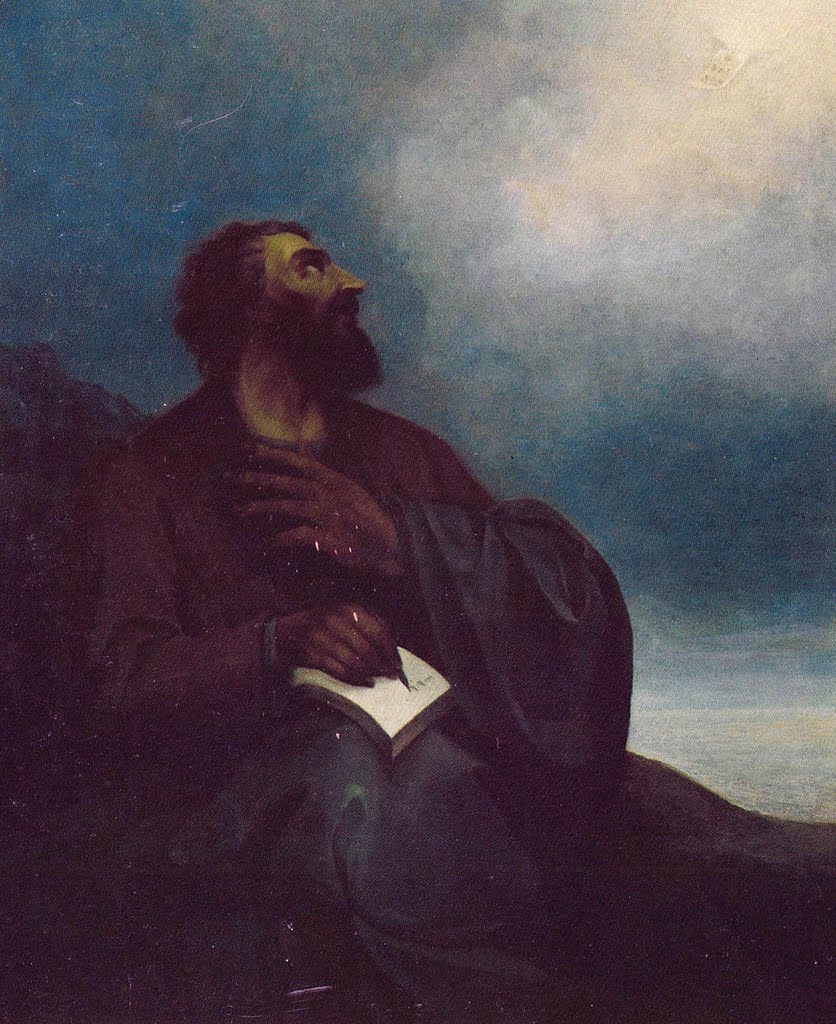
Mesrop Mashtots (Armenian Մեսրոպ Մաշտոց) was a young Armenian Christian of the Taron province in central Armenia, born around 362 AD. He served briefly as secretary in the Armenian royal court (where he became fluent in Greek, Persian, and Syriac in addition to his native Armenian). Around 395 AD he renounced the court for a hermit's life under the spiritual direction of the great Catholicos Sahak (see Sahak's entry above) and became an Armenian Christian monk.
After several years as a missionary monk in the Armenian provinces — where Mesrop observed directly the catastrophic problem that the Armenian Christian community had no Armenian-language Bible or liturgy, being entirely dependent on Greek or Syriac liturgy that the bulk of the Armenian peasant population could not understand — he proposed to Sahak the foundational project of his life: the creation of an alphabet specifically for the Armenian language and the translation of the Bible into Armenian.
With Sahak's commission and royal patronage from King Vramshapuh of Armenia, Mesrop undertook the linguistic-research project at the great Mesopotamian Christian centres (Edessa, Samosata, Amida) from 403 to 405 AD. He worked with the great Greek-Syriac calligrapher Rufanos of Samosata on the script-design, the Greek hierographer Hyropsanos on the phonetic-philological analysis, and others. The completed Armenian alphabet — 36 letters (later expanded to 39), designed specifically for the phonological structure of the Armenian language — was unveiled around 405 AD. It remains in continuous use today, almost unchanged from Mesrop's original design.
Mesrop then collaborated with Sahak across the next thirty years on the great project of the Armenian Bible translation, the foundational Armenian-Patristic translations, and the foundational original Armenian theological-historical literature (the foundational Armenian historian Korioun was Mesrop's personal disciple and composed the foundational Life of Mesrop after the master's death). Mesrop also created — in the same period — alphabets for the related Caucasian-Christian languages of Caucasian Albania and Georgia (the Georgian alphabet tradition acknowledges Mesrop as a substantial contributor to the foundational Georgian-Mkhedruli system, though the historical question of Mesrop's exact role is contested by modern Georgian scholarship).
He died at Vagharshapat on February 17, 440 AD, six months after Sahak's own death. He was buried at the small village of Oshakan, where his tomb has been the principal pilgrimage destination of Armenian Christians for over 1,580 years.