
Methodius (Greek Methodios) was Bishop of the small Lycian port-city of Olympus on the southern coast of Asia Minor in the late 3rd century. He composed multiple theological works, of which two are particularly important: the Symposium (Symposion or The Banquet of the Ten Virgins) — a Platonic-dialogue-form treatise on Christian virginity, modelled deliberately on Plato's Symposium and the foundational early Catholic literary-theological work on Christian consecrated virginity; and the Aglaophon (or On the Resurrection), a substantial three-book dialogue criticizing Origen's allegorical-spiritualizing tendencies on the doctrine of bodily resurrection and defending the foundational Catholic doctrine of the resurrection of the physical body.
Methodius's work On the Resurrection — preserved partially in Greek and more fully in an Old Church Slavonic translation — was the foundational early-Catholic theological response to Origenist excesses, anticipating by two centuries the major 5th- and 6th-century Origenist controversies. Methodius is the principal example of the 3rd-century Catholic theological tradition that affirmed substantial Origenist scholarly method while criticizing specific Origenist speculative-theological positions.
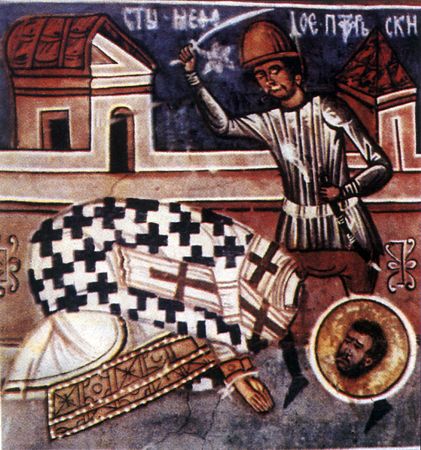
He died as a martyr around 311 AD during the late phase of the Great Diocletianic Persecution. The location of his martyrdom is uncertain — Jerome (Latin tradition) places it at Chalcis in Euboea; the Byzantine tradition places it at Patara in Lycia. Either way, he is one of the substantial theologian-martyrs of the late phase of the Great Persecution.