
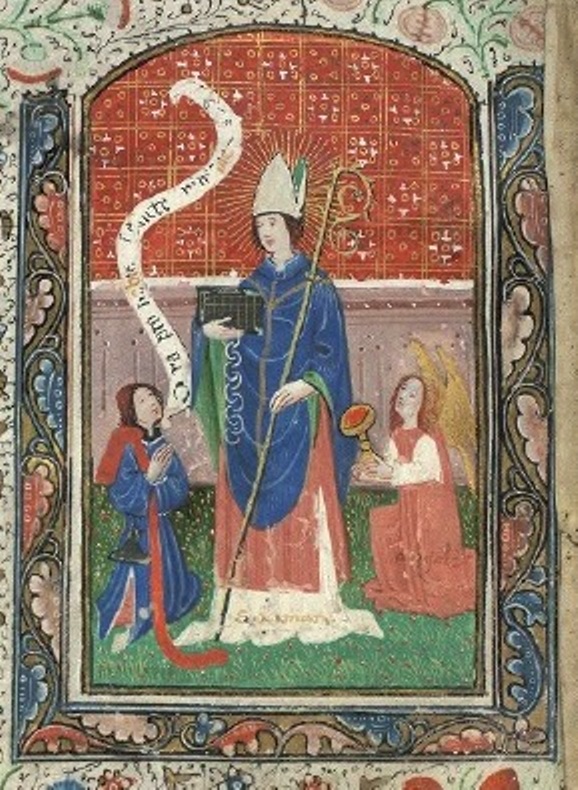
Ninian (Latin Niniauus, Old Brythonic Nynnyaw) was — per the foundational 8th-century account by the Venerable Bede in his Ecclesiastical History (3.4) and a separate 8th-century Latin life preserved at Whithorn — the foundational apostle of the southern Picts (the British-Celtic Pictish population of what is now southwestern Scotland). He is the earliest documented Christian missionary to Scotland.
Per Bede, Ninian was born to a Christian British family in the Cumbric-speaking territory of the late Roman British province of Britannia Secunda, around 360 AD. He travelled as a young man to Rome — a journey extraordinary for a British Christian of the late 4th century — where he received formal theological education and was eventually consecrated bishop directly by Pope Damasus I or one of his immediate successors (the precise chronology is debated).
Returning to Britain in the early 5th century, Ninian established his episcopal cathedra at Whithorn (Latin Candida Casa, 'the White House' — so named because Ninian had it built in dressed white stone, a unique architectural feature in Pictish-speaking territory at the time). From Whithorn Ninian and his followers undertook a substantial missionary outreach to the southern Pictish population north of the Solway Firth.
His apostolic work in southern Scotland antedates by over a century the more famous mission of Columba to the northern Picts (see Columba's entry already in the catalogue, c. 521–597). Whithorn became one of the great medieval Scottish pilgrimage destinations (the medieval Scottish kings made the journey regularly — King James IV walked to Whithorn six times during his reign), and remained so until the Scottish Reformation of the 16th century. The site has been the focus of substantial archaeological excavation since the 19th century; the foundations of the original 5th-century Candida Casa church have been identified.