
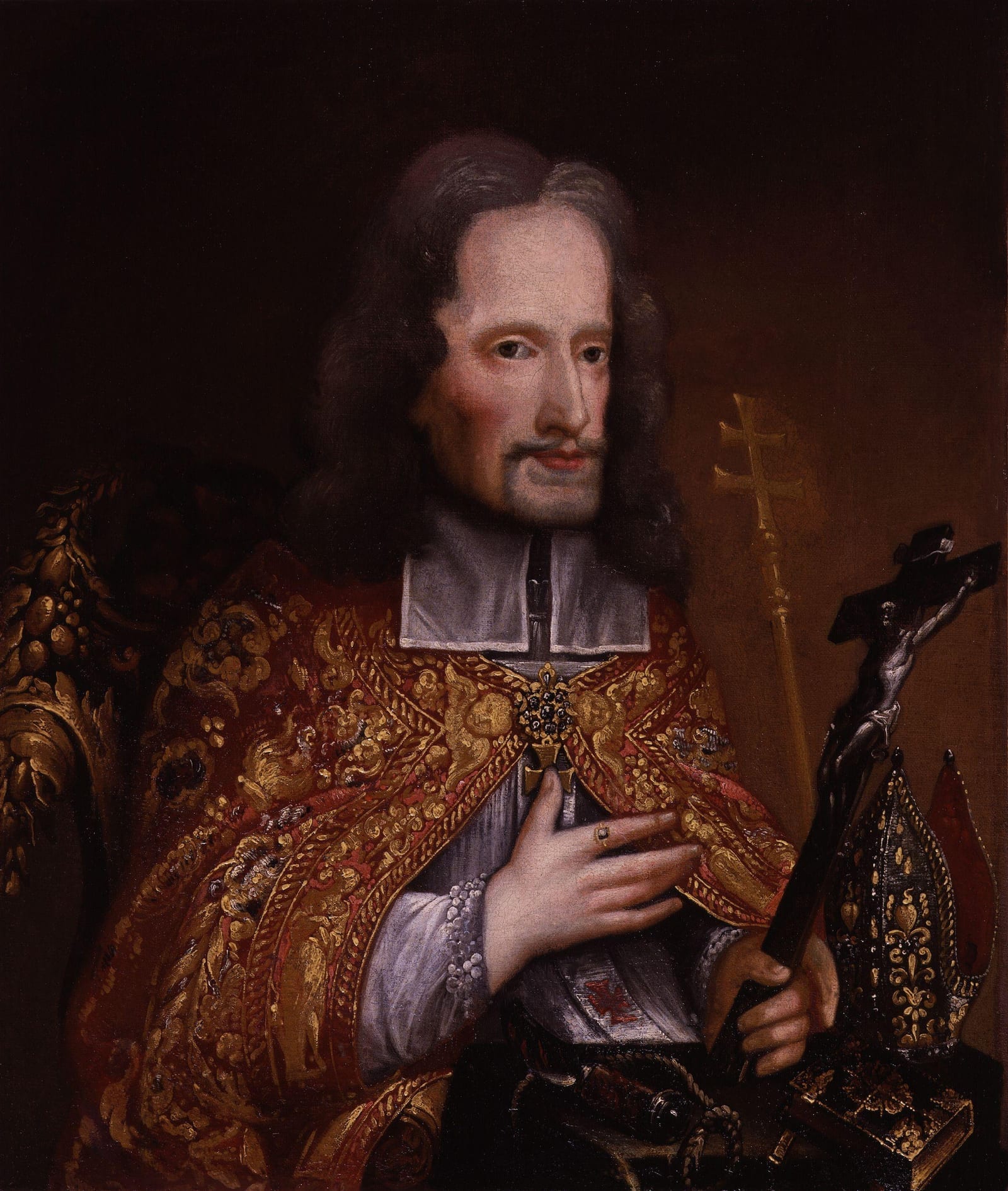
Oliver Plunkett was born on November 1, 1625 at Loughcrew in County Meath to the noble Irish Plunkett family — descendant of the Anglo-Norman Plunketts of medieval Ireland.
In 1647 (at 22), Oliver travelled to Rome to study for the Catholic priesthood at the Irish College. Ordained priest in 1654, Oliver served as professor of theology at the Propaganda Fide College of Rome for the 15 years.
In 1669, Pope Clement IX appointed Oliver as Archbishop of Armagh — the primatial see of Ireland. Consecrated at Ghent on November 30, 1669, Oliver arrived in Ireland in March 1670.
Oliver undertook the systematic pastoral reform of the Irish Catholic Church during the Restoration period (under King Charles II, the relative tolerance following the Cromwellian devastation). Oliver established the Catholic seminary at Drogheda, undertook the systematic diocesan reforms, and famously personally confirmed tens of thousands of Irish Catholics during his eleven-year archiepiscopal ministry.
During the Popish Plot hysteria (1678–1681, the anti-Catholic conspiracy hysteria fabricated by Titus Oates), Oliver was arrested on trumped-up charges of treason (conspiring with the French to invade Ireland).
Removed from Ireland to England for trial (to deny him a sympathetic Irish jury), Oliver was condemned to death by an English jury at Westminster on June 15, 1681.
On July 1, 1681, Oliver was hanged, drawn, and quartered at the Tyburn Tree — the last Catholic martyr executed at Tyburn and the last Catholic bishop martyred by the English state.
Canonized on October 12, 1975 by Pope St. Paul VI — the first Irish saint canonized in 700 years (since St. Laurence O'Toole canonized 1225).