
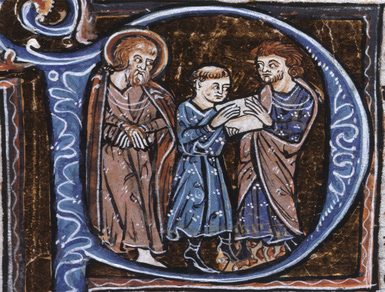
Onesimus (Greek Onēsimos, 'useful' — a standard ancient Greek slave-name) was a slave of the wealthy Colossian Christian Philemon. He apparently stole from his master Philemon (Philemon 18 implies some financial loss) and fled to Rome, where — through circumstances not recorded — he encountered the imprisoned Paul (Paul was under house arrest at Rome c. AD 60–62). Paul evangelized him, and Onesimus became a Christian and a devoted personal helper to Paul during the imprisonment.
Paul then wrote the very brief Epistle to Philemon (25 verses — the shortest of the Pauline letters) asking Philemon to receive Onesimus back not as a runaway slave but as 'a beloved brother' (Philemon 16). The letter is one of the foundational New Testament documents on the transformation of social relationships within the Christian community and has been central to subsequent Catholic abolitionist theology.
Tradition (preserved in the Greek menologia and in the writings of Ignatius of Antioch, who in his letter to the Ephesians around AD 107 mentions an Onesimus as their current bishop) holds that the former slave returned to Asia Minor — initially probably to Philemon, but then in due course returned to Asia Minor as bishop. He is identified by various early traditions as Bishop of Ephesus (the most widely-held identification, based on Ignatius's reference) or of Beroea. He was martyred at Rome or Puteoli during the reign of Trajan around AD 95, traditionally by stoning.