
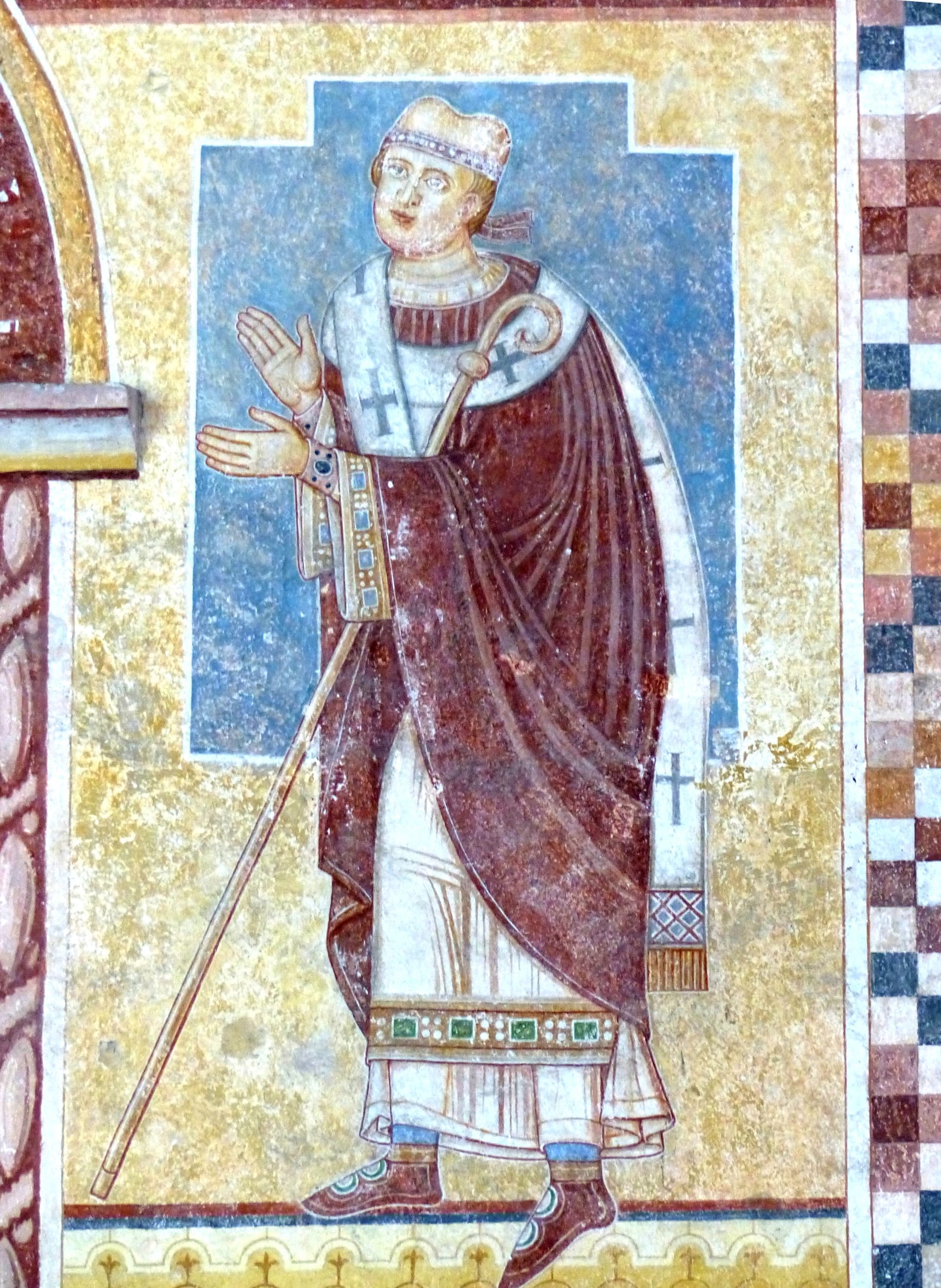
Otto, a Swabian of modest noble birth, entered the imperial chancery of Henry IV and rose to become chancellor. He played a discreet but pivotal role in the negotiations of the Investiture Controversy, helping bring the Concordat of Worms in 1122 (which he saw as Bishop of Bamberg, having been appointed in 1102) within reach.
From 1124 he led two great missionary expeditions to convert the still-pagan Western Pomeranians — the Slavic coastal peoples between the Oder and the Vistula. Travelling in episcopal solemnity rather than monastic poverty (a deliberate strategic choice for evangelizing a warrior aristocracy), he baptized thousands at Stettin, Wolin, Pyritz, Cammin, and Stargard, and established the diocesan structure that became the bishopric of Cammin.
He returned to Bamberg, founded or restored more than thirty monasteries across his diocese, and died there in 1139. Pope Clement III canonized him in 1189. He is the proto-apostle of the Slavic Baltic coast — the missionary saint of the lands later evangelized by the Cistercians and Premonstratensians.