
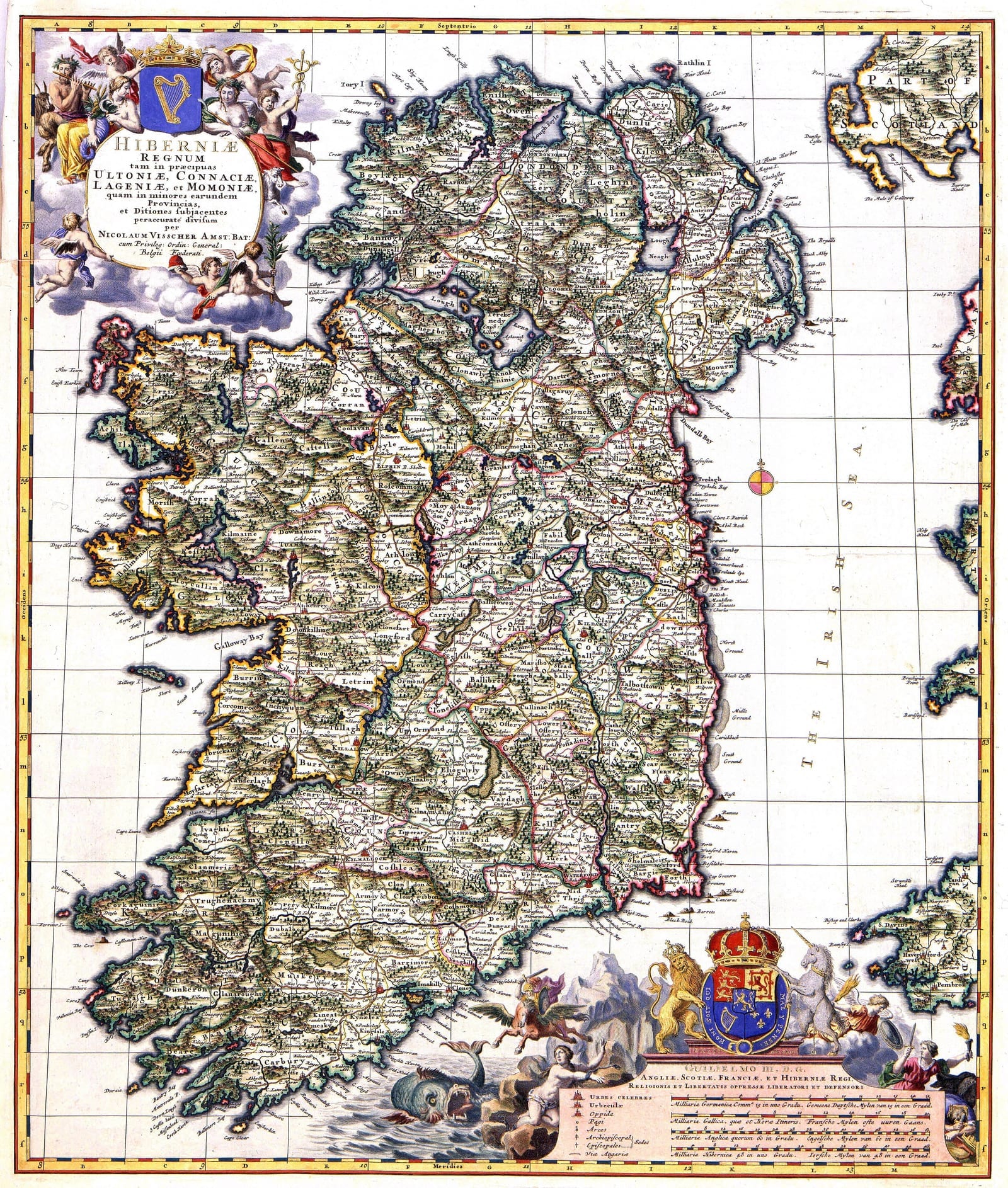
Palladius (Latin Palladius) was — per the explicit testimony of Prosper of Aquitaine writing in his Chronicle in 431 AD — a deacon of Pope Celestine I of Rome (see Celestine's entry already in the catalogue) who, in 431, was 'consecrated by Pope Celestine and sent as first bishop to the Irish who believe in Christ' (Prosper, Chronicle, year 431).
Prosper's testimony — composed only a few years after the events — establishes incontrovertibly that there was already a small Catholic Christian community in Ireland before Palladius's arrival in 431 (Prosper specifies 'the Irish who believe in Christ' — the explicit Latin presupposes a pre-existing Catholic Irish Christian community). The community had probably grown in southern and southeastern Ireland through trade-contact with Roman Britain and Gaul over the previous several decades. Palladius was sent to provide formal episcopal organization to this pre-existing community.
What happened to Palladius's mission is unclear from the contemporary sources. The Patrick-tradition (preserved in the late-5th and early-6th-century Irish hagiography of Patrick — see Patrick's entry already in the catalogue) describes Palladius's mission as brief and unsuccessful: per the Patrick tradition, Palladius either died very shortly after his arrival in Ireland, or was driven out by the local Irish chieftains, or quickly left the mission and was replaced by Patrick.
The Scottish tradition — preserved at the small village of Fordoun in Aberdeenshire — holds that Palladius, after his brief unsuccessful Irish mission, travelled north into the Pictish territories of Aberdeenshire, where he died around 461 AD and was buried at the small Pictish-Christian community of Fordoun. The site has been continuously venerated as Palladius's tomb since at least the medieval period.
Palladius's foundational historical importance: his 431 mission is the very first dated, documentary, externally-attested event in the history of Christian Ireland. He is the foundational pre-Patrician figure of Irish Christianity, and the entire chronology of the Patrick-mission is anchored to him.