
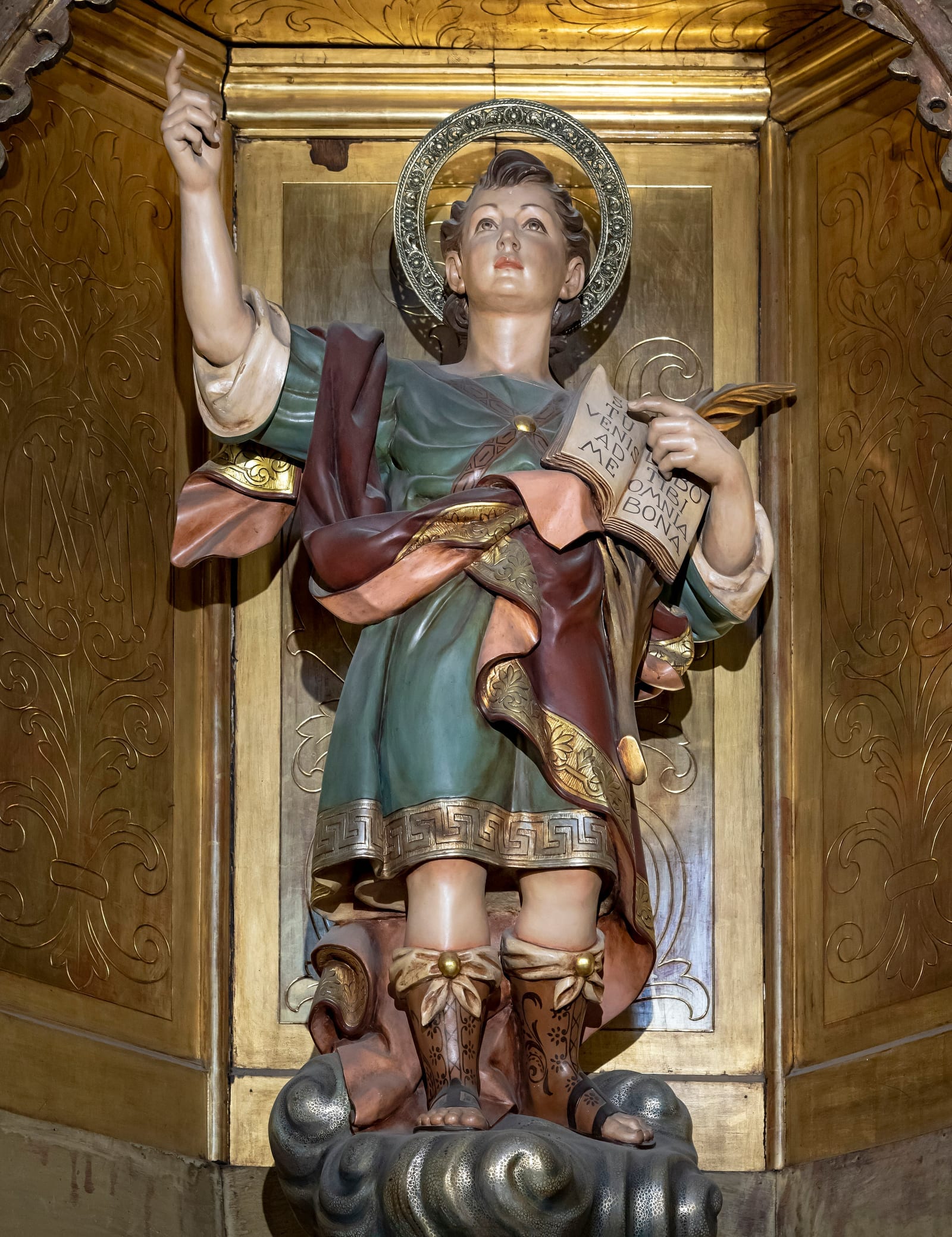
Pancras (Pancratius) was a fourteen-year-old orphan brought to Rome by his uncle Dionysius. Both became Christian and were arrested during the Diocletianic persecution. Brought before the emperor himself, the boy was offered great rewards if he would sacrifice to the gods; he refused. He was beheaded on the Via Aurelia on May 12, 304.
His basilica on the Via Aurelia became one of the great churches of medieval Rome. His patronage as the saint of oath-keeping comes from the medieval tradition of swearing oaths on his relics; perjurers, it was said, would be struck dead at his tomb. King Æthelberht of Kent, baptized by St. Augustine of Canterbury at the close of the 6th century, dedicated his first parish church to St. Pancras — the original church of St. Pancras in Canterbury, the first parish church established in Anglo-Saxon England.
The London neighborhood of St Pancras takes its name from a Norman-era foundation; St Pancras International railway station preserves the connection to this day.