
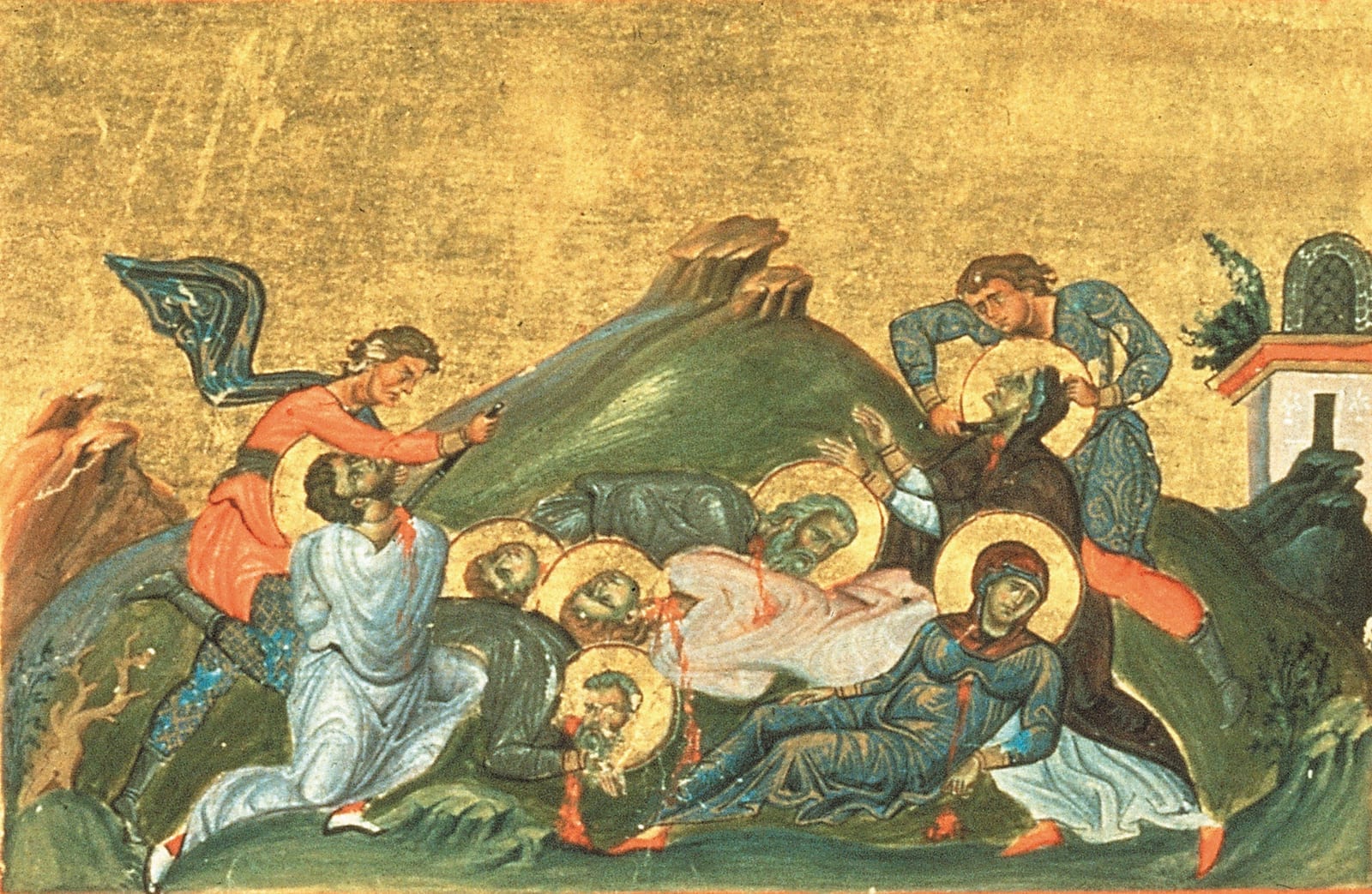
Vibia Perpetua was a noble Roman matron of Carthage, twenty-two years old, with an infant son at the breast. Felicity was her slave-girl, pregnant in her last month. With three young men — Saturninus, Secundulus, Revocatus, and their teacher Saturus — they were catechumens preparing for baptism when the persecution of Septimius Severus reached Carthage in 202.
Arrested and imprisoned, Perpetua kept a diary — the Passio Perpetuae et Felicitatis — the oldest surviving Christian writing by a woman, an autobiographical account of the days before her martyrdom and the four visions she received. Felicity gave birth to a daughter in prison two days before the games, weeping that her execution would be delayed by her pregnancy. The Christian community took the child to raise.
On March 7, 203, the day of the Emperor Geta's birthday games, they were led into the amphitheatre. Saturninus and Revocatus were savaged by a leopard. Saturus was unhurt by a boar, savaged by a bear, and finally killed by a leopard. The women were dressed in nets and exposed to a wild heifer; Perpetua, on the ground, modestly arranged her tunic. Both were finally killed by the sword. The young gladiator's trembling hand wavered; Perpetua took the blade and guided it to her own throat. They are named in the Roman Canon of the Mass.