
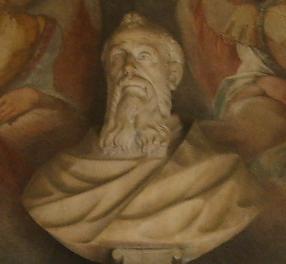
Born into deep poverty in Ravenna, Peter was orphaned young, badly treated by an elder brother, and rescued by another brother who saw his talent and sent him to school. Brilliant in his studies, he became a teacher of rhetoric at Ravenna and Parma — and then, in 1035, threw all of it over to enter the strict eremitical Camaldolese monastery of Fonte Avellana in the Apennines.
He became prior of Fonte Avellana in 1043 and from that mountain retreat made himself the great reformer of the 11th-century Italian Church. His Liber Gomorrhianus (the 'Book of Gomorrah,' c. 1049) was a fierce attack on clerical sexual abuse, particularly among bishops; the Liber Gratissimus defended the validity of sacraments administered by simoniacs.
Made Cardinal-Bishop of Ostia in 1057 against his fierce protests, he served as papal legate on missions to Milan, France, and Germany — settling disputes, deposing corrupt bishops, defending the Cluniac reform. He died on the night between February 22 and 23, 1072, at Faenza, on his way back from a final reconciliation mission. Pope Leo XII declared him a Doctor in 1828.