
MIRACULOUS MIRACLES™

Saint — Bl. Peter Kibe Kasui, SJ

Bl. Peter Kibe Kasui, SJ
1587 AD, Urabe, Bungo Province, Kingdom of Japan (Kibe samurai family) — July 4, 1639 AD, Edo, Tokugawa Shogunate — martyred by the Tokugawa 'pit torture' after refusing to apostatize
Japanese Jesuit martyr; pioneer Asian priest returning to home mission
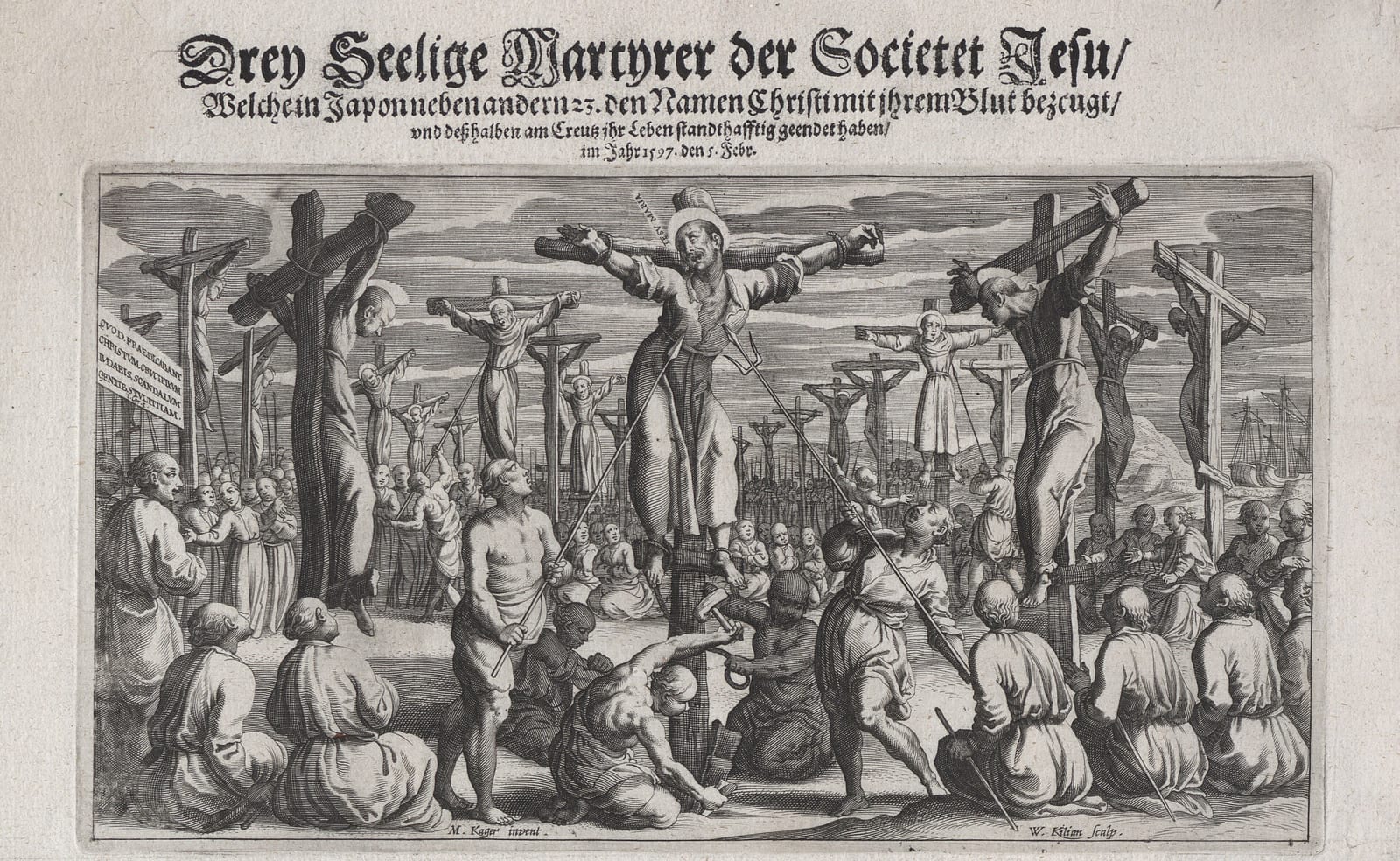
Catholic Basilica of the Twenty-Six Martyrs of Japan, Nagasaki, Japan — shrine of the Japanese Catholic martyrs including Kibe, Japan
Feast
July 4
Canonized
Beatified November 24, 2008 by Pope Benedict XVI (one of the '188 Martyrs of Japan')
✠ MartyrDied in the Tokugawa 'pit torture' (tsurushi) at Edo after nine days, refusing to apostatize, 1639 → The Martyrs
Life

Peter Kibe Kasui was born in 1587 at Urabe in Bungo Province (modern Ōita Prefecture in Kyushu) to a samurai Kibe family — baptized as Pedro / Peter in his childhood.

During the 1614 expulsion of Catholic missionaries by the Tokugawa Shogunate, Peter (age 27) was expelled to Macau — where he undertook studies for the Jesuit priesthood.

Peter undertook the extraordinary journey to Rome to seek priestly ordination — travelling from Macau to Goa to Persia and then across Palestine to Rome, arriving at Rome in 1620 after multiple years of overland travel.

Peter was ordained Catholic priest at Rome on November 15, 1620 — at the Basilica of St. John Lateran. He entered the Society of Jesus at Rome shortly thereafter.

Peter undertook the return journey to Japan through the Portuguese colonial network — attempting multiple secret returns via Vietnam and Manila. Finally, in 1630, he succeeded in re-entering the Tokugawa-Japan Catholic underground.

For the 9 years (1630–1639), Peter undertook the secret Jesuit mission to the hidden Japanese Catholic community — travelling through the Japanese countryside disguised as a farmer, celebrating the secret Masses.

Arrested in March 1639, Peter was taken to Edo and subjected to the Tokugawa 'pit torture' (tsurushi) — suspended inverted in a pit filled with excrement for multiple days. Peter refused to apostatize and died in the pit on July 4, 1639.

Miracles & Phenomena
  • The Rome-to-Japan return journey

    Bl. Peter Kibe Kasui's extraordinary journey from Macau to Rome for priestly ordination (1614–1620) — the overland journey via Persia and Palestine — and his return to Japan for underground ministry (1630) — established him as the pioneer Asian priest returning to home mission. The Kibe-tradition underpinned the Asian Catholic priest-tradition.

  • The 'pit torture' martyrdom

    Peter Kibe's nine-day 'pit torture' martyrdom (tsurushi) at Edo — suspended inverted in a pit filled with excrement for nine days without apostatizing — established him as one of the most heroic Japanese Catholic martyrs of the Tokugawa persecution.

Relics
  • Body
    Relics of Bl. Peter Kibe Kasui
    Catholic Basilica of the Twenty-Six Martyrs of Japan, Nagasaki, Japan

    memorial veneration at the Basilica of the Twenty-Six Martyrs at Nagasaki.

Iconography
  • Peter Kibe in the pit torture

    The early-17th-century Japanese Jesuit priest suspended inverted in the 'pit torture' at Edo in July 1639 — the iconography of Catholic Japanese Tokugawa-martyr tradition.

Patronages
Society of Jesus (Jesuit martyr)Japanese Catholic tradition (one of the '188 Martyrs of Japan')Catholic pioneer Asian priests returning to home mission tradition