
MIRACULOUS MIRACLES™

Saint — Peter of Verona

St. Peter of Verona
c. 1205, Verona — April 6, 1252, Barlassina, between Como and Milan
Peter Martyr — The First Dominican Martyr
Basilica of Sant'Eustorgio, Milan, Italy
Feast
June 4 (formerly April 29)
Canonized
March 25, 1253 by Pope Innocent IV — 337 days after his death, the fastest canonization in church history
✠ MartyrHead split by Cathar-hired assassins on the road at Barlassina, between Como and Milan, 1252 → The Martyrs
Life

Peter was born to a Catharist family of Verona — both his parents were Cathar perfecti — but converted to orthodox Catholicism while a student at the University of Bologna, where he heard Dominic preach. He entered the Dominican Order around 1221 and spent thirty years preaching against the Cathars across northern Italy, with such effect that the Cathar networks of Lombardy and the Veneto were broken in his lifetime.

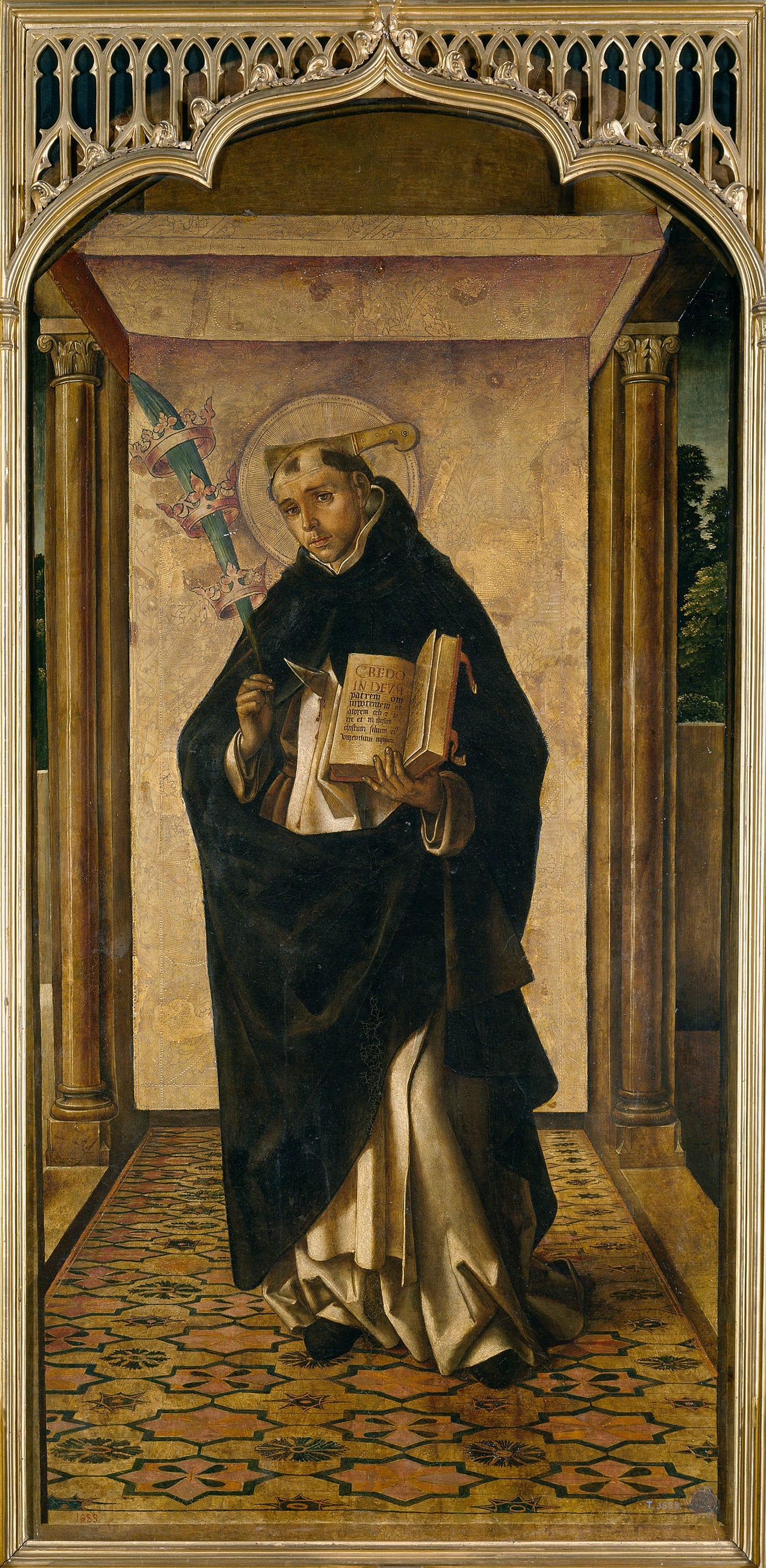
In 1251 Pope Innocent IV appointed him Inquisitor for northern Italy. The following year, on April 6, 1252, as he travelled from Como to Milan, two assassins paid by the Cathars (Carino of Balsamo and Manfredo Clitoro of Giussano) attacked him on the wooded road at Barlassina. The first blow split his head; tradition records that as he died Peter wrote the first words of the Creed — Credo in Unum Deum — in his own blood on the ground.

He was canonized by Pope Innocent IV on March 25, 1253 — three hundred and thirty-seven days after his death. This remains the shortest interval between death and canonization in the entire history of the Catholic Church (Becket, the previous record-holder, was canonized in twenty-six months). His head reliquary at Sant'Eustorgio in Milan still bears the split he received from the assassin's axe.

Miracles & Phenomena
  • Credo in Unum Deum

    As he died, Peter is said to have written the opening words of the Apostles' Creed in his own blood on the ground — the iconographic emblem of his martyrdom.

Relics
  • Body
    Shrine of St. Peter Martyr
    Basilica of Sant'Eustorgio, Milan — Cappella Portinari

    His tomb in the great Cappella Portinari at Sant'Eustorgio is one of the masterpieces of fourteenth-century Italian sculpture (by Giovanni di Balduccio, 1339). The skull, with the axe-wound visible, is preserved in a separate reliquary.

Iconography
  • Peter Martyr with the cleaver in his head

    The Dominican in black-and-white habit with a large butcher's cleaver or axe still embedded in his skull, often shown writing Credo in his blood on the ground — one of the most distinctive iconographic emblems in medieval Christianity.

Patronages
Inquisitors (he held the office)MidwivesHeadachesVerona