
MIRACULOUS MIRACLES™

Saint — Peter Thomas

St. Peter Thomas
c. 1305 AD, Salle-de-Sarlat, Périgord (French Périgourdine peasant family) — January 6, 1366 AD, Famagusta, Kingdom of Cyprus — died of wounds received at the unsuccessful siege of Alexandria (October 1365)
Carmelite; Latin Patriarch of Constantinople 1364–1366; Carmelite bishop-diplomat-Crusader
Carmelite Church, Famagusta, Cyprus — site of his death; the medieval Gothic Carmelite church survives in ruined form as part of the Famagusta walled city (now in northern Cyprus), Cyprus
Feast
January 25 (Carmelite calendar); January 6 (death anniversary)
Canonized
Beatified; venerated in the Carmelite Order calendar
Life

Peter Thomas (French Pierre Thomas) was born around 1305 to a French Périgourdine peasant family at Salle-de-Sarlat in Périgord. Educated as a young man at the Carmelite houses and at the Universities of Paris and Bologna, he entered the Carmelite Order and received the Doctor of Theology.

Peter Thomas served in multiple Carmelite provincial offices and was called by Pope Innocent VI to Avignon in 1354 as Procurator General of the Carmelite Order.

From 1355 to 1366 — under Popes Innocent VI, Urban V — Peter Thomas served as the principal papal-diplomatic legate to the Byzantine and eastern-Catholic and Slavic Christian frontiers. His diplomatic missions included: Serbia (1355), Byzantine Constantinople (1357), Hungary (1359), Byzantine Constantinople again (1359–1360), and Alexandria (1364–1365).

In 1359, Peter Thomas was appointed Bishop of Patti and Lipari; subsequently Archbishop of Crete (1363), and finally Latin Patriarch of Constantinople in 1364 (the Latin-Catholic Patriarchate of Constantinople established after the 1204 Fourth Crusade — residing in the Crusader-Aegean territories after the 1261 Byzantine reconquest of Constantinople).

As Latin Patriarch of Constantinople, Peter Thomas undertook the mission of the reunion between the Latin-Catholic Western Church and the Greek-Byzantine Eastern Church — in institutional continuity with the earlier Second Council of Lyon (1274) reunion attempt.

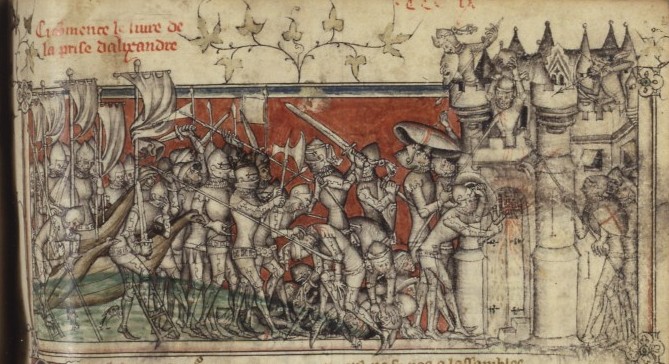
In 1364–1365, Peter Thomas undertook the Alexandrian Crusade with King Peter I of Cyprus — the last significant medieval Catholic Crusader expedition to the eastern Mediterranean. The Crusader army captured Alexandria on October 9, 1365 but was forced to evacuate the city on October 16, 1365.

Peter Thomas received wounds during the unsuccessful siege of Alexandria and returned to Famagusta in Cyprus, where he died of his wounds on January 6, 1366.

Miracles & Phenomena
  • The 14th-century Carmelite papal-diplomatic tradition

    St. Peter Thomas's eleven-year service as the principal papal-diplomatic legate (1355–1366) — to Serbia, Byzantine Constantinople, Hungary, and Alexandria — institutionally established the 14th-century Carmelite papal-diplomatic tradition. The Peter Thomas-Latin-Patriarch-of-Constantinople ministry continued the Catholic-Orthodox ecumenical-reunion effort in institutional continuity with the Second Council of Lyon (1274) and pre-figured the Council of Ferrara-Florence (1438–1445) reunion attempt.

  • The Alexandrian Crusade (1365) — the last significant medieval Catholic Crusader expedition

    St. Peter Thomas's participation in the Alexandrian Crusade with King Peter I of Cyprus in 1364–1365 — the last significant medieval Catholic Crusader expedition to the eastern Mediterranean — institutionally represents the end of the two-century Catholic Crusading movement in the eastern Mediterranean. The Peter-Thomas death from wounds received at the unsuccessful siege of Alexandria established him as the Catholic-Crusader martyr-hero of the final Crusading era.

Relics
  • Body
    Tomb of St. Peter Thomas
    Carmelite Church, Famagusta, Cyprus — site of his death; the medieval Gothic Carmelite church survives in ruined form as part of the Famagusta walled city (now in northern Cyprus, in the Turkish-Cypriot territory)

    His tomb at the Carmelite Church in Famagusta was largely lost in the Ottoman conquest of Cyprus in 1571; fragmentary relics at the Carmelite Order houses worldwide.

Iconography
  • Peter Thomas at the siege of Alexandria (October 1365)

    The mid-14th-century Périgourdine Carmelite Latin Patriarch of Constantinople in Carmelite brown habit with the patriarchal vestments over it, at the unsuccessful siege of Alexandria in October 1365, receiving the wounds that would produce his death — the iconography of Catholic Carmelite-Crusader tradition.

Patronages
Order of Carmelites (principal 14th-century Carmelite bishop-diplomat-Crusader)Catholic Latin Patriarchs of Constantinople tradition (the Latin-Catholic Patriarchate established after the 1204 Fourth Crusade)Catholic papal-diplomatic missions traditionThe Périgourdine and Cypriot Catholic traditions