
MIRACULOUS MIRACLES™

Saint — Philip the Apostle

St. Philip the Apostle
early 1st century, Bethsaida — c. AD 80, Hierapolis
Apostle of the Gentiles in Asia
Martyrium of St. Philip, Hierapolis (Pamukkale), Turkey
Feast
May 3 (with St. James the Less)
✠ MartyrMartyred at Hierapolis in Phrygia, traditionally by crucifixion, c. 80 → The Martyrs
Life

Philip was from Bethsaida, the town of Andrew and Peter. The Gospel of John records his calling on the second day of Jesus's public ministry; his immediate response was to find Nathanael (Bartholomew) and tell him: 'We have found him of whom Moses in the law, and the prophets, wrote — Jesus of Nazareth, the son of Joseph' (John 1:45).

He appears repeatedly in John's Gospel: it is to Philip that Jesus turns at the multiplication of the loaves — 'Where are we to buy bread, so that these people may eat?' — and Philip who, at the Last Supper, asks the question that draws the great answer: 'Lord, show us the Father, and we will be satisfied. Jesus said to him: Have I been with you so long, and you still do not know me, Philip?' (John 14:8–9).

Tradition holds that after Pentecost he preached in Phrygia and was martyred at Hierapolis. Eusebius, citing Polycrates of Ephesus, identifies Hierapolis as the site of his death. In 2011 Italian archaeologists discovered what they identified as Philip's tomb in a previously unknown 1st-century church at Hierapolis, in association with the martyrium that had been excavated decades earlier.

Miracles & Phenomena
  • The Conversion of the Ethiopian Eunuch (by Philip the Evangelist)

    Acts 8 records this miracle of Philip — though it is contested whether the apostle Philip or the deacon Philip of Acts 6 is meant. An angel sent Philip to a desert road; he met an Ethiopian official reading Isaiah 53, explained the passage, and baptised him on the spot before being 'caught up' by the Spirit and translated to Azotus.

  • Reading the Hearts at Bethsaida

    At the multiplication of the loaves, Jesus tests Philip — knowing what he intends to do — and Philip honestly admits his inability: 'Two hundred denarii would not buy enough bread for each to get a little' (John 6:7). The miracle that follows is, in part, his lesson.

Relics
  • Body
    Tomb of St. Philip
    Martyrium and church complex, Hierapolis (Pamukkale), Turkey

    Identified in 2011 by an Italian archaeological team (led by Francesco D'Andria) in a previously unknown 1st-century church next to the well-known octagonal martyrium of St. Philip.

  • Bodily relic
    Relics of Sts. Philip and James the Less
    Basilica of the Holy Apostles (Santi Apostoli), Rome

    Translated to Rome by Pope John III in the 6th century. The basilica, restored in the 18th century, preserves the joint relics of the two apostles whose feast they share.

Iconography
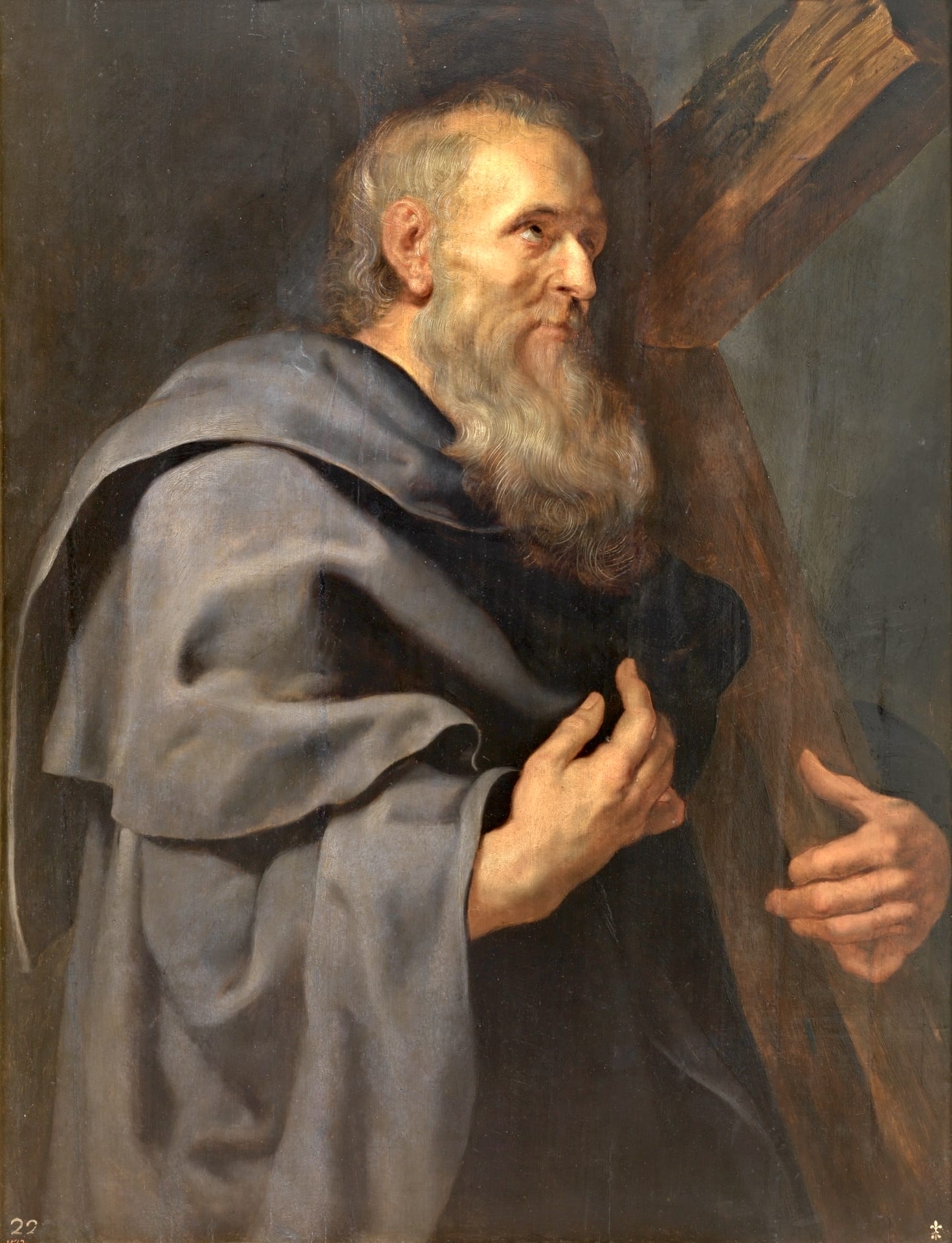
  • St. Philip with the Cross

    Often depicted carrying a tall cross — tradition holds he was crucified at Hierapolis. He may also hold loaves of bread (a reference to the feeding of the five thousand) or a book.

Patronages
HatmakersPastry chefsUruguaySan Felipe, Mexico
Sources & Further Reading