
Filippo Romolo Neri was born to a respectable Florentine notarial family and educated by the Dominicans of San Marco — the convent of Fra Angelico and Antoninus a century earlier — where he absorbed Savonarola's reform spirituality. At eighteen he was sent to his uncle in San Germano (near Monte Cassino) to be apprenticed in trade; he experienced a sudden conversion there, left his uncle's house, and walked to Rome — penniless — in 1533.
He spent the next seventeen years (1533–50) as a lay tutor and street evangelist in Rome — without becoming priest or religious. He lived in a single room above an attic, ate one meal a day, spent his afternoons in conversation with passers-by on the Roman streets ('Brothers, when shall we begin to do good?' was his standard opening), and developed a method of catechesis through warm informal personal contact that converted thousands of Roman noblemen and merchants. He was a permanent fixture of the Roman religious landscape long before he was ordained priest in 1551 at thirty-six.
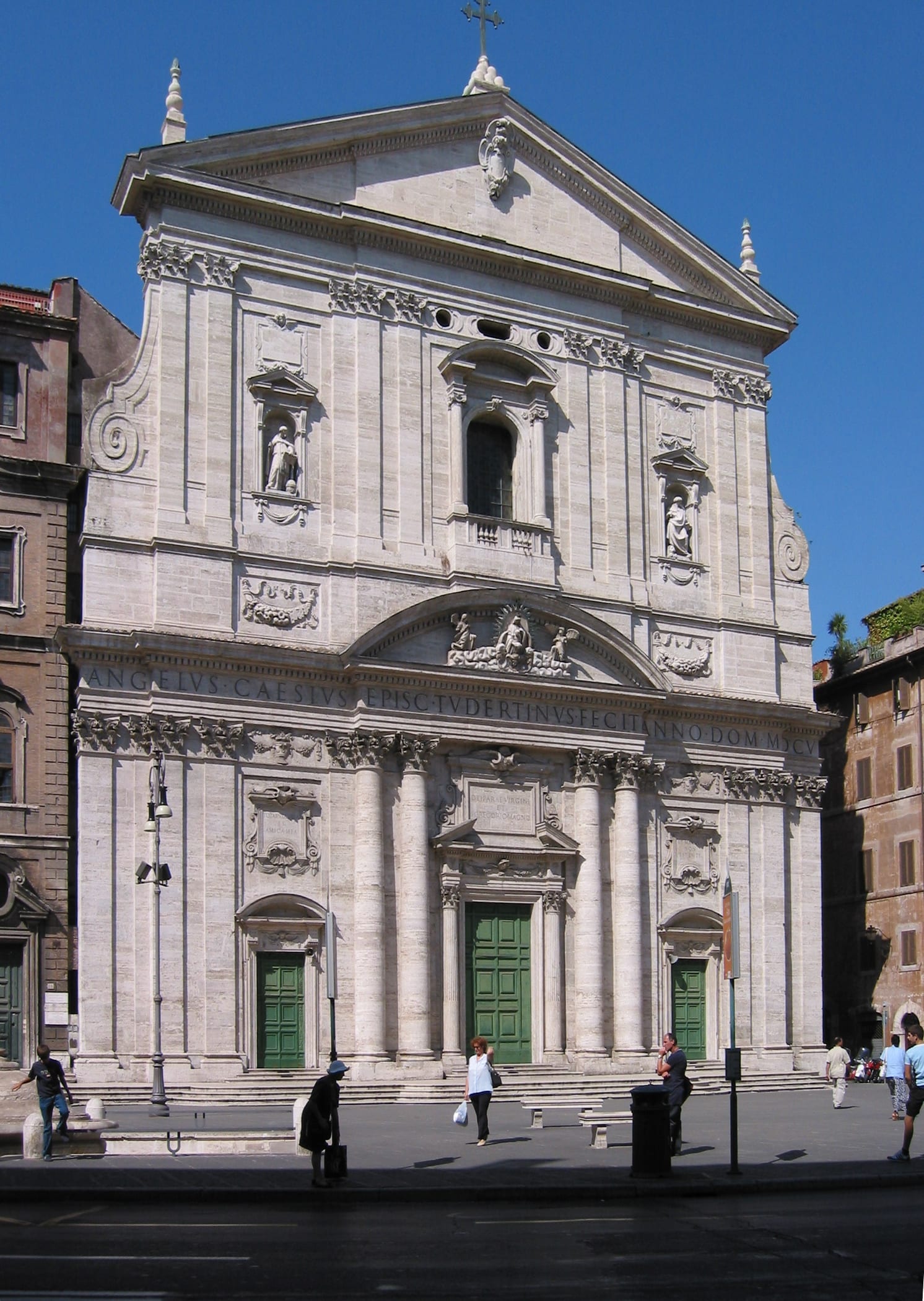
From 1551 his small evening gathering at the church of San Girolamo della Carità — informal prayer, scriptural reflection, music — grew into the institution of the Oratory. By the 1570s the Oratory had its own house at San Giovanni de' Fiorentini, then the 'New Church' (Chiesa Nuova, Santa Maria in Vallicella) given by Gregory XIII in 1575, where it remains. He founded the Congregation of the Oratory of St. Philip Neri — a society of secular priests without formal vows living in community, dedicated to preaching, the sacraments, and informal pastoral conversation. The Oratorian model became influential across France (Cardinal de Bérulle's French Oratory, 1611) and Spain.
He was the personal confessor of half the Roman religious establishment of his last decades — including Charles Borromeo, Camillus de Lellis, Felix of Cantalice, and the writer of his Life Cardinal Cesare Baronio (whose Annales Ecclesiastici were composed at the Oratory under Philip's direction). His personality combined Renaissance erudition with extreme practical jokes (he frequently went out wearing one shoe, half a beard shaved off, or with a Tuscan donkey-driver's hat — to humiliate his admirers' tendency to revere him), reverence with riotous laughter, mystical experience with ironic deprecation. He died at Chiesa Nuova on the night of May 25–26, 1595, having heard confessions all afternoon as usual. Canonized 1622 in the same ceremony as Ignatius, Xavier, Teresa, and Isidore.