
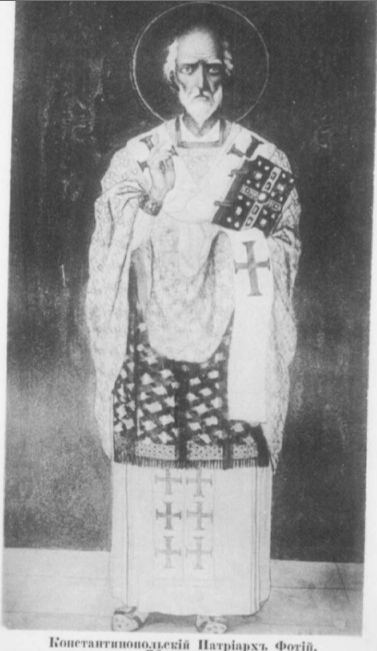
Photios was the most learned man of 9th-century Byzantium — chief secretary of state under three emperors before, in 858, being abruptly elevated to the patriarchate of Constantinople in succession to the deposed Ignatius. He was a layman who received all the major orders within six days before his consecration as patriarch.
His Bibliotheca — 280 reviews of patristic and classical Greek texts, many surviving only because of his summary — is the principal source for our knowledge of ancient Greek prose literature. His Lexicon, Mystagogia (on the procession of the Holy Spirit), homilies, and letters made him the supreme Greek theologian of his century.
Pope Nicholas I refused to recognize his elevation, ruling that Ignatius had been deposed unjustly. The decade-long Photian Schism (863–880) was the first major rupture between Rome and Constantinople over papal jurisdiction. The Council of Constantinople IV (869–870) deposed Photios; the Council of Constantinople (879–880) reinstated him with Roman approval; he was deposed again in 886 by Emperor Leo VI and died in exile in 893.
Although the Latin and Greek Churches assess his legacy differently — Latin tradition views him as a schismatic, Greek Orthodoxy honors him as a saint and the principal defender of Eastern doctrinal independence — modern Catholic scholarship (Francis Dvornik especially) has rehabilitated him considerably, and Pope John Paul II in 1980 publicly venerated him.