
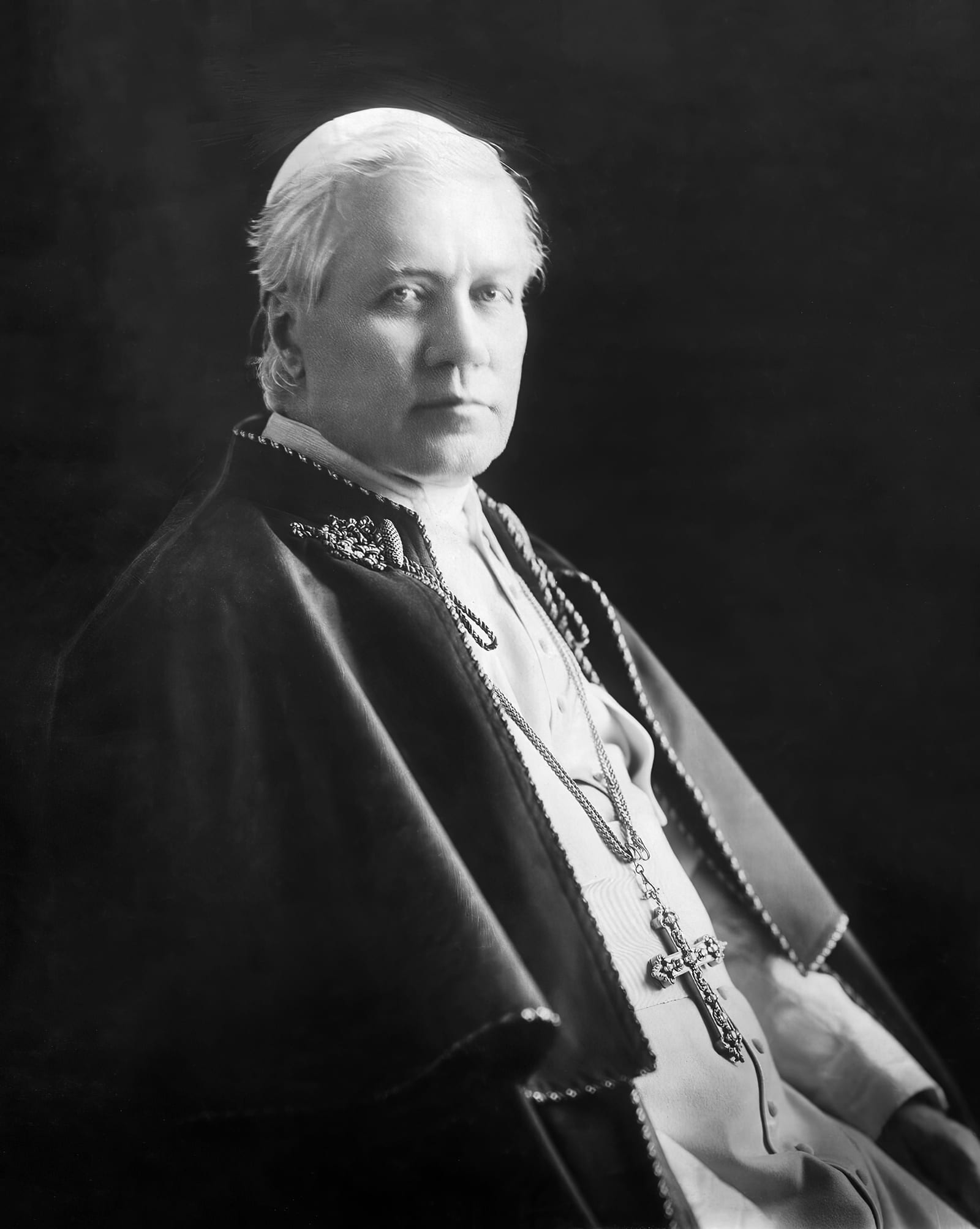
Giuseppe Melchiorre Sarto was born the second of ten children to a village postman and a seamstress in Riese, in the Venetian countryside. He walked four miles each way to school. Ordained at twenty-three, he served twenty-six years as parish priest, professor, and spiritual director before becoming bishop of Mantua at fifty, then Patriarch of Venice, then — at sixty-eight, by a process he had begged to be spared — pope.
His motto, 'Instaurare omnia in Christo' ('To restore all things in Christ'), gave the programme. He issued the decree Sacra Tridentina synodus (1905) restoring frequent and even daily Communion to a Catholic world that had largely treated the Eucharist as an annual event. He issued Quam singulari (1910), lowering the age of First Communion from twelve to seven — the 'age of discretion' — which remade Catholic childhood across the world.
He reformed the breviary, restored Gregorian chant to its proper liturgical place (Tra le sollecitudini, 1903), and personally oversaw the first codification of canon law (completed under Benedict XV). Against the Modernist movement he issued the encyclical Pascendi Dominici gregis and the decree Lamentabili sane exitu (both 1907), and required of every Catholic teacher the Oath against Modernism. The pastoral consequences of this anti-Modernist programme were debated for the rest of the twentieth century.
He kept the manner of a parish priest in the papal apartments — refused to allow his sisters titles of honour, lived in his old cassock, gave personal almsgiving from his own pocket. He died at the outbreak of the First World War, broken in spirit by his failure to prevent it. Canonised in 1954, he was the first pope canonised since the 18th century; his body, found incorrupt at his 1944 exhumation, was placed under the altar of the Chapel of the Presentation in St. Peter's, where it remains visible.