
MIRACULOUS MIRACLES™

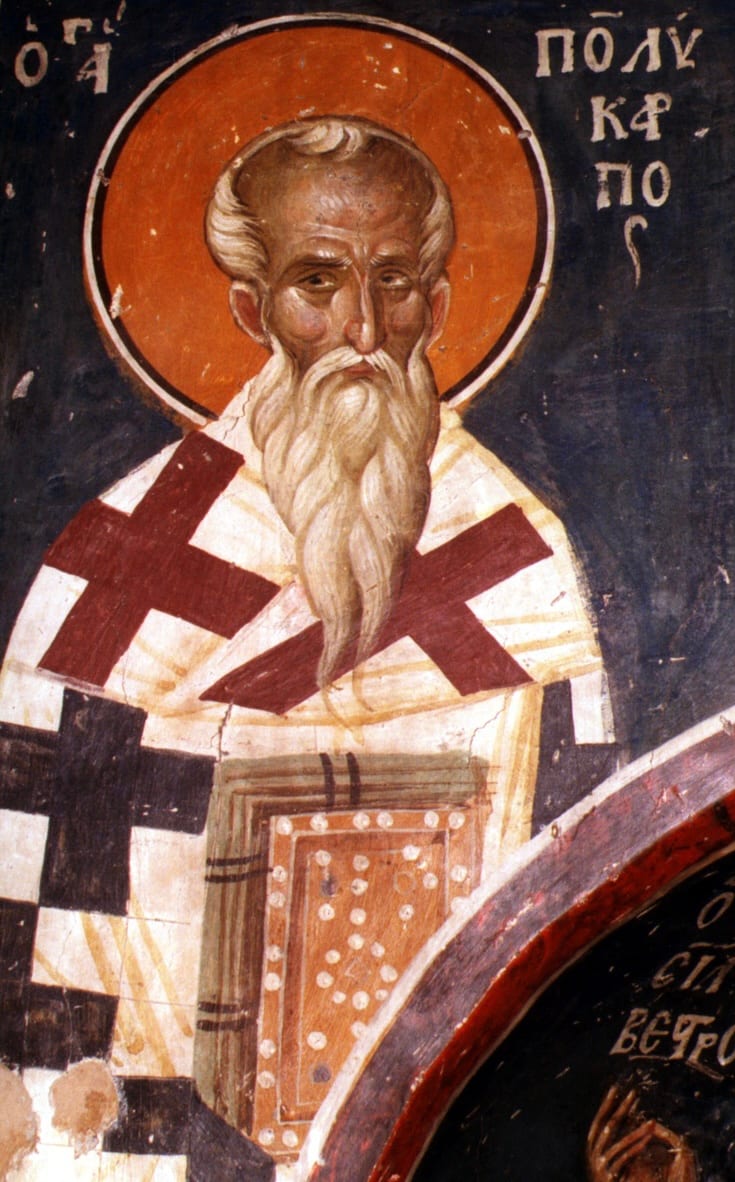
Saint — Polycarp of Smyrna

St. Polycarp of Smyrna
c. AD 69 — c. AD 155, Smyrna
Apostolic Father — disciple of St. John
St. Polycarp Church, Izmir (Smyrna), Turkey
Feast
February 23
✠ MartyrBurned at the stake at Smyrna; when the flames refused to consume him, stabbed through with a dagger, c. 155 → The Martyrs
Life

Polycarp was bishop of Smyrna in Asia Minor and a disciple, in his youth, of the Apostle John. Irenaeus of Lyon, who as a boy had heard Polycarp preach, writes that Polycarp 'had been taught by the apostles, and had conversed with many who had seen the Lord.' He is the principal living link between the apostolic age and the patristic.

He wrote a Letter to the Philippians that survives — a quiet, sober, pastorally focused work much occupied with the dangers of avarice and false teaching. Around the year 154, in his mid-eighties, he travelled to Rome to discuss with Pope Anicetus the date of Easter — a difference that remained unresolved without breaking communion.

Returning to Smyrna, he was arrested in the persecution under the emperor Antoninus Pius. Brought into the stadium, he refused to swear by the genius of Caesar with the famous reply: 'Eighty and six years have I served Him, and He has done me no wrong: how then can I blaspheme my King, who saved me?' Tied to the stake, the flames refused to consume him; a soldier stabbed him through with a dagger. The Martyrdom of Polycarp is the oldest extant account of a Christian martyrdom outside the New Testament.

Miracles & Phenomena
  • The Flames Refusing to Burn

    c. AD 155

    According to the Martyrdom of Polycarp (an eyewitness account), the fire formed a vault around him 'like a ship's sail filled with wind' and refused to consume him. The executioner had to dispatch him with a dagger.

  • Earliest Account of Relic Veneration

    After his death, the Christians of Smyrna 'gathered his bones, which were more precious to us than gems and more refined than gold, and laid them in a fitting place' (Martyrdom of Polycarp 18) — the earliest documentary witness to the veneration of relics in the Church.

Relics
  • Bodily relic
    Right arm of St. Polycarp (until 2013)
    Monastery of Panagia Ambelakiotissa, near Nafpaktos, Greece (stolen 2013)

    The principal preserved relic of Polycarp — kept at the Greek Orthodox monastery near Nafpaktos from 1475 — was stolen on March 14, 2013, and has not been recovered.

  • Bodily relic
    Smaller relic fragments
    Various churches in Smyrna (Izmir) and the Aegean
Iconography
  • St. Polycarp at the Stake

    The aged bishop bound to a stake in flames that arch around him without consuming him — the central scene of his martyrdom.

Patronages
Against earacheAgainst dysenterySmyrna (Izmir)
Sources & Further Reading