
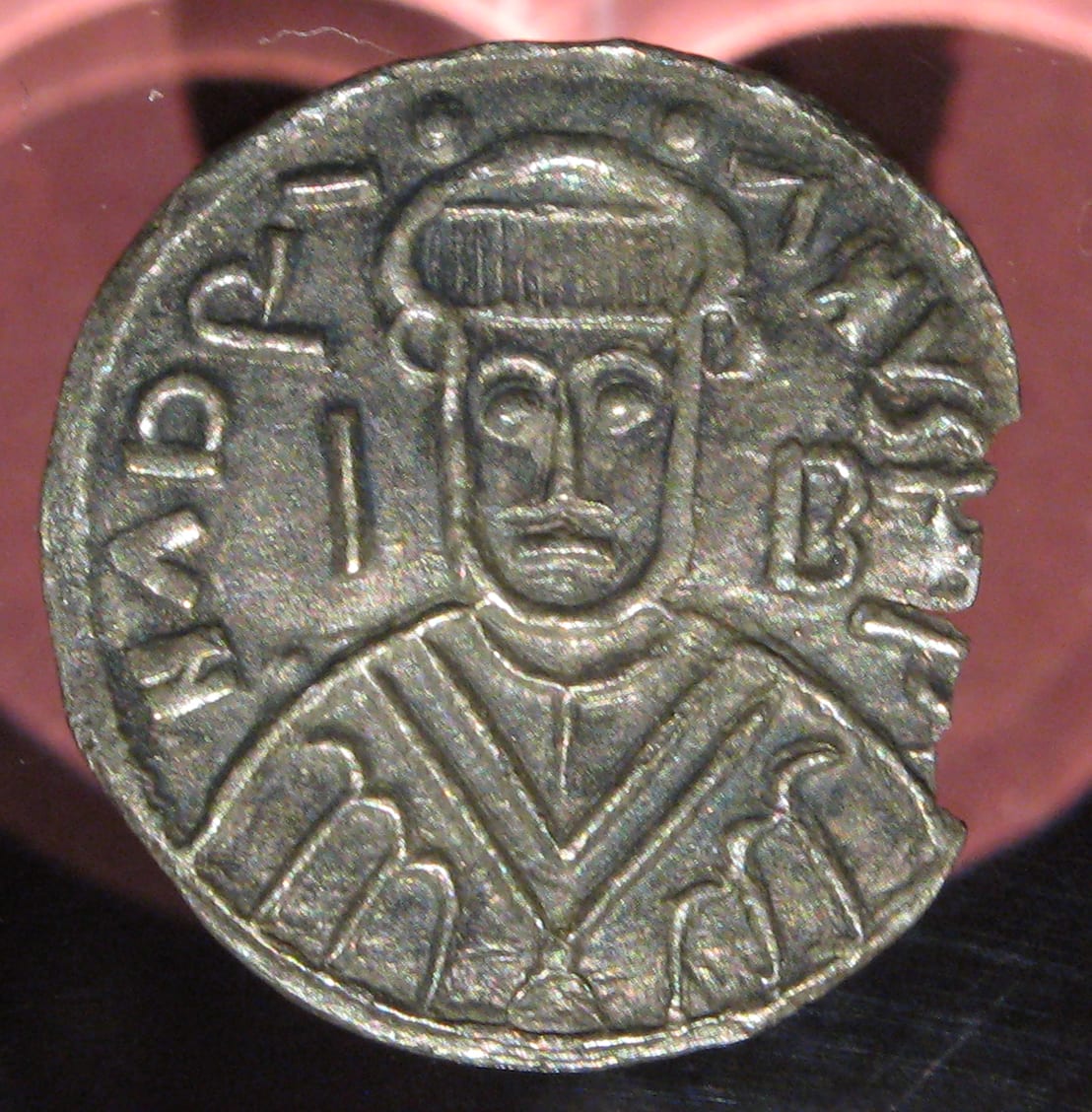
Adrian I succeeded Stephen III in 772 and reigned twenty-three years — the longest 8th-century pontificate. His reign coincided exactly with the rise of Charlemagne, with whom he maintained continuous correspondence and the closest collaboration of any pope and king in early medieval history.
He confirmed the Carolingian conquest of the Lombards in 774 and received from Charlemagne the renewal of the Donation of Pippin that established the territorial basis of the medieval Papal States. He summoned through his legates and confirmed the Second Council of Nicaea (787), the Seventh Ecumenical Council, which formally restored the veneration of icons in the East and closed the iconoclast controversy.
He restored multiple Roman basilicas and undertook the largest building program at Rome since Constantine — refortifying the city walls, building the great aqueducts, restoring San Pietro. He governed Rome during the years of its transition from Byzantine outpost to the spiritual capital of the Christian West.
He died on Christmas Day 795. Charlemagne mourned him 'as a brother and a most beloved father,' commissioning a great epitaph in black marble that still survives, set in the portico of St. Peter's.