
Adrian II was elected on December 14, 867 at the age of 75 — at first refusing the election (he had been a widowered cardinal-presbyter; his wife Stephania had been alive at the time of his diaconal ordination, in the Carolingian-era pre-Gregorian-Reform tradition of married clergy who became celibate at higher orders).
His pontificate immediately faced two crises: the personal tragedy of his daughter (also named Stephania) being kidnapped and murdered by Eleutherius, son of Bishop Arsenius — a private grief mingled with public scandal in the heart of his pontificate; and the continuing Photian schism inherited from Nicholas I.
Adrian II's most consequential act was the convocation of the Fourth Council of Constantinople (869–870) — counted by the Latin Catholic Church as the Eighth Ecumenical Council. The council deposed the Patriarch Photios I of Constantinople and restored the previous Patriarch Ignatius — the temporary resolution of the Photian schism, though it would reopen in 879 under his successor John VIII.
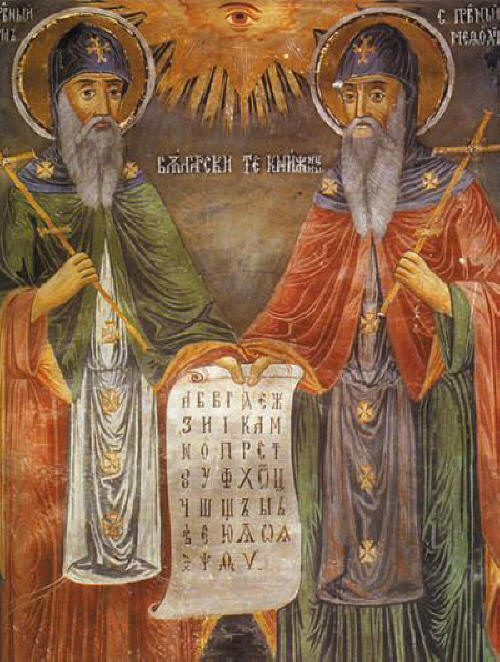
Adrian II received the Slavic-mission brothers Sts. Cyril and Methodius in Rome (867–869) — approving the Slavonic liturgical translation, consecrating Methodius as missionary bishop to the Slavs, and burying Cyril at the basilica of San Clemente in Rome (where his tomb survives in active Catholic veneration to the present day, re-discovered in 1857 by Joseph Mullooly, OP). The Slavonic-liturgy approval is the institutional birth of the Catholic Slavic-Rite tradition that survives today in the Croatian Glagolitic Catholic rite.
He died on December 14, 872, leaving his successor John VIII the task of continuing the Cyrillo-Methodian Slavic mission and the ongoing Photian controversy.