
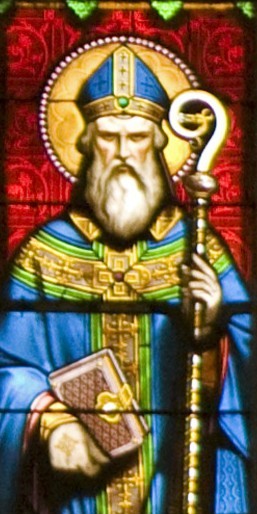
Agapitus I (Latin Agapitus) was elected Bishop of Rome on May 13, 535 — at the very beginning of the catastrophic Justinianic-Gothic War (535–554) that would destroy the Ostrogothic kingdom of Italy and devastate the Italian peninsula for two generations. His brief ten-month pontificate was almost entirely consumed by the diplomatic mission to Constantinople that gives his pontificate its principal significance.
Before his papal election, Agapitus had been a substantial personal collaborator of Cassiodorus (see Cassiodorus's entry below) in the foundational Roman papal library project: the plan to establish at Rome a substantial Christian-Latin-Greek scholarly library on the foundational model of the great Catechetical School of Alexandria. Cassiodorus had purchased the substantial library and library-building infrastructure necessary, and the project was on the verge of beginning when the Gothic War broke out and forced the abandonment of the Roman foundation (Cassiodorus would eventually realize the project decades later at his retirement-monastery of Vivarium in southern Calabria — see Cassiodorus's entry).
In late 535, the Ostrogothic King Theodahad — desperate to forestall the Justinianic invasion of Italy that was about to begin — sent Agapitus as his personal ambassador to the Emperor Justinian I at Constantinople to attempt diplomatic resolution. Agapitus arrived at Constantinople in February 536. The mission failed diplomatically (Justinian was committed to the war); but it succeeded theologically: Agapitus discovered that Anthimus, the recently-elected Patriarch of Constantinople, was a secret crypto-Monophysite who had been imposed on the see by the Empress Theodora. Agapitus formally deposed Anthimus, consecrated Mennas as the new Catholic Patriarch of Constantinople, and convened the first Roman papal council on Eastern soil.
He died at Constantinople on April 22, 536, of an unspecified illness — only two months into the long Gothic-Justinianic catastrophe that would devastate Italy. His body was returned to Rome around 540 and buried at the Basilica of San Lorenzo fuori le Mura.