
MIRACULOUS MIRACLES™

Saint — Pope St. Alexander I

Pope St. Alexander I
c. 75 AD, Rome — c. 115 AD, Rome
Sixth Successor of Peter — Pope (c. 108–c. 115)
Catacombs of the Via Nomentana (Sant'Alessandro), Rome, Italy
♕ The 6th Bishop of RomeReign: c. 108 — c. 115
Feast
May 3 (formerly); now omitted from the universal calendar but retained at local Roman level
✠ MartyrMartyred at Rome under Hadrian (per tradition), c. 115 → The Martyrs
Life

Alexander I succeeded Evaristus around AD 108 and governed the Roman Christian community for some seven years until his own martyrdom around AD 115. The Liber Pontificalis attributes to him the institutional decision of including the narrative of the Last Supper in the celebration of the Eucharist (the foundational moment of what became the Words of Institution in the Roman Canon) — though again the historical reliability of this 6th-century source for the early papal liturgical history is contested.

He was buried in the catacombs along the Via Nomentana (about seven miles outside the city walls) — the catacombs now called Sant'Alessandro, which were rediscovered and partly excavated in 1855 and which contain inscriptions from his cult continuous from the 4th century. The Roman tradition associates him with two other Roman martyrs (Eventius and Theodulus) traditionally martyred at the same location.

Relics
  • Body
    Tomb of Pope St. Alexander I
    Catacombs of Sant'Alessandro, Via Nomentana, Rome

    His relics are at the catacombs along the Via Nomentana that bear his name, with some translation also to the Roman church of Santa Sabina on the Aventine in the medieval period.

Iconography
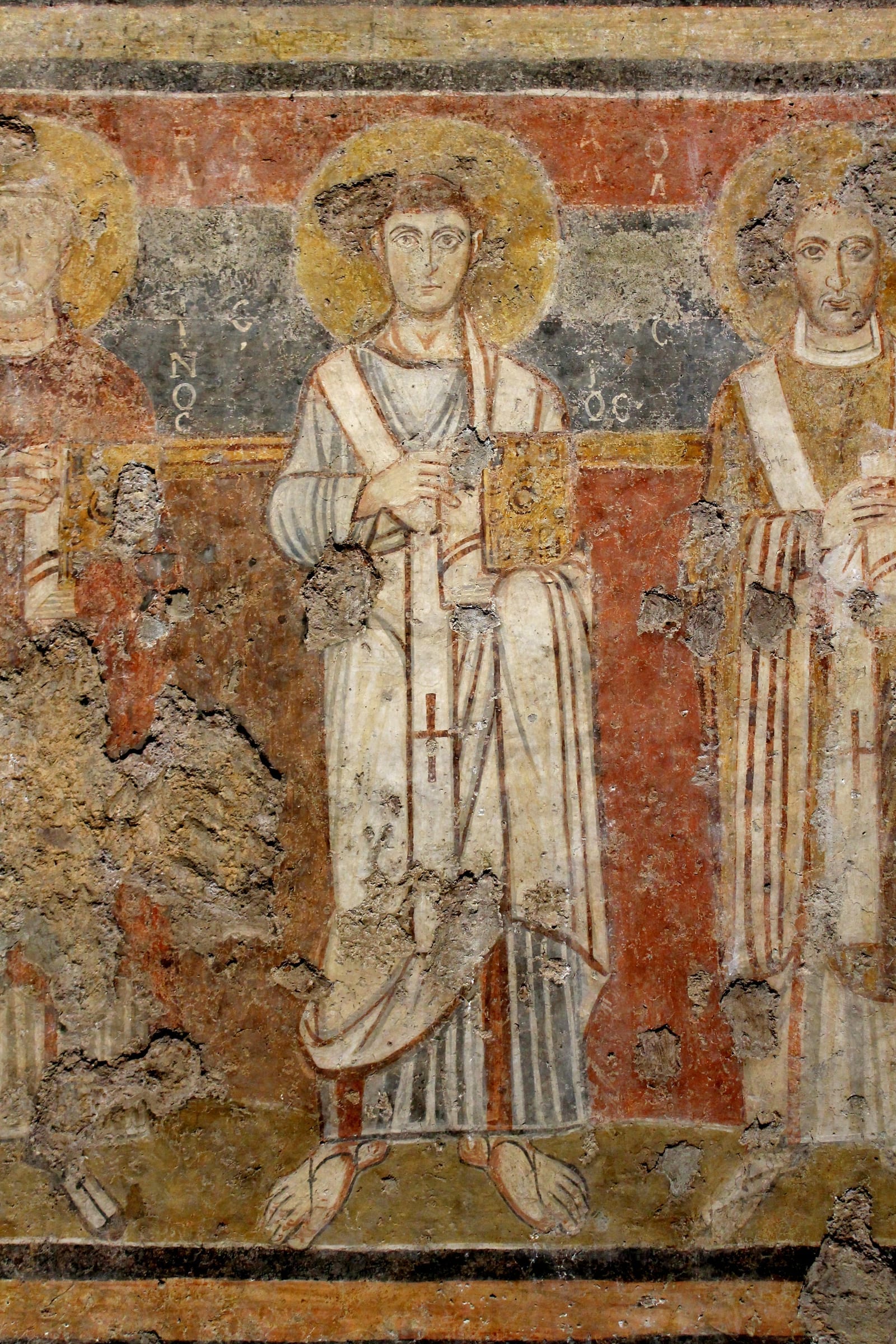
  • Alexander I with the Roman Canon

    The early Roman pope at a small altar holding the bread and wine, the open Gospel-book before him — the iconography of the early Roman papal liturgical tradition.

Patronages
The Catacombs of the NomentanaThe early Roman martyrs