
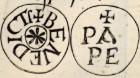
Benedict III was elected in July 855 after the death of Leo IV — but his election was contested by the imperial-Carolingian-backed candidate Anastasius (later known as Anastasius Bibliothecarius, the Latin scholar-cardinal of the Photian-controversy era).
The contested election of 855 was resolved when the Roman clergy and people, supported by the Frankish bishops of the imperial delegation, rejected the Anastasian candidacy and confirmed Benedict III's election. Anastasius was degraded from his cardinal-presbyter rank — though he would later return to prominence as the papal librarian (Bibliothecarius) and Latin theological translator-interpreter under Nicholas I.
Benedict III's three-year pontificate (855–858) was devoted to the restoration of the basilicas damaged in the 846 Saracen sack and the diplomatic management of the Anglo-Saxon-Frankish-papal relations under King Æthelwulf of Wessex (Alfred the Great's father), who made the royal pilgrimage to Rome in 855 with his five-year-old son Alfred — the Alfred the Great's first papal blessing.
He died on April 17, 858; his successor would be the Nicholas I the Great, the towering pope of the 9th century. The so-called 'Pope Joan' legend is located by medieval tradition between Leo IV and Benedict III — the anachronistic 13th-century invention refuted by the continuous documented historical sequence of the 9th-century papacy.