
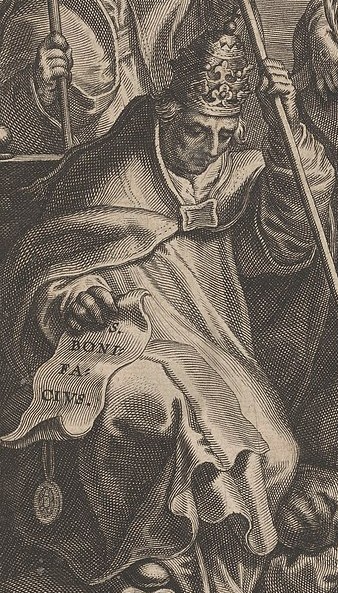
Boniface I succeeded Zosimus as Bishop of Rome at the end of December 418 — but the succession was contested. Two days after Zosimus's death, a faction of the Roman clergy elected the deacon Eulalius pope in the Lateran basilica; the next day, a separate faction of the Roman presbyters elected the elderly priest Boniface pope at the Basilica of San Marcello. The two parties brought the dispute to the Emperor Honorius (the Western Emperor at Ravenna), who initially recognized Eulalius but then — after a substantial Italian Catholic episcopal synod ruled in favour of Boniface — confirmed Boniface as the legitimate pope on April 3, 419. The Eulalian Schism — though brief — was the first major contested papal election after the Marcellinus-era lapsi controversies and established important canonical precedents for the future Catholic episcopal-election system.
Boniface's three-and-a-half-year pontificate was principally devoted to the defence of the Roman papal jurisdiction in the so-called Illyrian dispute: the question of whether the dioceses of the Roman province of Illyricum Orientale (the Balkans, including Thessalonica) belonged to the jurisdiction of the Bishop of Rome or to the Bishop of Constantinople. The Emperor Theodosius II had ruled (414) in favour of Constantinopolitan jurisdiction; Boniface successfully appealed to Theodosius's father Honorius (the Western Emperor) and to Theodosius himself, and the imperial ruling was reversed. The matter would re-erupt at the Council of Chalcedon in 451 (under Pope Leo I — see Leo's entry already in the catalogue), but Boniface's foundational intervention was decisive.
Boniface also corresponded extensively with Augustine of Hippo on the post-Pelagian theological controversies of the period; Augustine dedicated to Boniface his four-book Contra Duas Epistulas Pelagianorum (Against Two Letters of the Pelagians) of 420. He died at Rome on September 4, 422.