
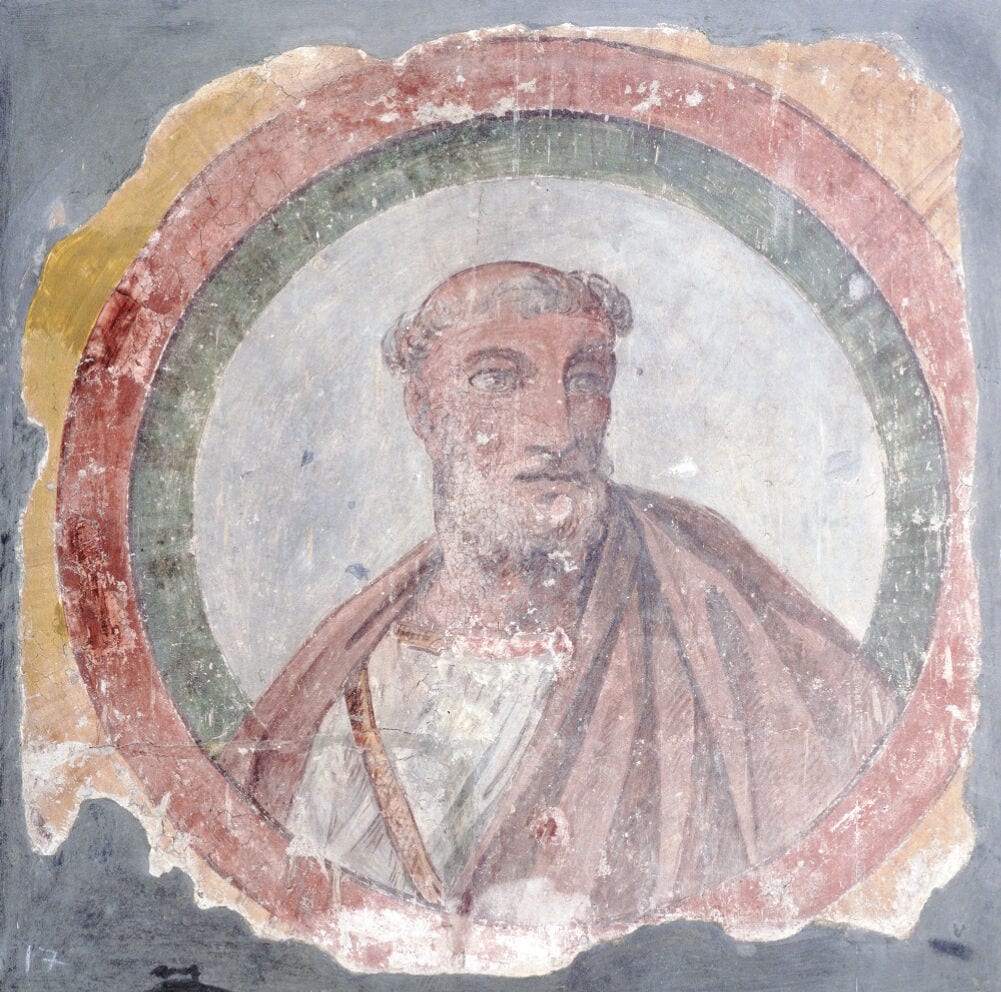
Callixtus was a slave who worked as bank manager for his Christian master Carpophorus. After bankrupting the bank's deposits and being condemned to the mines of Sardinia, he was released through the intervention of Pope Victor I. Under Pope Zephyrinus (199–217) he was put in charge of the Christian cemetery on the Appian Way — the Catacomb of San Callisto, which bears his name to this day and is the largest of the Roman catacombs.
Elected pope to succeed Zephyrinus in 217, he reigned five years in the midst of intense controversy. The antipope Hippolytus, with whom he disputed over the Church's penitential discipline, regarded him as far too lenient — Callixtus restored to communion those who had committed grave sin after Baptism, the foundational papal exercise of the doctrine of forgiveness that the Lateran Synods would later formalize.
He was martyred — by tradition, by being thrown down a well in Trastevere — on October 14, 222. He is buried in the Catacomb of San Calepodio, not the one named for him.