
MIRACULOUS MIRACLES™

Saint — Pope Clement VI

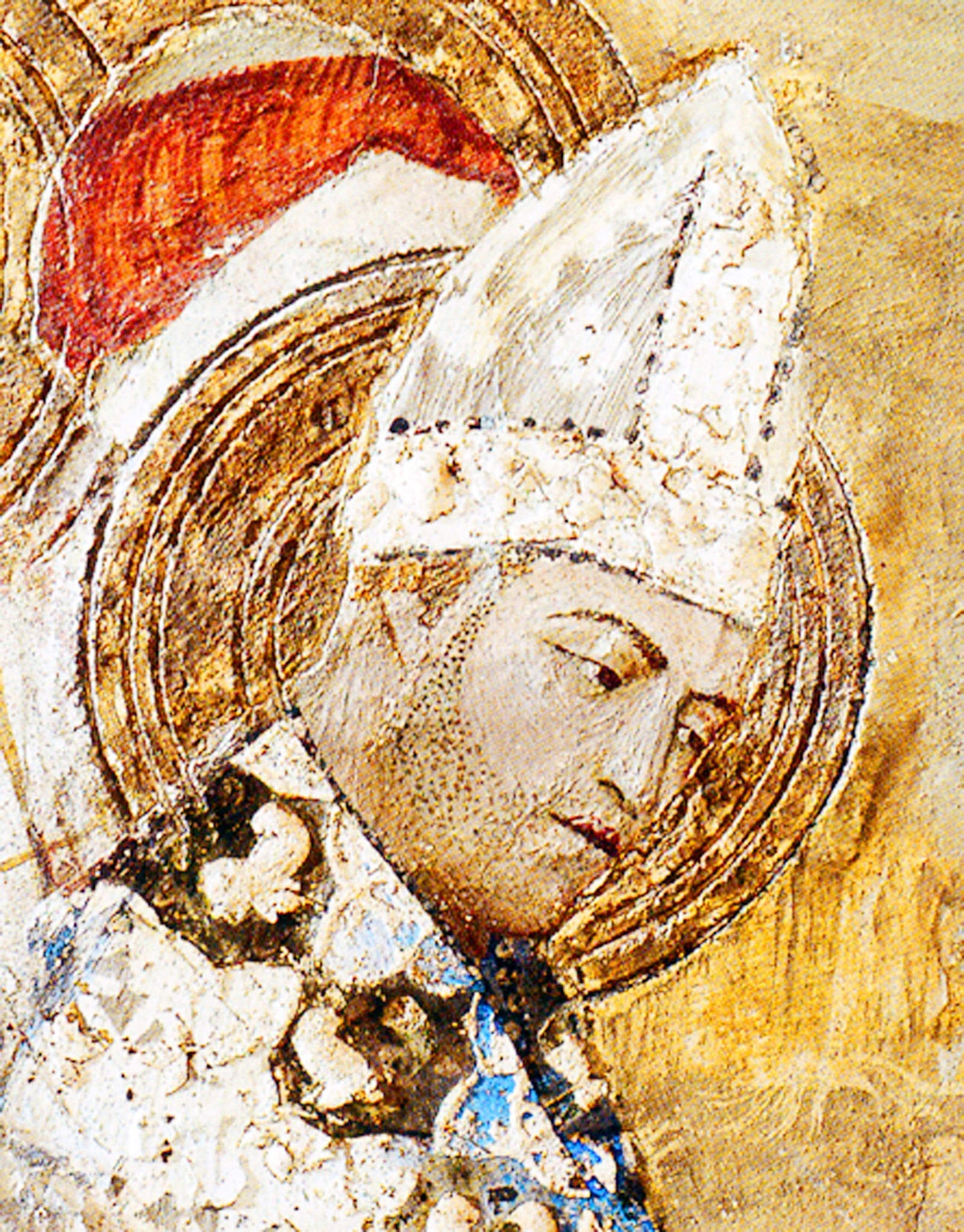
Pope Clement VI
1291 AD, Château de Maumont, Corrèze, Limousin (French Limousin family — Pierre Roger) — December 6, 1352 AD, Avignon, Papal States
198th Pope (1342–1352); Black Death Pope; patron of the Papal Palace of Avignon
Abbey of La Chaise-Dieu, Auvergne, France — his Benedictine monastic origin; the Gothic abbey-church (built 1344–1352 under Clement's papal patronage) preserves his tomb, France
Feast
December 6 (not on the universal calendar; not formally canonized)
Canonized
Not canonized
Life

Pierre Roger was born in 1291 at the Château de Maumont in Corrèze to a French Limousin noble family. At the age of 10 (1301), he entered the Benedictine Abbey of La Chaise-Dieu (the Auvergne abbey of St. Robert of Chaise-Dieu) as a child oblate.

Educated at the University of Paris, Pierre Roger became Doctor of Theology and Abbot of Fécamp (1327–1329), then Bishop of Arras (1328), Archbishop of Sens (1329), and Archbishop of Rouen (1330–1338).

On the death of Pope Benedict XII (April 25, 1342), Pierre Roger was elected Pope on May 7, 1342, taking the papal name Clement VI.

Clement VI's ten-year pontificate (1342–1352) coincided with two catastrophic events: the Black Death (1348–1350, the bubonic plague epidemic that killed an estimated one-third to one-half of the European population) and the continuing Hundred Years' War (1337–1453) between France and England.

Clement VI's pastoral response to the Black Death is one of the principal medieval Catholic pastoral-ecclesiastical narratives. During the plague's arrival at Avignon in spring 1348, Clement VI: ordered continuous Masses to be celebrated for the plague victims; personally led papal processions through the Avignon streets with the papal cross; issued the papal bull 'Sicut Judaeis' (1348) protecting the European Jewish population from the plague-blame pogroms that erupted across Christian Europe (over 1,000 Jewish communities attacked during the plague years, producing tens of thousands of Jewish deaths); established the 'Plenary Indulgence for the Plague' for the dying; and personally purchased the sovereignty of the Comtat Venaissin (including Avignon proper, purchased from Queen Joanna I of Naples for 80,000 florins in 1348), institutionally establishing the papal territorial sovereignty at Avignon.

Clement VI undertook the massive expansion of the Palais des Papes (Papal Palace) at Avignon — commissioning the construction of the 'New Palace' (the second and larger portion of the current Palais des Papes, built 1344–1352 under Clement's patronage). The Palais des Papes — the largest Gothic palace in Europe, UNESCO World Heritage Site since 1995 — established the Avignon papal architectural-cultural tradition.

He died at Avignon on December 6, 1352, and was buried at his native Abbey of La Chaise-Dieu, where the late-Gothic abbey-church (built 1344–1352 under his papal patronage) preserves his tomb.

Miracles & Phenomena
  • The pastoral response to the Black Death (1348–1350)

    Clement VI's pastoral response to the Black Death — the papal bull 'Sicut Judaeis' protecting the European Jewish population from the plague-blame pogroms, the continuous Masses for the plague victims, the Plenary Indulgence for the Plague dying, the personal papal processions — institutionally represents the medieval Catholic institutional pastoral response to the most catastrophic epidemic in European history. The Clement-VI papal defence of the European Jews — in the continuing pattern established by Popes Innocent III, Gregory IX, and Innocent IV — established the continuing Catholic papal protection of the Jewish communities that would extend through the late-medieval and early-modern Catholic tradition.

  • The Palais des Papes at Avignon (UNESCO World Heritage Site)

    Clement VI's massive expansion of the Palais des Papes at Avignon — commissioning the construction of the 'New Palace' between 1344 and 1352 — established the Avignon papal architectural-cultural tradition. The Palais des Papes, the largest Gothic palace in Europe, is a UNESCO World Heritage Site since 1995 and one of the principal late-medieval Catholic architectural monuments.

Relics
  • Body
    Tomb of Pope Clement VI
    Abbey of La Chaise-Dieu, Auvergne, France — his Benedictine monastic origin; the late-Gothic abbey-church built 1344–1352 under Clement's papal patronage preserves his tomb

    His tomb at the Abbey of La Chaise-Dieu in Auvergne — in the late-Gothic abbey-church built under his papal patronage — survives in continuous Catholic liturgical use.

Iconography
  • Clement VI issuing Sicut Judaeis during the Black Death

    The mid-14th-century French Roman pope in papal vestments at the Palais des Papes at Avignon in 1348 issuing the papal bull 'Sicut Judaeis' protecting the European Jewish population from the plague-blame pogroms — the iconography of Catholic Avignon-papal pastoral tradition.

Patronages
The Avignon papacy tradition (fourth Avignon pope; principal patron of the Palais des Papes)Catholic Black Death pastoral tradition (Clement's pastoral response to the 1348–1350 Black Death epidemic)La Chaise-Dieu and the Auvergne Catholic tradition