
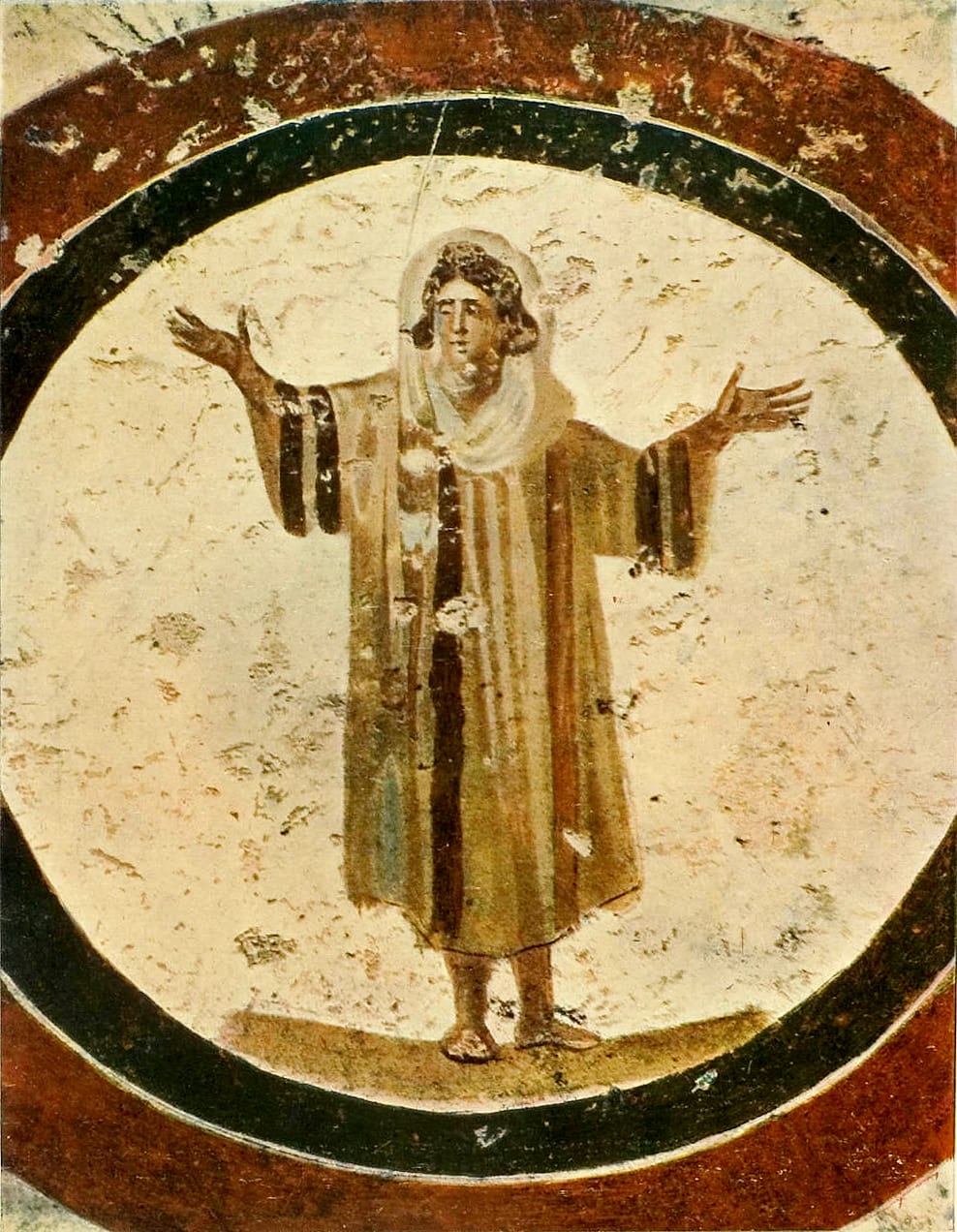
Eusebius (Greek Eusebios, 'pious') was elected Bishop of Rome on April 18, 310 — a year after his predecessor Marcellus's death — and governed the Roman Christian community for only four months before his own exile and death. His brief reign was dominated by the same post-Diocletianic crisis over the readmission of the lapsi that had destroyed his predecessor.
Eusebius — following Marcellus's strict line — insisted on public penance for readmission. The lax faction (now under the leadership of an antipope named Heraclius) continued to riot against the Roman papacy on the question. The Emperor Maxentius — using the same template he had used against Marcellus — exiled both Eusebius and Heraclius from Rome to Sicily. Eusebius died there on August 17, 310, perhaps a hundred and twenty days after his original election.
His body was returned to Rome and buried at the Catacombs of San Callisto. His tomb-inscription — composed by his successor Pope Miltiades and discovered by Giovanni Battista de Rossi in the 19th century — is one of the most-historically-important early-4th-century papal inscriptions, explicitly recording the lapsi-controversy context and the role of the antipope Heraclius. He is the only pope of the immediate pre-Constantinian era buried in the Crypt of the Popes who is documented with such precise historical context.