
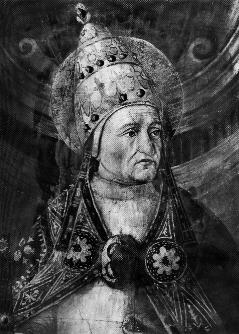
Felix I succeeded Dionysius as Bishop of Rome in 269 and governed the Roman community for five years through the early reign of the emperor Aurelian. His pontificate is principally significant for the Roman papal role in the resolution of the Paul of Samosata crisis at Antioch.
Paul of Samosata, Bishop of Antioch from 260, had been teaching a strict adoptionist Christology — that Christ was only a man into whom the divine Logos descended at his baptism, not the eternally pre-existent Son of God. Multiple councils of Asian bishops had attempted to depose him without success; the third council at Antioch in 268–269 had formally deposed him and elected Domnus as the new Bishop of Antioch. Paul refused to vacate the episcopal residence at Antioch.
The Emperor Aurelian — when appealed to by the council — issued his famous ruling that the Antiochene episcopal residence should be given to whoever was 'recognized as bishop by the bishop of Rome and by the bishops of Italy' (preserved in Eusebius, Church History 7.30). Aurelian's pagan-emperor ruling — explicitly recognizing the Roman bishop as the doctrinal arbiter of intra-Christian disputes — is one of the foundational early-pagan attestations of the Roman primacy. Felix I's role in confirming Domnus as legitimate Bishop of Antioch was the immediate occasion of the imperial ruling. Felix himself died in 274 and is buried in the Crypt of the Popes.