
MIRACULOUS MIRACLES™

Saint — Pope Formosus

Pope Formosus
c. 816 AD, Ostia (region of Rome) — April 4, 896 AD, Rome — natural death, but his corpse was posthumously exhumed and put on trial nine months later in the notorious Cadaver Synod of January 897
111th Pope (891–896); subject of the notorious Cadaver Synod of 897
St. Peter's Basilica, Rome — original tomb (897 exhumed and thrown into the Tiber; subsequently restored and re-buried in St. Peter's after the Cadaver Synod's revocation), Vatican City
Feast
Not in the universal Catholic calendar (his pontifical legitimacy was confirmed by the papal revocations of the Cadaver Synod)
Canonized
Not canonized; remembered as the victim of the most notorious posthumous trial in Catholic history
Life

Formosus was one of the most controversial figures of the late-9th-century Roman papacy. He had been consecrated Bishop of Porto (suburbicarian see near Rome) in 864 under Pope Nicholas I, and served as papal legate to the Bulgarian conversion mission of Khan Boris I in the 860s.

Under Pope John VIII (872–882), Formosus was accused of conspiring against the papal authority, deposed, excommunicated, and exiled. He was rehabilitated by Pope Marinus I in 883 and restored to his see of Porto under Adrian III and Stephen V.

On the death of Stephen V in 891, Formosus was elected pope — the first pope to have been bishop of two separate sees before his papal election (Porto, then Rome), a canonical irregularity that would provide the political pretext for his posthumous trial.

His five-year pontificate (891–896) was devoted to the management of the disintegrating Italian-imperial situation: he crowned the Saxon king Arnulf of Carinthia (the successor of Charles the Fat in East Francia) as emperor in 896 — angering the Spoletan party of Lambert of Spoleto (whose father Guy III Formosus had previously crowned).

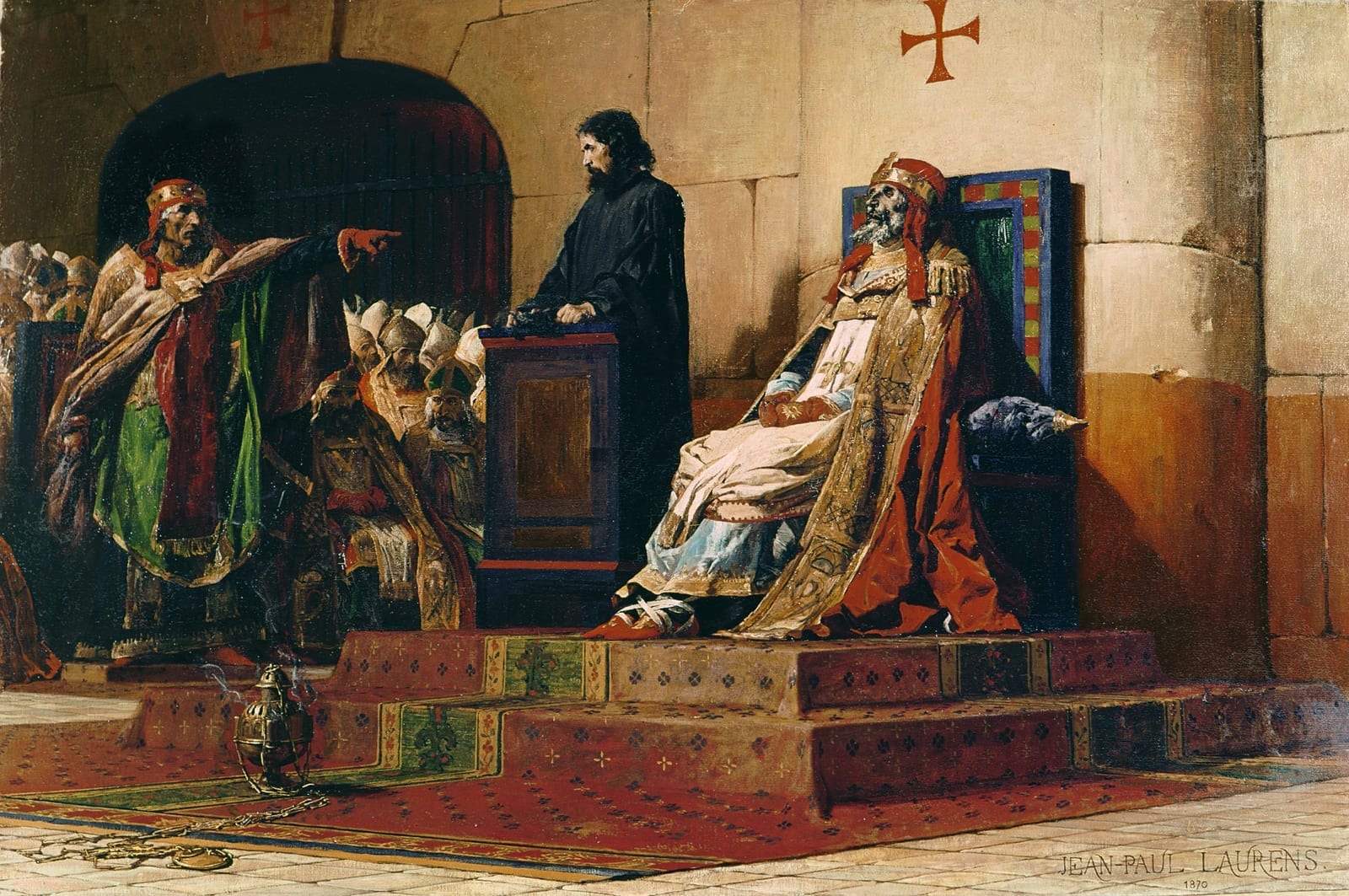
Formosus died of natural causes on April 4, 896. Nine months later, his successor (after the fourteen-day pontificate of Boniface VI) Pope Stephen VI (896–897) — a partisan of the Spoletan party — exhumed the corpse of Formosus, clothed it in papal vestments, placed it on the papal throne, and subjected it to ecclesiastical trial: the Cadaver Synod (Synodus Horrenda) of January 897.

The corpse was found guilty of perjury, episcopal-translation irregularity (in crossing from Porto to Rome), and usurpation. The three fingers of the right hand (the fingers of papal blessing) were cut off; the vestments were stripped; and the corpse was thrown into the Tiber.

The Cadaver Synod provoked popular revolt in Rome; Stephen VI was deposed and strangled in prison; the Cadaver Synod's decrees were formally annulled by popes (Theodore II, John IX, Sergius III). The episode is among the darkest in Catholic papal history and the opening act of the saeculum obscurum.

Miracles & Phenomena
  • The Tiber recovery of the corpse

    Tradition recorded in the Liber Pontificalis records that after the Cadaver Synod threw the corpse of Formosus into the Tiber, the body was recovered by pious Catholic Romans, restored in secret to its episcopal vestments, and buried in St. Peter's by Pope Theodore II — and that at the re-burial, the papal images of the saints in the basilica bowed to the restored corpse in vindication of the unjustly-condemned pope. The legend is the hagiographic memory of the Catholic-Roman popular vindication of Formosus.

  • The legal precedent of papal-translation acceptability

    The papal revocations of the Cadaver Synod's condemnation of Formosus's episcopal translation from Porto to Rome — by Popes Theodore II (897) and John IX (898) — established the definitive canonical principle that the episcopal translation of a bishop to the papal see is fully canonical. The precedent is institutional in the entire medieval and modern Catholic practice of papal election from already-serving bishops.

Relics
  • Body
    Tomb of Pope Formosus
    Vatican grottoes, St. Peter's Basilica, Rome — original tomb desecrated in the Cadaver Synod of January 897; the corpse thrown into the Tiber, recovered, and re-buried in St. Peter's after the revocation of the Cadaver Synod

    Re-buried in St. Peter's after the vindication of his pontifical legitimacy by Popes Theodore II and John IX; remains in the Vatican necropolis. The Cadaver Synod desecration is the most notorious episcopal-trial episode in Catholic papal history.

Iconography
  • Formosus crowning Arnulf of Carinthia

    The late-9th-century Roman pope in papal vestments at St. Peter's Basilica placing the imperial crown on the kneeling Saxon king Arnulf of Carinthia in 896 — the coronation that would produce the political vendetta against the pope by the Spoletan party, and the political backdrop of the Cadaver Synod nine months later — the iconography of Catholic post-Carolingian imperial-papal-political tradition.

Patronages
Catholic victims of posthumous ecclesiastical-political vendettaCatholic episcopal-translation precedent (his double-translation as bishop of Porto, then to Rome)