
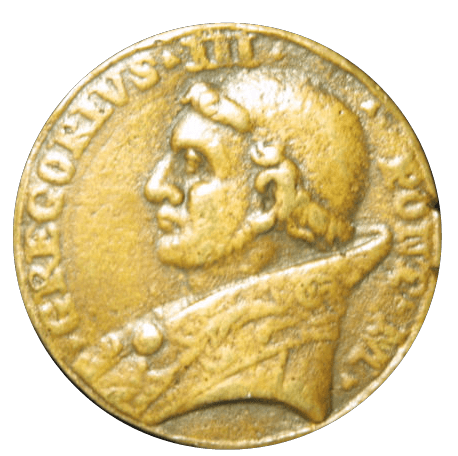
Gregory III was a Syrian — the last non-European pope until John Paul II in 1978 — elected to the papacy by acclamation as he walked in the funeral procession of his predecessor Gregory II in 731. His decade-long reign was dominated by two crises: the iconoclast campaign of the Eastern emperors, and the Lombard military advance on Rome.
He summoned a Roman synod of ninety-three bishops in November 731 that formally condemned iconoclasm and excommunicated those who had destroyed sacred images. The Emperor Leo III responded by transferring papal jurisdiction over the Greek-speaking dioceses of southern Italy, Sicily, and Illyricum to the Patriarchate of Constantinople — the schism, never fully healed, that would deepen over the next three centuries.
Threatened with Lombard conquest of Rome itself, Gregory III in 739 made the most consequential diplomatic decision of the early medieval papacy: he appealed directly to Charles Martel, the Frankish mayor of the palace, for armed protection. Charles declined, but Gregory's appeal opened the path for his son Pippin's intervention a decade later under Pope Zachary — the foundation of the Frankish-papal alliance that would produce Charlemagne, the Carolingian Empire, and the medieval papal states.