
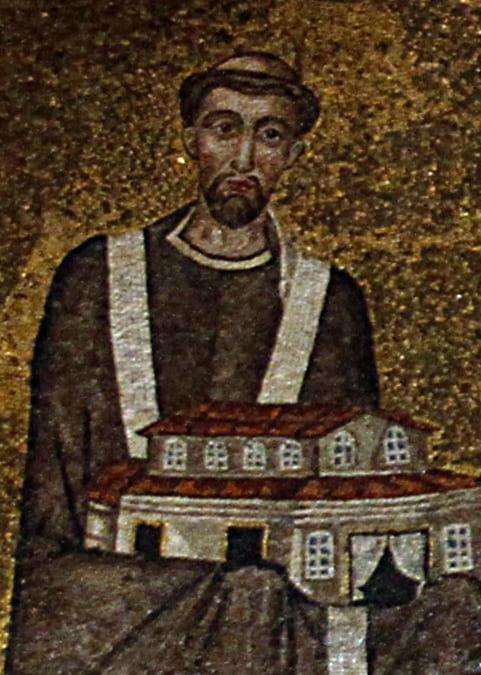
Honorius I (Latin Honorius) was a Capuan who succeeded Boniface V as Bishop of Rome on October 27, 625, and governed the Roman Catholic Church for 13 years until his death on October 12, 638. His pontificate is one of the most substantially controversial of the entire patristic period because of the Monothelite-theological correspondence that produced his posthumous condemnation by the Third Council of Constantinople (Constantinople III) in 681.
The Monothelite Controversy: the Patriarch Sergius of Constantinople (in office 610–638) had been attempting through the 620s and 630s to find a Christological formula acceptable to both the Chalcedonian-Catholic and the Monophysite-Miaphysite traditions through the new formula of Monothelitism (the doctrine that Christ had two natures but only one will — a substantial compromise that attempted to bridge the long Chalcedonian-Monophysite divide that had divided the Eastern Christian world since 451 AD). Sergius wrote to Pope Honorius I around 634 asking for Roman papal endorsement of the Monothelite formula.
Honorius's response — preserved partly in his two surviving letters to Sergius — was substantially imprudent and substantially compromised. His first letter (around 634) endorsed in substantial terms a Monothelite formulation ('we confess one will [una voluntas] of our Lord Jesus Christ'); his second letter (around 635) was substantially more guarded but still compromised. The Roman-papal endorsement gave Monothelitism substantial doctrinal credibility for the next forty years.
After Honorius's death in 638, the Monothelite controversy continued. The substantial Western-Catholic opposition to Monothelitism (led by Pope Theodore I, Pope Martin I, and Maximus the Confessor — see Maximus's entry already in the catalogue) eventually produced the foundational Catholic Lateran Council of 649 (which condemned Monothelitism) and the Third Council of Constantinople of 681 (which formally defined Catholic Dyothelitism — that Christ has two wills, one divine and one human, perfectly united).
Constantinople III also formally condemned Honorius I posthumously — by name — for his substantial Monothelite-tradition correspondence. The Honorius condemnation has been one of the most theologically-discussed events of patristic-period Catholic ecclesiology ever since: it is one of the foundational arguments addressed in the 19th-century First Vatican Council debates over the doctrinal definition of papal infallibility (Honorius's condemnation was cited by opponents of the infallibility doctrine as historical evidence against the doctrine; defenders of the infallibility doctrine argued that Honorius's letters were private theological correspondence rather than formal ex cathedra papal teaching and therefore did not fall under the scope of the infallibility doctrine).
Honorius's other substantial pontifical work included the foundational architectural rebuilding of the Roman Basilica of Sant'Agnese fuori le Mura (preserving substantially intact the foundational 7th-century apse mosaic, which remains one of the great surviving early-medieval Roman mosaic works). He died at Rome on October 12, 638.