
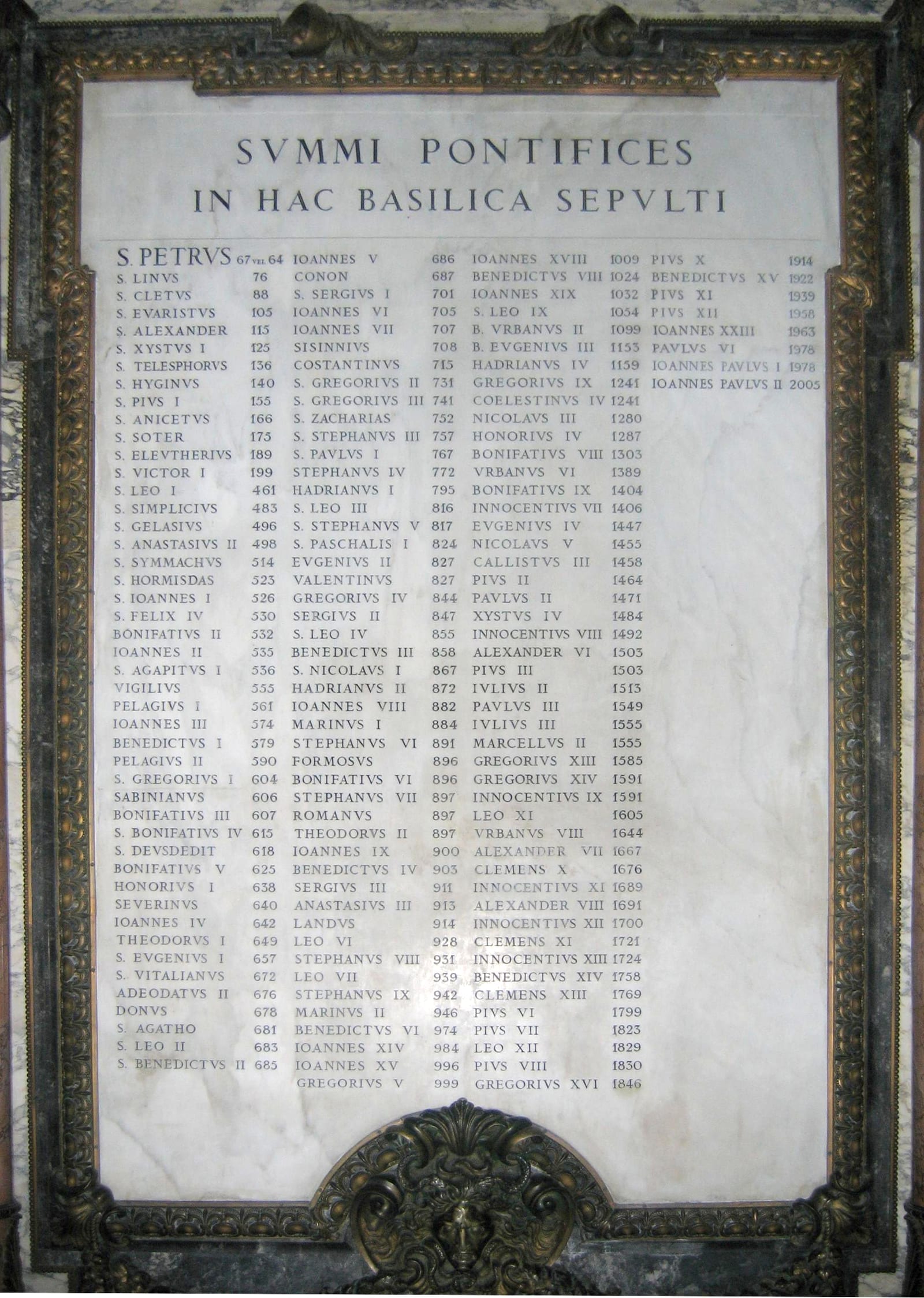
Hormisdas (Latin Hormisdas — a Persian-origin name; Hormisdas had been born in Italy of Greek-Italian family) was elected Bishop of Rome on July 20, 514, succeeding Symmachus. He had been married before his ordination and was the father of the future Pope Silverius (see Silverius's entry below) — one of the very rare father-son pairs among the popes. His nine-year pontificate is principally significant for the foundational healing of the Acacian Schism that had divided the Roman Catholic Church from the Eastern Patriarchate of Constantinople for thirty-five years.
The Acacian Schism (484–519) had begun with Pope Felix III's excommunication of the Constantinopolitan Patriarch Acacius in 484 for promulgating the imperial Henotikon (the Christological compromise document of the Emperor Zeno that had attempted to bridge the Chalcedonian-Monophysite divide but had been rejected by Rome). The schism had persisted through the reigns of five Eastern emperors (Zeno, Anastasius I, Justin I) and seven popes (Felix III, Gelasius I, Anastasius II, Symmachus, Hormisdas — and the Constantinopolitan patriarchs Acacius, Fravitas, Euphemius, Macedonius II, Timothy I, and finally John II).
When the Emperor Justin I (the uncle of the future Justinian I) succeeded Anastasius I in July 518 — a Latin-speaking Illyrian who was a firm Chalcedonian — the political context for ending the schism finally became possible. Hormisdas sent a Roman delegation to Constantinople with the foundational document known as the Libellus Hormisdae ('Formula of Hormisdas') — a substantial Latin theological-disciplinary statement explicitly reasserting the Chalcedonian Christological line, formally condemning Acacius, and asserting the foundational doctrine of Roman papal primacy ('in the apostolic see, the Catholic religion has always been preserved without spot, sicut in qua perfecta est et incolumis Catholica conservatur religio').
On March 28, 519 (Holy Thursday) — Patriarch John II of Constantinople, the Emperor Justin I, and approximately 200 Eastern bishops formally signed the Libellus Hormisdae at Constantinople. The signature ended the 35-year Acacian Schism. Justin I had the names of Acacius and the four subsequent schismatic Constantinopolitan patriarchs formally struck from the Eastern diptychs. The Libellus Hormisdae has remained one of the foundational Roman-papal-primacy documents and is repeatedly cited in the medieval and modern Catholic tradition.