
MIRACULOUS MIRACLES™

Saint — Pope St. Hyginus

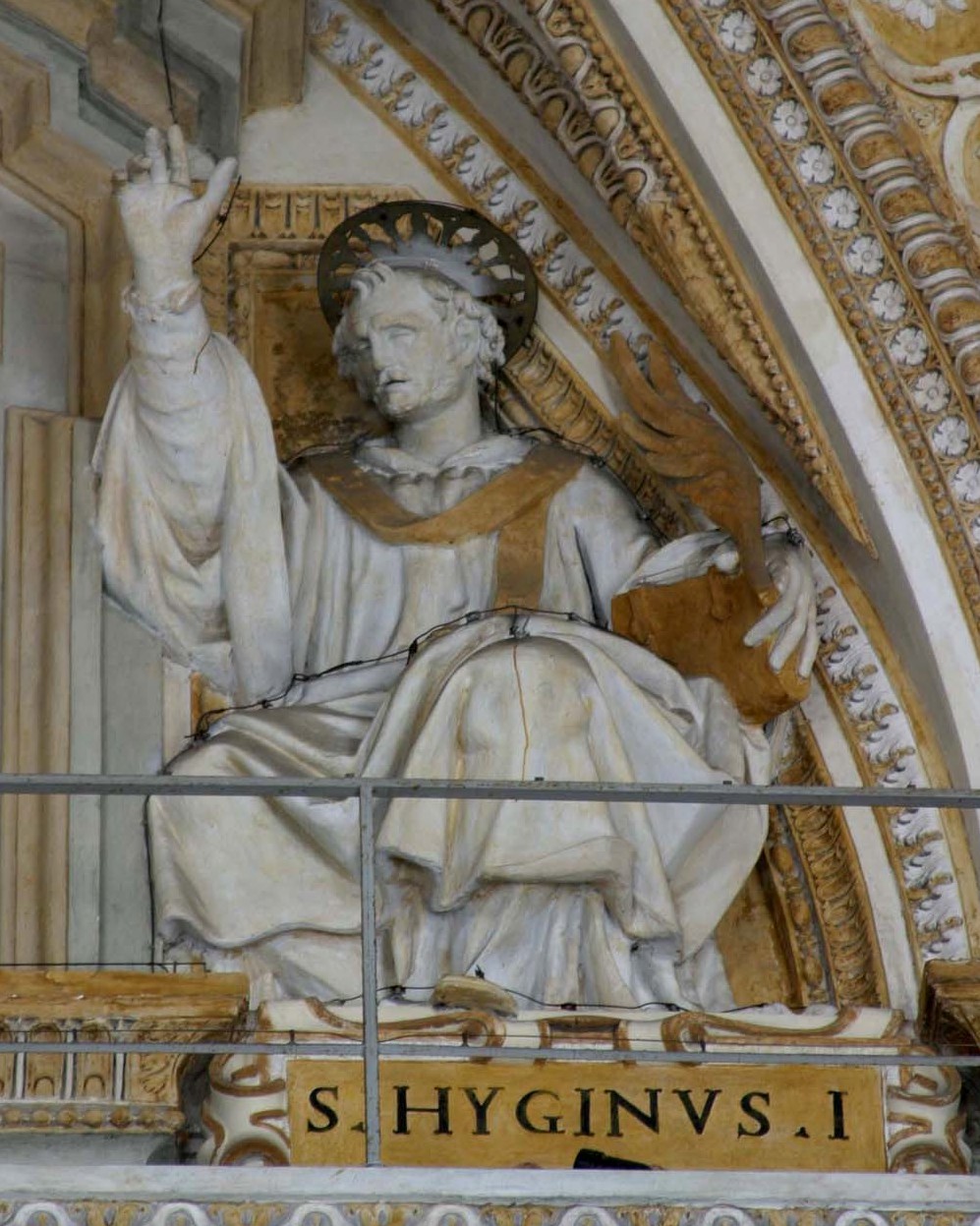
Pope St. Hyginus
Late 1st century, Athens (per the Liber Pontificalis, 'a Greek philosopher') — c. 142 AD, Rome
Ninth Successor of Peter — Pope (c. 138–c. 142) — Greek Philosopher of Athens
St. Peter's Basilica, Vatican — early papal tombs, Vatican City
♕ The 9th Bishop of RomeReign: c. 138 — c. 142
Feast
January 11 (formerly); now omitted from the universal calendar but retained at local Roman level
✠ MartyrMartyred at Rome, c. 142 (per the Liber Pontificalis); no circumstances known → The Martyrs
Life

Hyginus (Greek Hygeinos, 'healthy') was a Greek philosopher from Athens, per the Liber Pontificalis — the second of the four early popes of presumed Greek philosophical formation (with Telesphorus, Eleuterus, and the apologist-influenced Anicetus). He succeeded Telesphorus around AD 138 at the very start of the reign of Antoninus Pius.

The Liber Pontificalis attributes to him the formal institution of the clerical orders below the diaconate — the so-called 'minor orders' of acolyte, exorcist, lector, and porter — which became the foundational pattern of the Latin clerical hierarchy until the 1972 Vatican II reform replaced the medieval minor orders with the ministries of lector and acolyte. He also confronted the early gnostic teachers Valentinus and Cerdo, who arrived at Rome during his reign and began to teach there.

His four-year pontificate was brief and is sparsely documented; the Liber Pontificalis records his martyrdom but no specific circumstances are known. He is buried at the Vatican near the tomb of Peter.

Relics
  • Body
    Tomb of Pope St. Hyginus
    St. Peter's Basilica, Vatican — early papal tombs section

    His relics rest at the Vatican near the tomb of St. Peter.

Iconography
  • Hyginus organizing the minor orders

    The early Roman pope ordaining acolytes, exorcists, lectors, and porters in a small Roman house-church — the iconography of the foundational Roman clerical hierarchy.

Patronages
The institutional organization of the early Roman clergyCatholic engagement with Greek philosophy