
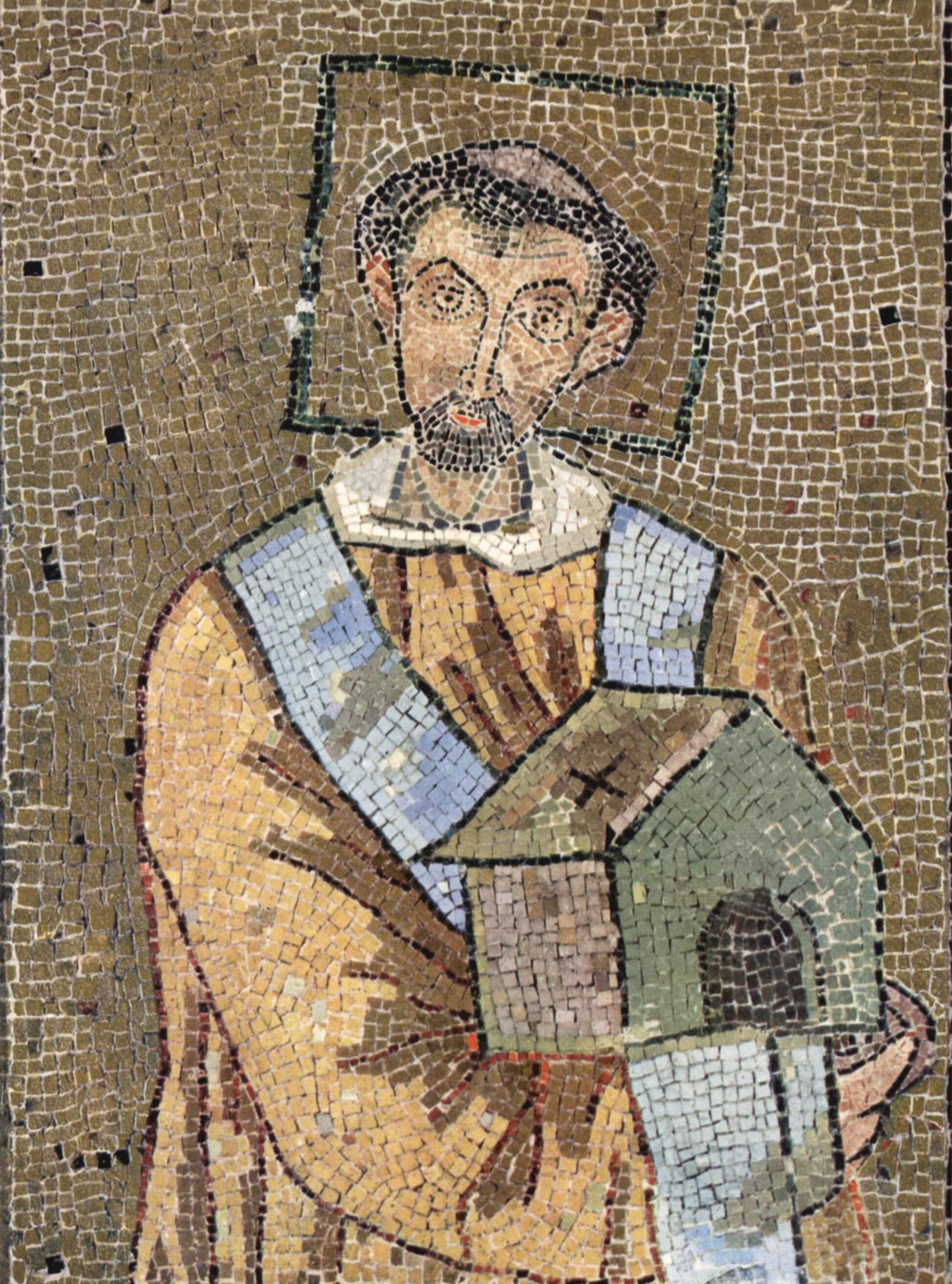
John VII was born around 650 in Rossano, Calabria, son of Plato, the imperial Byzantine curator of the Palatine palace in Rome — placing him in the elite Greek-Italian administrative class that bridged Byzantine and papal Rome.
Elected on March 1, 705, his short pontificate is foundational for Roman Marian iconography. He commissioned the great Oratory of the Virgin in the porch of old St. Peter's Basilica — a chapel entirely dedicated to images of the Virgin Mary, with surviving 8th-century fragments (now in the Vatican grottoes, San Marco in Florence, and the church of Santa Maria in Cosmedin) demonstrating the introduction of Byzantine Marian iconographic types into the Latin West.
He also restored the great basilica of Santa Maria Antiqua in the Roman Forum — adorning it with the foundational early-8th-century cycle of frescoes (still partly visible) depicting the lives of Christ, the Virgin, and the saints in a fully developed Byzantine iconographic style. The Santa Maria Antiqua frescoes are the most important surviving early-medieval Roman fresco cycle, the missing link between late-antique catacomb painting and the later Carolingian and Byzantine traditions.
John VII confirmed the canons of the Council of Trullo with some reservations — a more conciliatory stance than his predecessor Sergius I — and is sometimes criticised in later Latin tradition for this. He died on October 18, 707, and was buried in his own Marian oratory at St. Peter's.