
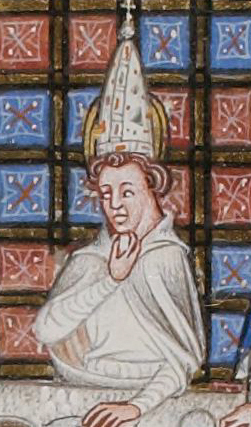
John VIII was elected on December 14, 872 — succeeding Adrian II — and his ten-year pontificate is one of the most consequential and dramatic of the 9th century.
He inherited the ongoing Saracen threat against Rome and central Italy. After diplomatic appeals to the Carolingian emperors had failed to produce decisive military action, John VIII took the unprecedented step of personally leading the papal fleet — equipping galleys in the papal-Roman shipyards and defeating the Saracen fleet at the naval battle off Capo Circeo on the coast of Lazio.
He crowned Charles the Bald as the Holy Roman Emperor (Christmas Day 875) and his successor Charles the Fat as emperor (881) — maintaining the Carolingian-papal alliance through the disintegration of the Carolingian empire.
Most consequentially for the eastern Catholic Church, John VIII reversed his predecessors' position on Photios of Constantinople — at the Council of Constantinople of 879–880, his legates accepted the restoration of Photios as Patriarch and entered into communion with him. The 879–880 council is counted by the Orthodox Church as the Eighth Ecumenical Council (rejecting the 869–870 council that the Latin Catholic Church counts as the Eighth). The John-Photios reconciliation postponed the definitive Catholic-Orthodox East-West Schism for the next two centuries.
He supported Methodius's continued Slavic mission against the Frankish-episcopal opposition, re-confirming the Slavonic liturgical approval.
On December 16, 882, John VIII was assassinated in the Lateran Palace by members of his own household — poisoned by his kinsmen, then (when the poison was working too slowly) beaten to death with a hammer. He is the first documented assassinated sitting pope in Catholic history — the beginning of the late-9th-and-10th-century Roman crisis of the saeculum obscurum (the 'dark age' of the 10th-century Roman papacy).