
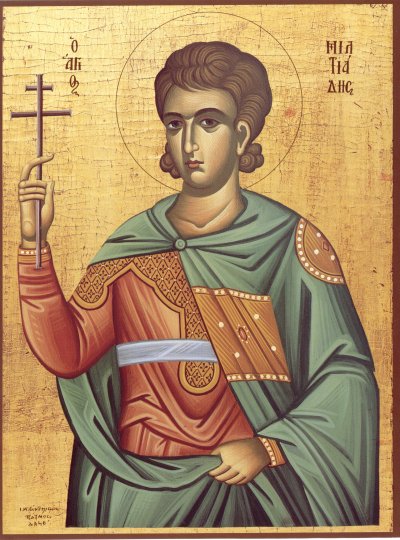
Miltiades (Greek Miltiadēs; the form Melchiades appears in many medieval sources from a corruption of the original) was — per the Liber Pontificalis — of North African birth, succeeding Eusebius as Bishop of Rome on July 2, 311. His three-year pontificate was the providentially-decisive one: it bridges the transition from the period of imperial persecution to the imperial recognition of Christianity.
Two foundational events of his pontificate. First: on April 30, 311 — three months before Miltiades's election — the Emperor Galerius (the principal architect of the Great Diocletianic Persecution, then dying of cancer) had issued from his deathbed at Serdica the Edict of Toleration, formally ending the Great Persecution and legally recognizing the right of Christians to assemble and to rebuild their churches. The implementation of the edict in Rome under the Emperor Maxentius (who controlled Italy) was incomplete and partial; Miltiades's pontificate was the period in which the formal restoration of the Roman Catholic Christian community as a recognized public body was carried through.
Second: on October 28, 312, Constantine defeated Maxentius at the Battle of the Milvian Bridge outside Rome — the foundational event of imperial Christianization, fought under the labarum (the Chi-Rho monogram of Christ). Miltiades — as Bishop of the city — was the first pope to receive imperial Roman recognition: Constantine gave him the use of the Lateran Palace (originally the property of the Empress Fausta) as the official papal residence, which it remained for the next thousand years. In February 313 Constantine and the eastern co-emperor Licinius issued from Milan the Edict of Milan (the legal document confirming the universal toleration of Christianity and the formal restoration of all Christian property confiscated during the persecution).
Miltiades presided at Rome over the foundational Catholic conciliar response to the Donatist schism: the Lateran Council of October 313 — the first council ever held at the new Lateran Palace, and the foundational example of a Roman papal-presided council. The council ruled against the Donatists. Miltiades died on January 11, 314, four months after the council and was buried in the Catacombs of San Callisto. He is the foundational pope of the post-persecution era of Catholicism.