
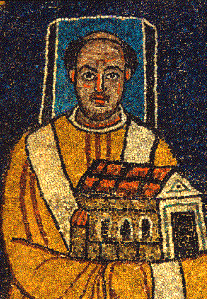
Paschal I was a monk of San Stefano Maggiore who succeeded Stephen IV in 817. His seven-year reign was distinguished by the largest church-building and decorative program at Rome between Adrian I and the Renaissance.
He rebuilt three of the great Roman basilicas in their present form — Santa Prassede, Santa Cecilia in Trastevere, and Santa Maria in Domnica — adorning each with the magnificent apse-mosaics that survive intact today. The mosaics of Santa Prassede, depicting Christ enthroned with saints in the apse and the chapel of San Zeno (the 'Garden of Paradise'), are among the supreme masterpieces of medieval Roman art.
To save the catacombs from Lombard pillaging, he translated the relics of thousands of early Roman martyrs into churches in the city — including those of St. Cecilia, found incorrupt in 821, into her basilica. Without his program much of early Christian Rome would not have survived for the modern world.