
Pelagius I (Latin Pelagius) had served Pope Vigilius (see Vigilius's entry above) as papal apocrisiarius at Constantinople during the long Three Chapters Controversy years (537–554), where he had been Vigilius's most senior collaborator and had himself initially opposed the imperial condemnation of the Three Chapters. After Vigilius's death at Syracuse in 555, Pelagius — under substantial Justinianic pressure to accept the Constantinopolitan-Council II condemnation of the Three Chapters — eventually agreed to do so and was consecrated Bishop of Rome on April 16, 556.
His Roman election and consecration produced substantial controversy: only two bishops attended his consecration (the canonical Roman tradition required three), and most of the Western Catholic episcopate refused for years to enter into communion with him because of his ratification of the Three Chapters condemnation. The substantial Italian-Gallic-Visigothic Western Catholic schism that resulted (the Three Chapters Schism that we have already mentioned at Vigilius's entry) was the principal pastoral-administrative difficulty of Pelagius I's pontificate.
His five-year pontificate was principally devoted to the catastrophic post-Justinianic-War reconstruction of the Roman Catholic Church: the substantial reorganization of the Italian episcopate after twenty years of Gothic-Byzantine warfare had killed many bishops and destroyed many sees; the substantial reconstruction of the Roman Catholic charitable infrastructure (the great famine of 559 had devastated Rome's population); and the foundational rebuilding of the Roman Catholic-papal basilica system after the catastrophic damage of the long war.
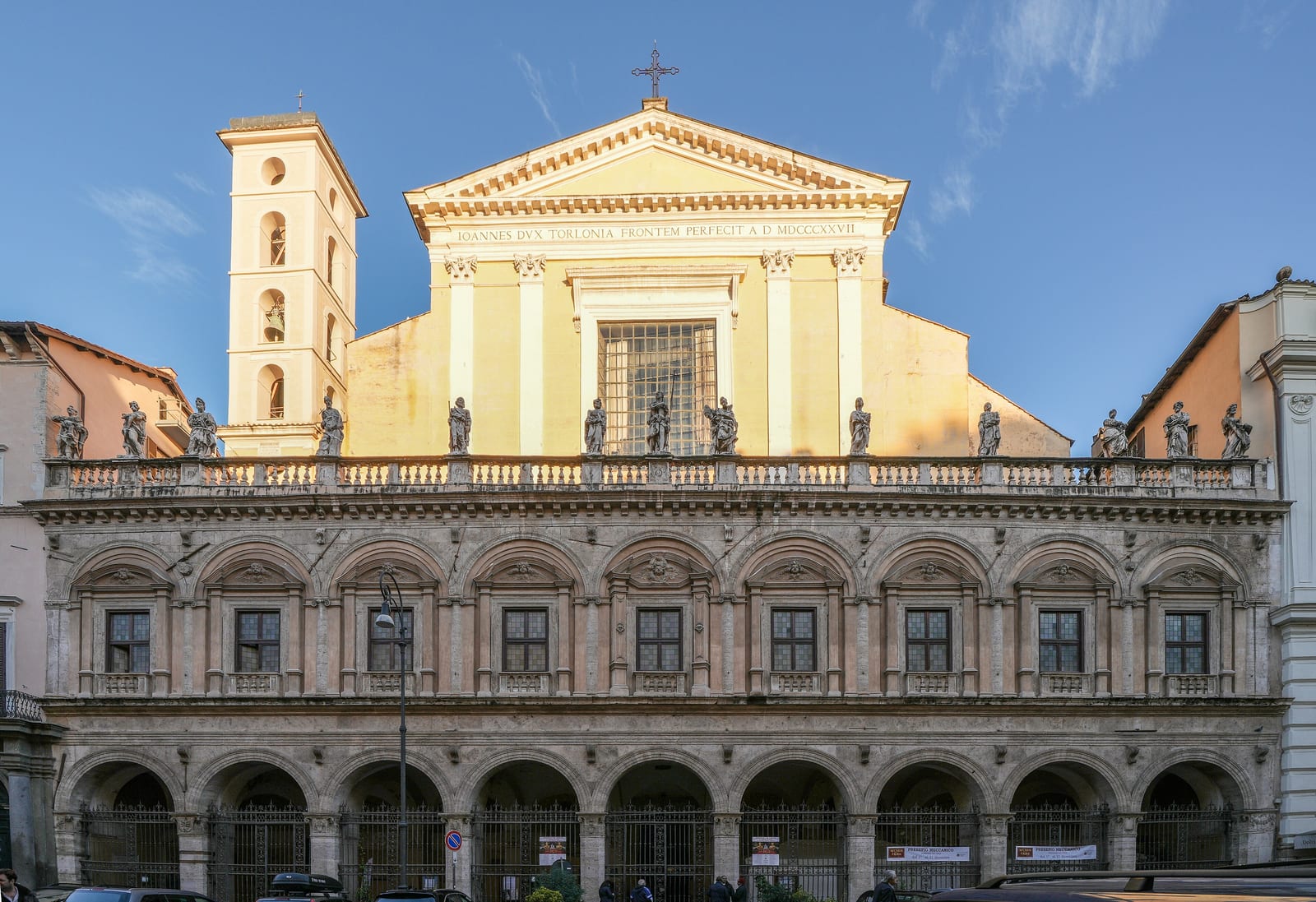
Pelagius's most visible architectural project: the substantial rebuilding of the Roman Basilica of Santi Apostoli (the small early-Christian basilica on the Quirinal Hill dedicated to the apostles Philip and James the Less). The rebuilding — completed during the brief peace of the 550s — gave Pelagius his foundational architectural memorial. He died at Rome on March 4, 561, and was buried at the basilica he had rebuilt.