
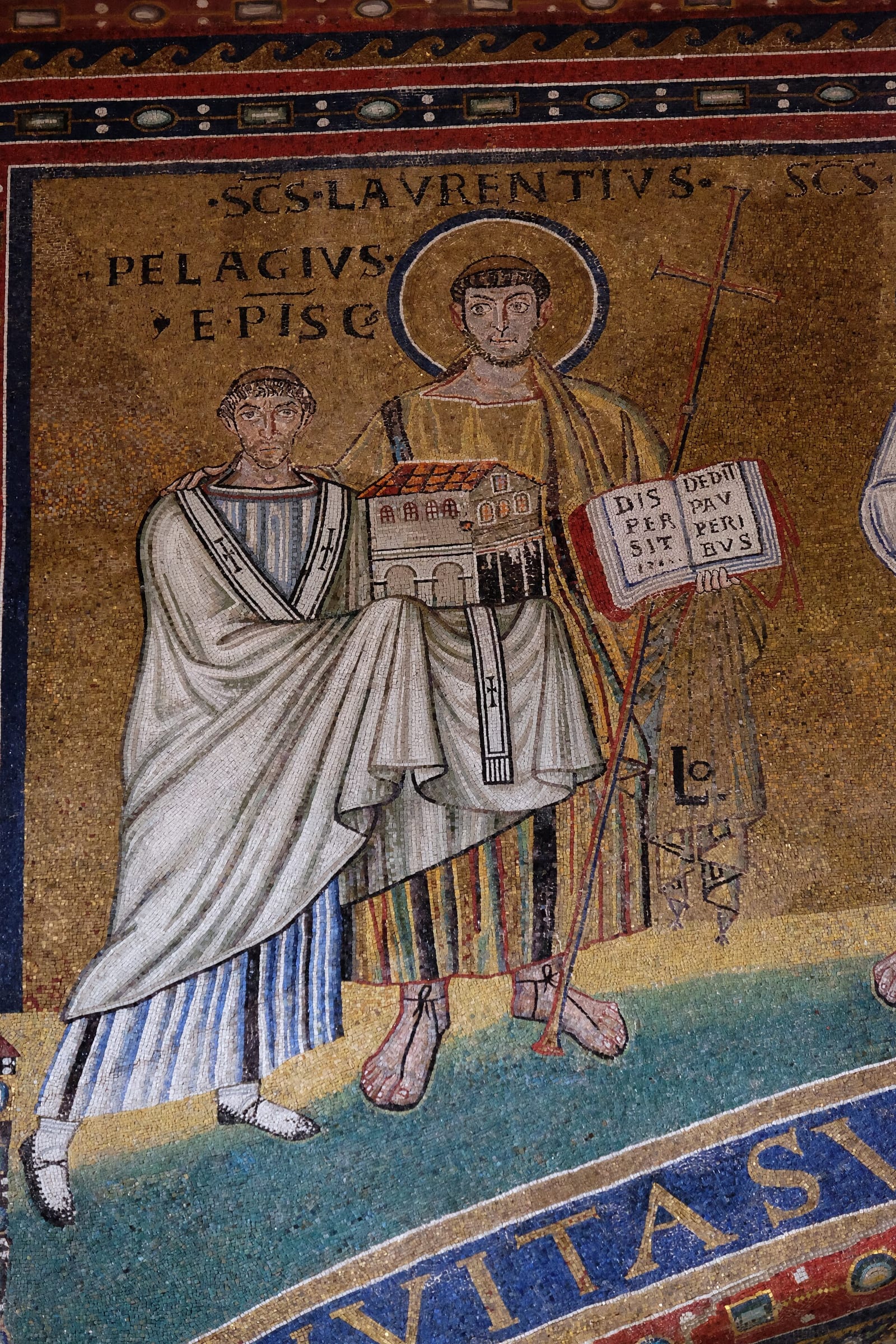
Pelagius II (Latin Pelagius) was elected Bishop of Rome on November 26, 579 — a few weeks before the Lombard military encirclement of Rome that began in 580 and continued through the entire period of his eleven-year pontificate. The Lombard invasion of Italy (which had begun in 568) had by Pelagius II's election reduced the surviving Byzantine-Italian territories to a small set of coastal enclaves and inland strongholds; Rome itself was effectively cut off from the rest of Catholic Italy and was governed under continuous low-intensity Lombard pressure throughout his pontificate.
Pelagius II's principal pastoral work was the substantial maintenance of Roman Catholic governance under conditions of continuous military pressure and substantial population displacement. He directed extensive famine-relief operations during the recurring food-supply crises of the 580s, organized the Roman Catholic response to the substantial refugee population from the Lombard-overrun territories, and continued the substantial pastoral correspondence with the surviving Italian Catholic episcopate under conditions of severe communication difficulty.
His architectural project was the substantial 6th-century rebuilding of the Basilica of San Lorenzo fuori le Mura on the Via Tiburtina — the early-Christian basilica that Constantine had originally built over the tomb of St. Lawrence the Deacon (see Lawrence's entry already in the catalogue). Pelagius II's rebuilding produced the 6th-century triumphal-arch mosaic of San Lorenzo (one of the great surviving early-medieval Roman mosaic works), which remains today the architectural memorial of his pontificate.
He died at Rome on February 7, 590, of plague — during the great Roman plague outbreak of January–February 590 that killed (per Gregory of Tours's account) substantial portions of the Roman population. The catastrophe required the rapid election of his successor — Gregory I the Great, see Gregory's entry already in the catalogue — who would become one of the popes of the entire medieval Catholic tradition.