
MIRACULOUS MIRACLES™

Saint — Pope St. Sixtus I

Pope St. Sixtus I
c. 65 AD, Rome — c. 125 AD, Rome
Seventh Successor of Peter — Pope (c. 115–c. 125)
Basilica of St. Sixtus, Alatri, Lazio (translation of relics, 1132), Italy
♕ The 7th Bishop of RomeReign: c. 115 — c. 125
Feast
April 3 (formerly); now omitted from the universal calendar but retained at Alatri level
✠ MartyrMartyred at Rome under Hadrian (per tradition), c. 125 → The Martyrs
Life

Sixtus I (Greek Xystos, 'polished') succeeded Alexander I around AD 115. The Liber Pontificalis attributes to him three significant liturgical-disciplinary decisions: that only consecrated ministers might handle the sacred liturgical vessels of the altar; that bishops returning from Rome to their dioceses must carry an apostolic letter from the pope as testimony of their visit; and that the people should sing the Sanctus (Trisagion) together with the priest at the Eucharist (a chant taken from Isaiah 6:3 — 'Holy, holy, holy, Lord God of hosts') — the first formal liturgical institution of the Sanctus in the Roman Mass.

He governed the Roman community for some ten years. Tradition holds that he was martyred during the reign of Hadrian. His relics were translated from the Roman catacombs to the small Latin town of Alatri in 1132, where they have remained venerated ever since.

Relics
  • Body
    Body of Pope St. Sixtus I
    Basilica of St. Sixtus, Alatri, Lazio

    His body was translated from the Roman catacombs to the small Latin town of Alatri (in Lazio, about an hour south of Rome) in 1132 — where they have been the principal pilgrimage focus of the small town ever since.

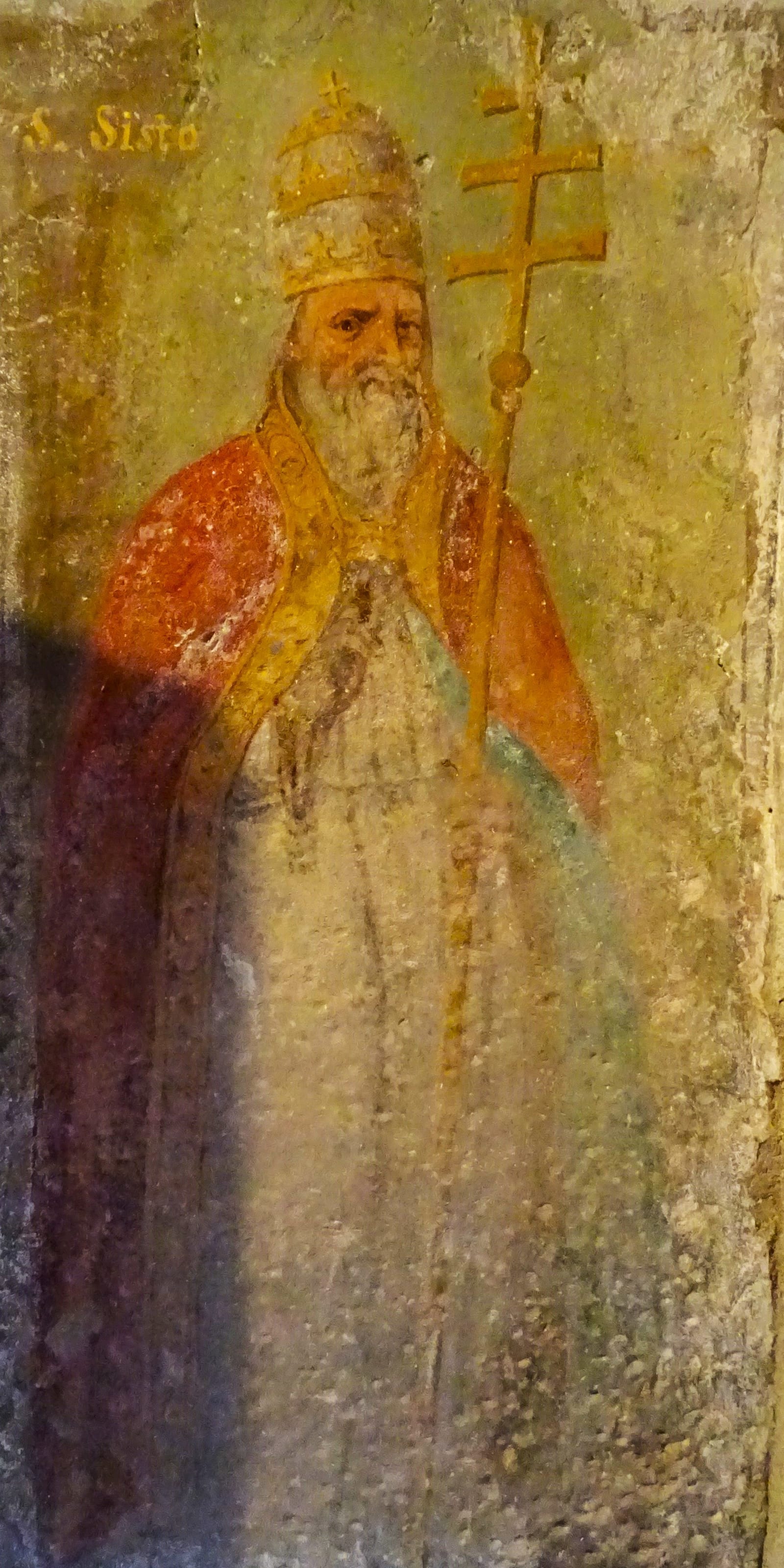
Iconography
  • Sixtus I instituting the Sanctus

    The early Roman pope in toga and small Roman-era pallium at a small altar with the deacon-singers beside him intoning Sanctus, Sanctus, Sanctus — the iconography of the foundational Roman papal liturgical institution.

Patronages
Alatri, Lazio (where his relics were translated in 1132)The early Roman pontifical liturgical tradition