
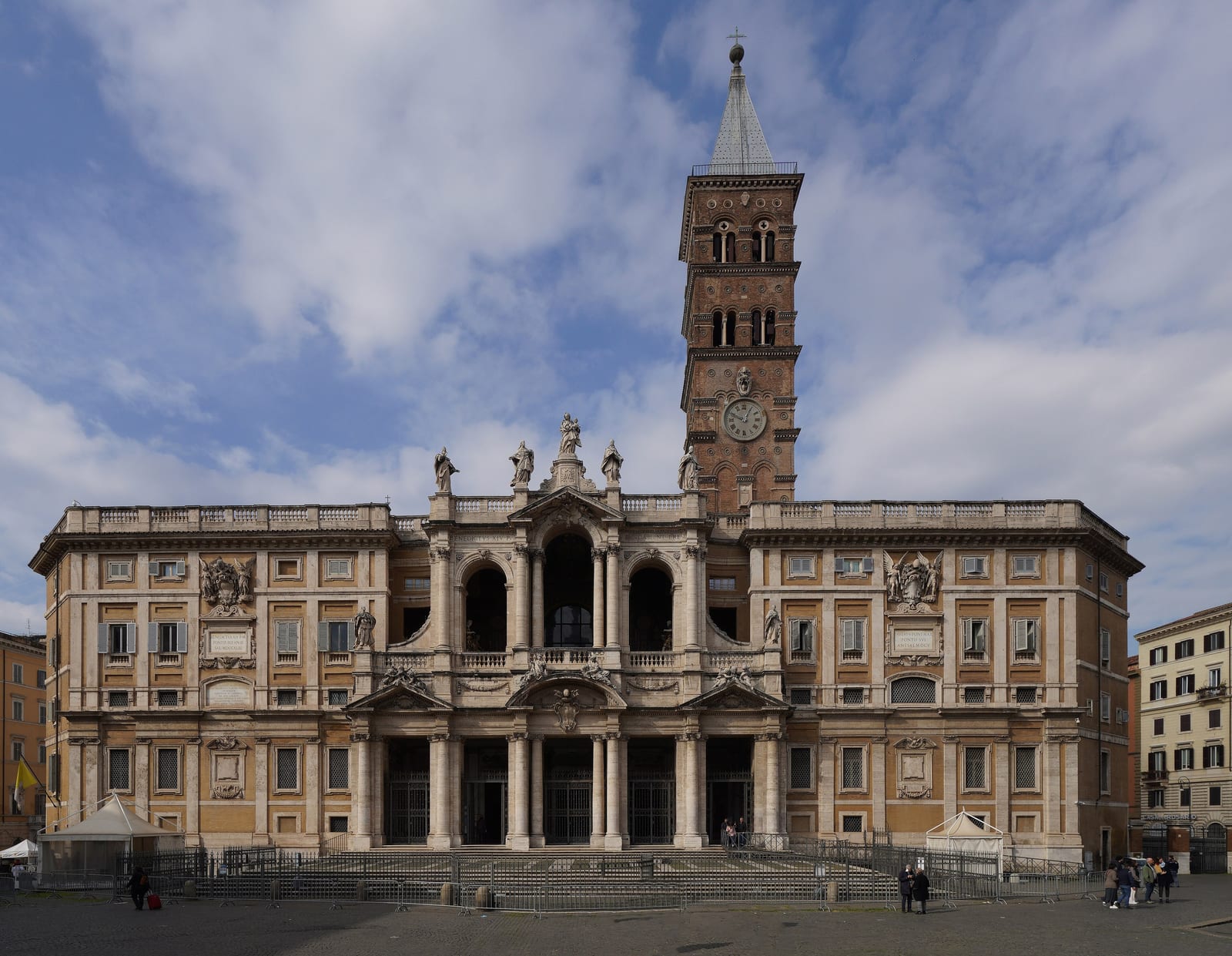
Sixtus III (Latin Xystus III) succeeded Celestine I as Bishop of Rome on July 31, 432 — eleven months after the foundational Council of Ephesus of June–July 431, which had formally defined the dogma of the Theotokos ('God-bearer') of Mary against the Nestorian rejection of the title. His eight-year pontificate is principally significant for the foundational Roman papal architectural and liturgical celebration of the Ephesian Theotokos definition.
Sixtus III directed the substantial reconstruction and re-dedication of the great Roman Marian basilica on the Esquiline Hill — originally founded by Pope Liberius in the 350s on the legendary site of the August 358 miraculous snowfall (the foundational miracle of the Basilica of Santa Maria Maggiore), and now formally re-consecrated in the early 430s as the foundational Roman papal architectural celebration of the Ephesian Theotokos definition. The 5th-century mosaic cycle of the Old Testament typological scenes in the nave clerestory of Santa Maria Maggiore — preserved largely intact to this day — is the principal surviving 5th-century Roman papal Marian theological-art project and one of the supreme surviving early-Christian artistic works.
Sixtus also directed the substantial reconstruction of the great Lateran Baptistery (the foundational Western-Christian baptistery, originally built by Constantine in the early 4th century) — adding the famous octagonal layout that became the architectural model for the entire subsequent medieval Western Christian baptistery tradition.
He died at Rome on August 19, 440. His tomb-inscription — preserved at Santa Maria Maggiore — is one of the foundational 5th-century papal-inscription documents.