
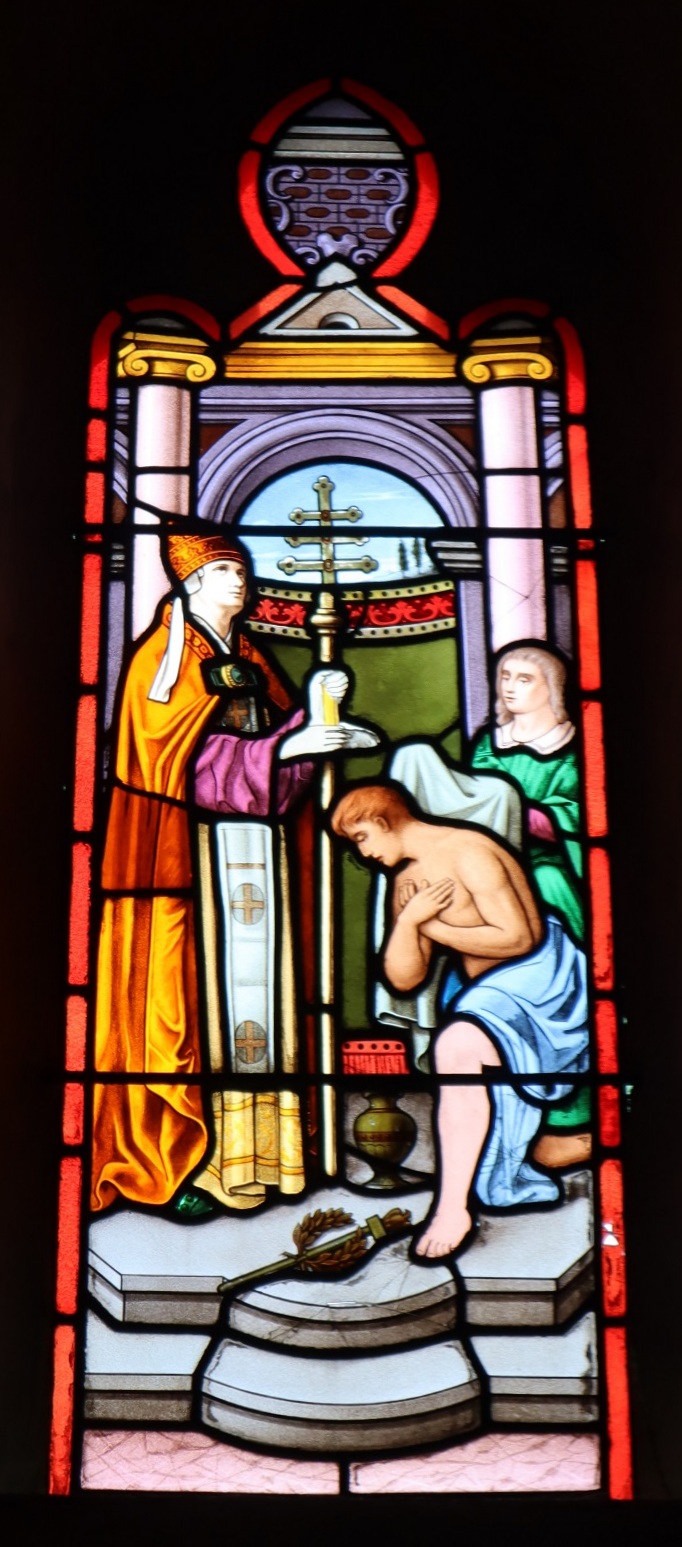
Stephen III was a Sicilian-born Benedictine monk who became a Roman cardinal-presbyter under Pope Zachary. He was elected in August 768 after the violent and uncanonical pontificate of the antipope Constantine II (a layman seized as pope by his brother Duke Toto of Nepi) and the antipope Philip — a contested election whose chaos prompted the foundational reform of papal elections.
At the Lateran Council of April 769 — one of the foundational Catholic ecclesiastical councils of the 8th century — Stephen III instituted the foundational reform restricting papal election to the Roman clergy alone (excluding the laity from the elective franchise), and condemned the iconoclast canons of the eastern Byzantine Council of Hieria (754) — the foundational Western papal repudiation of Byzantine iconoclasm that prepared the Catholic ground for the Second Council of Nicaea (787).
Stephen III faced the difficult diplomatic situation of the Lombard king Desiderius's proposed marriage alliance with the Carolingian princes Charles (Charlemagne) and Carloman — opposing the marriage as a violation of the Franco-papal alliance, but ultimately unable to prevent Charles's marriage (briefly, and soon repudiated) to Desiderata of the Lombards.
He died on January 24, 772, and was buried in St. Peter's. His successor Adrian I would complete the Carolingian-papal alliance with the conquest of the Lombard kingdom by Charlemagne in 774.