
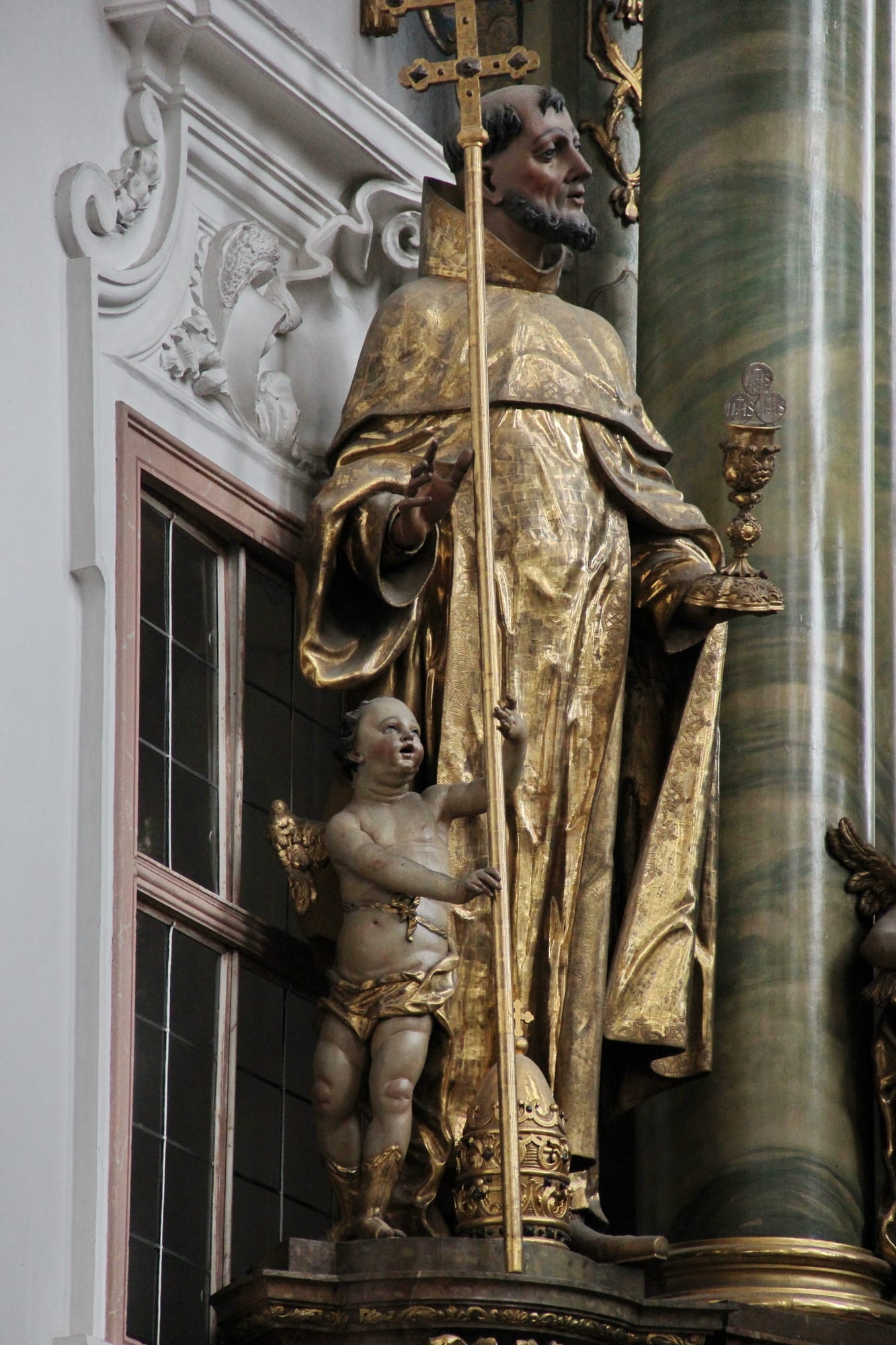
Telesphorus (Greek Telesphoros, 'one who carries fruit to completion') was, according to Irenaeus's testimony around AD 180, a martyr — the only one of the early Roman popes (after Peter himself) whose martyrdom Irenaeus explicitly confirms ('Telesphorus, who gloriously suffered martyrdom' — Adversus Haereses 3.3.3). The reign of Telesphorus thus marks the first historically secure papal martyrdom after Peter.
The Liber Pontificalis attributes to him three liturgical institutions: the institution of the Midnight Mass of Christmas; the singing of the Gloria in Excelsis at the Christmas Midnight Mass (now sung at every Sunday Mass and at every solemnity of the universal Catholic liturgical year); and the prescription of a seven-week Lenten fast for clergy. The historical reliability of the 6th-century Liber for early-2nd-century papal liturgical legislation is contested, but the persistence of these traditions across the universal Roman tradition is itself significant.
He governed the Roman community for some 13 years through the late reign of Hadrian. His martyrdom around AD 138 — under conditions not specifically recorded — is the foundational secured episode of post-apostolic Roman papal martyrdom.