
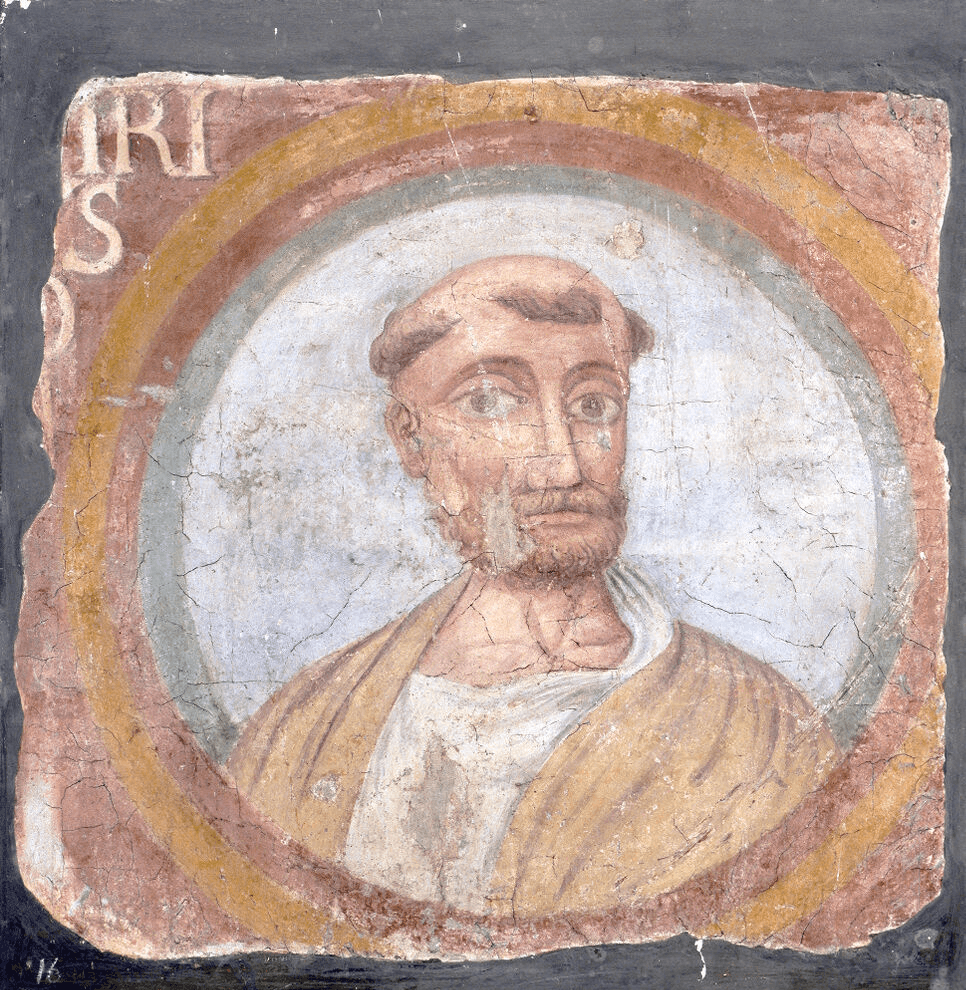
Zephyrinus succeeded Victor I as Bishop of Rome in 199 and governed the Roman community for eighteen years through the difficult reign of the Severan emperors. Hippolytus of Rome — see his entry already in the catalogue — was a sharp contemporary critic of Zephyrinus, and Hippolytus's writings have shaped most modern scholarly portraits of his reign: Hippolytus accused Zephyrinus of being theologically uneducated and easily manipulated by his powerful deacon-administrator Callixtus (the future Pope Callixtus I).
But the substantial pastoral and administrative work of the reign was real: Zephyrinus systematized the Roman papal liturgical ceremonial, expanded the catacomb-burial system of the Roman Christian community (placing Callixtus as administrator of what became the Catacombs of San Callisto on the Via Appia — the largest of the Roman catacomb complexes and the future burial site of nine 3rd-century popes), and oversaw the resolution of the long Quartodeciman controversy over the date of Easter.
He governed during the Severan persecution period (Septimius Severus's edict of 202 against conversion to Christianity is the foundational legal text of the 3rd-century systematic persecutions), and is traditionally counted among the martyrs — though the specific circumstances of his death are unrecorded.