
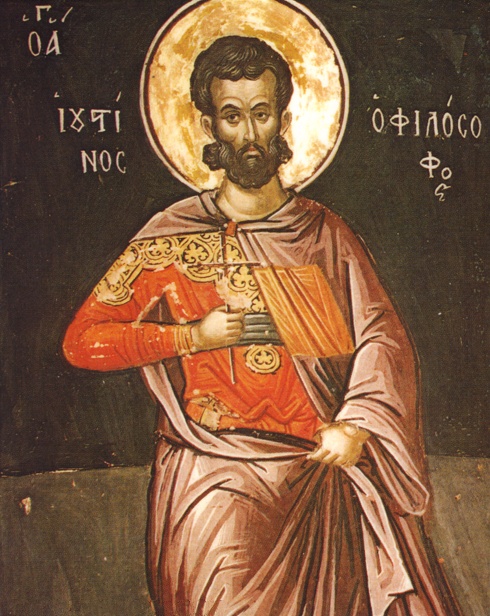
Ptolemy and Lucius were Roman Christians whose trial and execution around AD 165 — described in detail by Justin Martyr in his Second Apology (chapter 2), which Justin wrote specifically in response to the unjust handling of their case by the Roman urban prefect Lollius Urbicus — became one of the foundational New Testament-era martyr cases for the Catholic apologetic record.
The case began with the conversion to Christianity of a Roman patrician woman through the catechetical instruction of Ptolemy. The woman's pagan husband, infuriated, denounced Ptolemy as a Christian to the urban prefect Lollius Urbicus. At Ptolemy's trial Lucius — a Christian bystander — publicly objected that the trial was patently illegal, since Ptolemy had been convicted of nothing except the bare fact of being a Christian (the foundational early Christian legal objection that would eventually prevail in Constantine's 313 Edict of Milan). Lucius was promptly arrested with Ptolemy. A third bystander made the same objection and was also arrested.
All three were executed. Justin Martyr — writing his Second Apology directly to the Roman emperor Marcus Aurelius and the Senate immediately after the executions — used the case as evidence of the patent legal injustice of the Roman handling of Christian cases. The case is one of the rare 2nd-century martyrdoms documented at the moment by a contemporary Christian author with explicit named details — and it is the immediate cause of Justin's own subsequent arrest and martyrdom (c. AD 165).