
Quadratus (Greek Kodratos) was the first Christian apologist — the first Christian writer to address a formal written defense of Christianity to a Roman emperor. His Apology (Apologia pro Religione Christiana), addressed to the Emperor Hadrian around AD 124–129, survives only in a single brief fragment preserved by Eusebius (Church History 4.3). The fragment is theologically important because Quadratus, writing perhaps ninety years after the Resurrection, argues for the historicity of Christ's miracles by appealing to living memory: 'The works of our Saviour were always present, for they were real: those who had been cured, those who had been raised from the dead, who were not only seen at the moment of their cure or resurrection but were also constantly present, not merely while the Saviour was living, but even for some considerable time after his death, so that some of them survived even to our own day.'
The fragment is the earliest extant Christian source explicitly making the argument from continuous living memory for the historicity of the Gospel miracles — a foundational text of Catholic apologetic method that anticipates by some 1,700 years the modern Catholic apologetic argument from continuous post-apostolic tradition.
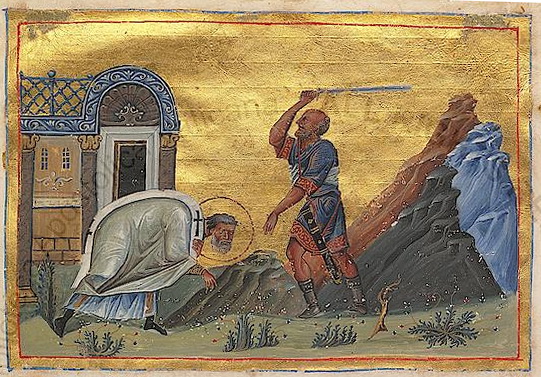
Quadratus is identified by the Byzantine tradition as Bishop of Athens (successor of Dionysius the Areopagite, the original Athenian convert of Paul). The Eastern tradition further identifies him as a bishop who suffered martyrdom at Magnesia on the Maeander in Asia Minor around AD 129 — though some Latin sources separate the Athenian apologist from a different Quadratus martyr at Magnesia.