
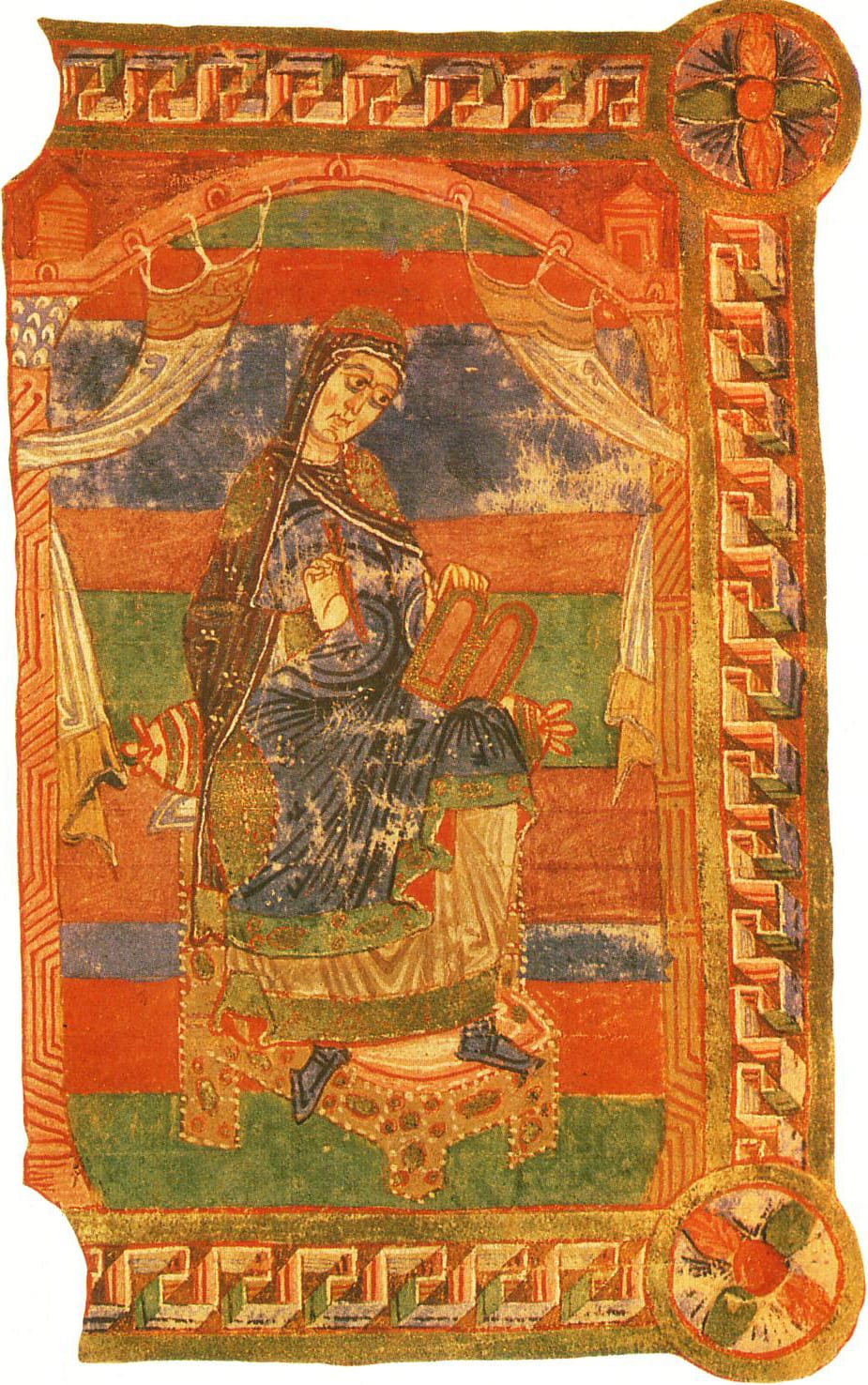
Radegund was a princess of Thuringia, captured at twelve when the Frankish king Clotaire I conquered her people. Forced to marry Clotaire some years later, she lived a holy life at the brutal Frankish court, founding hospitals and praying through the night. When Clotaire murdered her brother in 550, she fled — with his eventual consent — to the bishop of Noyon, who consecrated her a deaconess.
She founded the great monastery of the Holy Cross (Sainte-Croix) at Poitiers around 560, the first Frankish monastery to enclose its nuns under the Rule of Caesarius of Arles. She obtained from the Byzantine emperor Justin II a relic of the True Cross for her monastery — a piece of the relic that had been at Jerusalem since Helena.
For the arrival of the relic in 569, her court poet Venantius Fortunatus composed two hymns — Vexilla Regis ('The Royal Banners') and Pange Lingua Gloriosi Lauream Certaminis — that have been sung in the Latin liturgy of Holy Week ever since. Radegund lived seventeen more years at Sainte-Croix in great holiness; she died on August 13, 587, and is buried in the church that bears her name.