
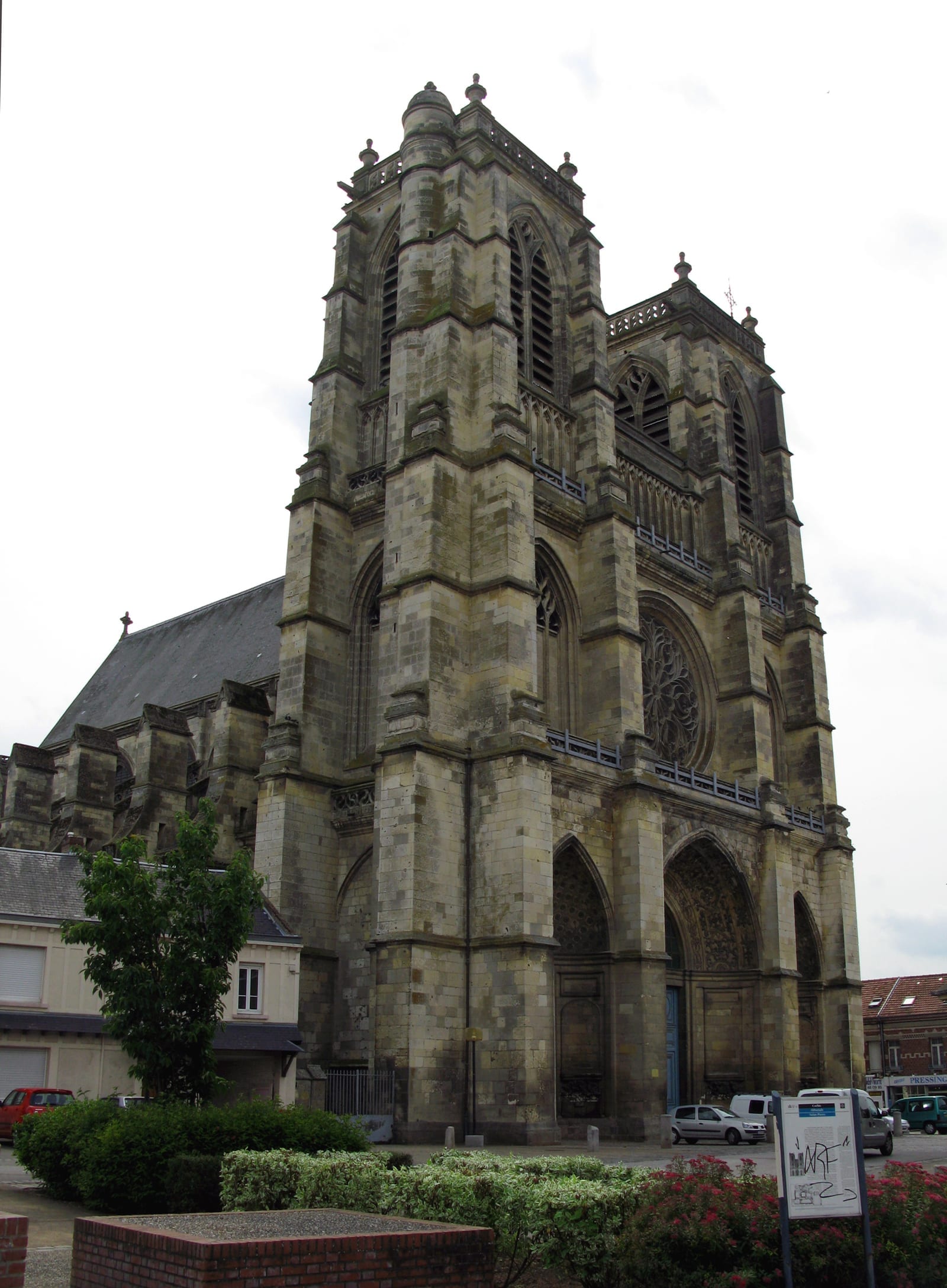
Ratramnus was a monk of the great Carolingian abbey of Corbie (founded c. 660 by St. Bathild) during the golden age of its 9th-century theological flowering under Sts. Adalhard and Wala and their successor Paschasius Radbertus.
He was the author of three influential Carolingian theological treatises — all composed at Corbie in the 840s–860s, in response to the theological questions put to him by Emperor Charles the Bald.
His most famous work — and the source of his 16th–17th-century Reformation-era theological controversy — is the De Corpore et Sanguine Domini ('On the Body and Blood of the Lord', c. 850), written at Charles the Bald's request in response to the treatise of the same title by Ratramnus's fellow Corbie monk Paschasius Radbertus. Where Paschasius argued that the Eucharistic body is identical in substantial and physical reality with the historical body of Christ born of Mary, Ratramnus articulated a more nuanced distinction — the Eucharistic body present 'in figura/in veritate' (in figure/in truth), anticipating later Catholic distinctions between sacramental and substantial presence.
His De Praedestinatione Dei (the treatise on predestination, 850s) intervened on the side of the condemned Gottschalk of Orbais in the Carolingian double-predestination controversy. His Contra Graecorum Opposita (the treatise against the Greeks, c. 868) defended the Latin Filioque clause against the eastern-Catholic / Orthodox objections during the Photian schism.
Ratramnus died at Corbie around 868. His works were largely forgotten in the medieval centuries, but the De Corpore et Sanguine Domini rediscovered in the 16th century became the principal patristic-Carolingian text appealed to by both the Protestant Reformation (arguing that Ratramnus pre-articulated a sacramental-symbolic Eucharistic theology against transubstantiation) and the Catholic Counter-Reformation (arguing the Catholic-orthodox interpretation of Ratramnus's 'figura/veritate' distinction). His text remains the source of ongoing Catholic-Protestant ecumenical Eucharistic-theological dialogue.