
Raymond of Capua (Italian Raimondo delle Vigne) was born in 1330 at Capua in the Kingdom of Naples to the noble Capuan Delle Vigne family. He entered the Dominican Order in 1347 at Bologna and studied at the Dominican studia at Rome, Bologna, and Paris.
In 1367, Raymond was appointed lector at the Dominican Convent of Siena — where in 1374 he became the personal confessor and spiritual director of St. Catherine of Siena (1347–1380). The Catherine-Raymond spiritual-friendship — analogous to the earlier Jordan-of-Saxony-and-Diana-d'Andalò Dominican spiritual-friendship tradition — became one of the principal medieval Catholic spiritual-friendship relationships.
Raymond accompanied Catherine on her famous diplomatic missions to Pope Gregory XI at Avignon (1376, producing the return of the papacy from Avignon to Rome in 1377) and to multiple Italian princes on Catherine's reconciliation-diplomacy missions.
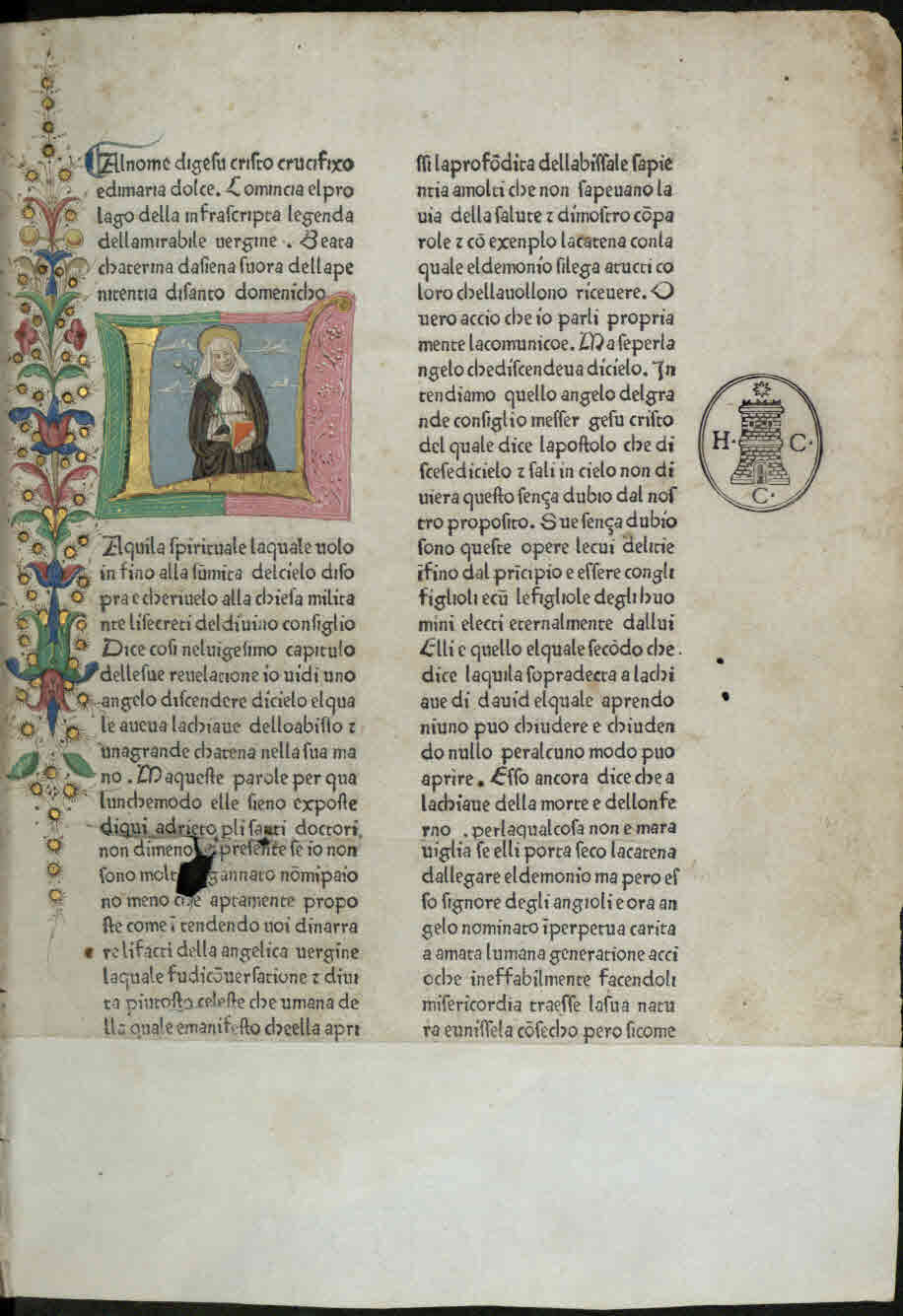
After Catherine's death on April 29, 1380, Raymond undertook the ministry of preserving Catherine's literary legacy and institutional cult. He composed the Legenda Maior (Life of St. Catherine of Siena) — the principal Latin biography of Catherine, the principal source for the entire Catherine-devotional tradition.
In 1380 — at the death of the Dominican Master General Elias of Toulouse in the Great Western Schism period — Raymond was elected 23rd Master of the Order of Preachers (for the Roman-obedience Dominican Order during the Great Western Schism, which had competing Master-Generals for the Roman and the Avignonese obediences).
Raymond's 19-year mastership (1380–1399) was devoted to the Dominican Observant Reform — the systematic return to the strict observance of the primitive Dominican discipline, against the relaxed 'Conventual' practice that had developed through the 14th century. Raymond founded the first Observant Dominican convent at Colmar in 1389 — the institutional beginning of the Dominican Observant Reform that would extend through the late-medieval Dominican tradition and produce Sts. Vincent Ferrer, Antoninus of Florence, and the broader Dominican-Observant-Reform tradition.
Raymond died on October 5, 1399 at Nuremberg, on the visitation-journey to the Dominican Convent of Nuremberg. His relics were translated to the Basilica of San Domenico at Naples.