
Robert was born around 1000 in Aurillac, Auvergne, to a noble Auvergnat family — a kinsman of the late Pope Sylvester II (Gerbert of Aurillac, who had been pope 999–1003, the native son of Aurillac).
Educated at the Abbey of Saint-Géraud in Aurillac (the Carolingian-era abbey founded by St. Gerald of Aurillac, where Gerbert / Sylvester II had also studied), Robert entered religious life and became a canon of the cathedral chapter of Saint-Julien at Brioude.
Around 1037, drawn to the hermit life, Robert undertook the ascetic withdrawal to the high plateau of the Livradois mountains in Auvergne — a rocky, forested, sparsely-inhabited area at over 1000 metres elevation. Joined by two hermit companions, he established a small hermitage in the chestnut forests of the Livradois.
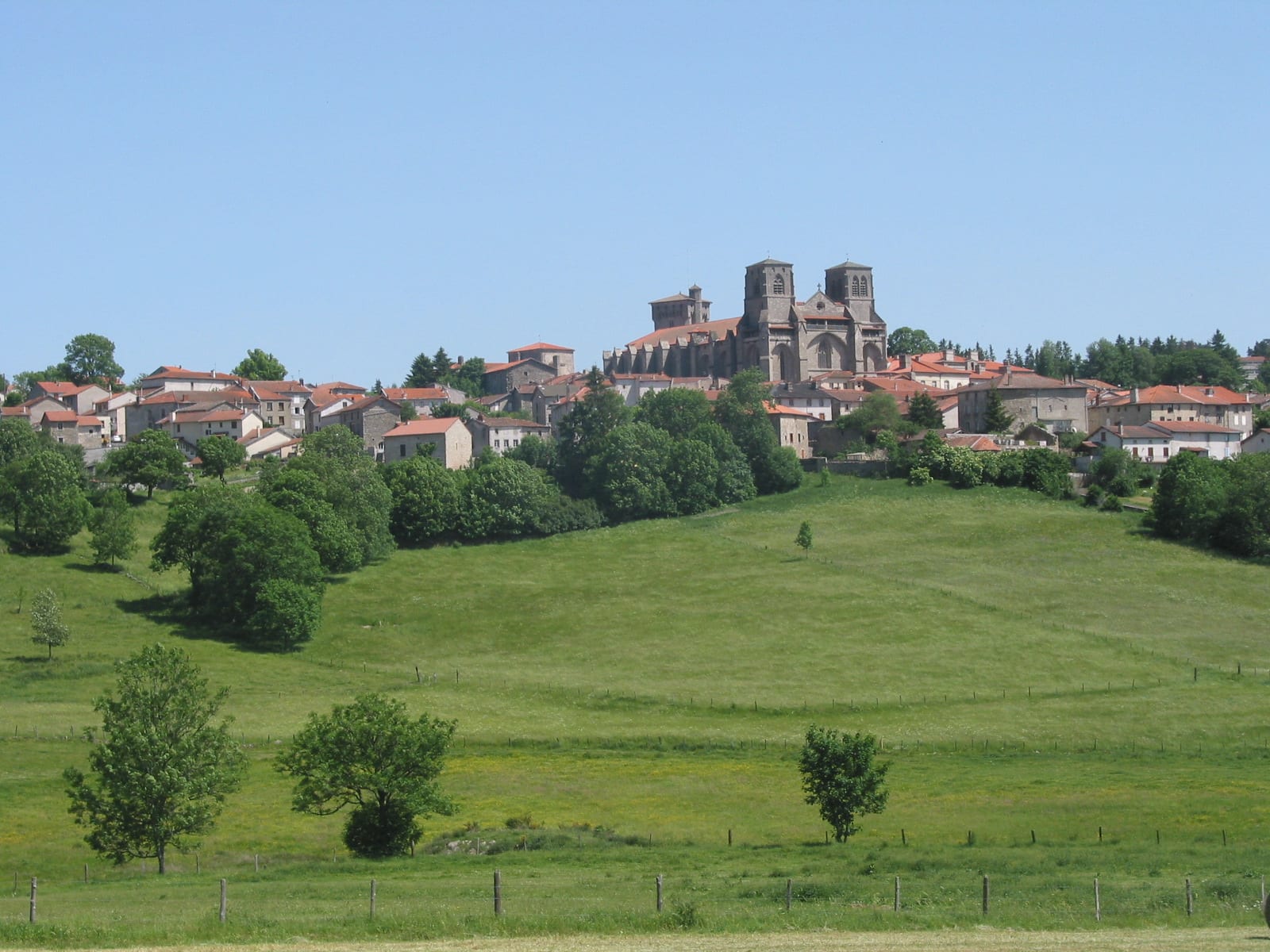
In 1043, with the donation of royal Auvergnat lands from Étienne, Vicomte de Polignac, Robert founded the Abbey of La Chaise-Dieu (Casa Dei, 'House of God') — the Benedictine monastic foundation that would become the principal Catholic monastic centre of the French central highlands.
Under Robert's abbacy (1043–1067), La Chaise-Dieu became the principal Auvergnat monastic-reform centre, affiliated with over 50 daughter houses across central France, the principal monastic instrument of the late-Cluniac monastic reform in the Auvergnat region.
He died at La Chaise-Dieu on April 17, 1067. Canonized by Pope Urban II in 1095 — the pope who would launch the First Crusade in the same year — Robert's cult became the principal Auvergnat Catholic devotion. The late-Gothic abbey-church (1344–1352, built under the direction of Pope Clement VI, who had himself been a monk of La Chaise-Dieu before his election to the Avignonese papal throne in 1342) survives as the architectural masterpiece of the Auvergne, containing the famous Danse Macabre fresco (c. 1410) — the principal medieval Danse Macabre cycle in France.